Sacrifice of Isaac — History & Analysis
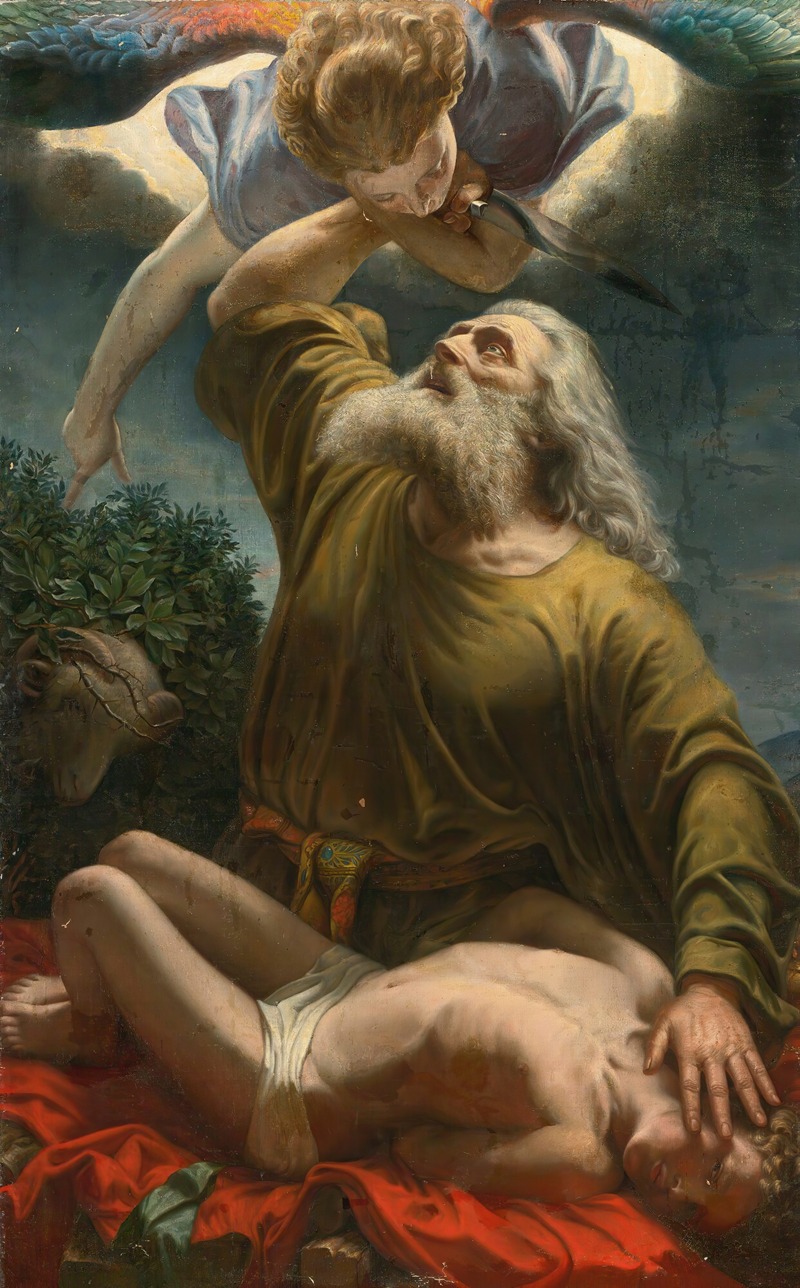
“To paint is to remember what time wants us to forget.” In the haunting interplay of light and shadow, decay whispers of lost moments and the weight of sacrifice. The canvas, vibrant yet melancholic, encapsulates the relentless passage of time while holding a fragile beauty that defies its fate. Look to the center where the dramatic tension unfolds; the figures are tightly clustered, with Abraham poised over Isaac, a knife glimmering ominously. Notice how light streams from an unseen source, illuminating the paternal face, etched with anguish and resolve, while casting deep shadows that conceal the innocence of the child.
The rich earth tones contrast sharply with the gleaming blade, creating a visceral sense of urgency that commands the viewer’s attention. Delve deeper into the subtle details—the way Isaac’s body bends in resignation, a profound embodiment of trust, even amidst impending doom. The background is a tapestry of muted greens and browns, hinting at decay, echoing the themes of sacrifice and loss that permeate the work. Each brushstroke seems to pulse with an emotional resonance, revealing the struggle between faith and despair, and the fleeting nature of life itself.
The Sacrifice of Isaac was painted by the School of Johann Liss during the early to mid-17th century, a period marked by a profound exploration of Baroque themes. This was a time when Europe was grappling with religious conflict and seismic shifts in artistic expression, as artists sought to capture the human experience in all its tragic complexity. The School of Liss, with its focus on emotive storytelling and dramatic composition, aimed to evoke deep reflections on morality and existence, making this work a poignant contribution to that era.