Saint Francis: side panel from a triptych — History & Analysis
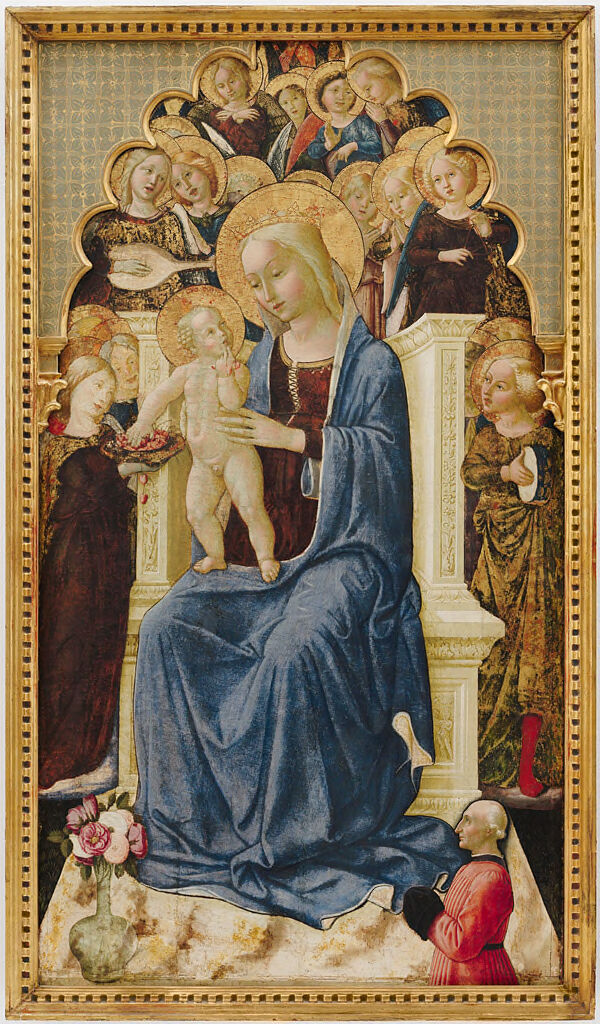
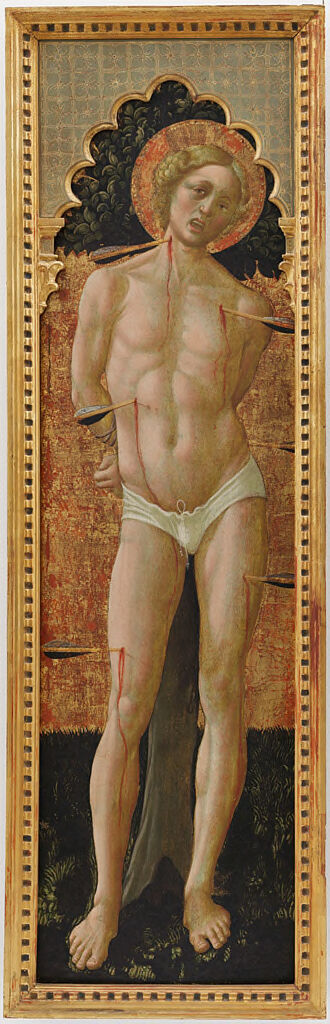
When did color learn to lie? The intricate hues that dance across this panel beckon us to question the boundary between the earthly realm and the divine. Look closely at the figure of Saint Francis, draped in humble browns and soft greens, a poignant contrast against the luminous gold background. Notice how the painter's delicate brushwork creates a halo, a radiant circle of light that seems to emanate from the saint himself.
The folds of his robe ripple with life, each stroke revealing a narrative of devotion and humility, inviting the viewer to become a part of this spiritual narrative. The interplay of light and shadow here carries a weight that transcends mere representation. The saint's serene expression holds a quiet power, exuding tranquility amidst the vibrant surroundings, while the ethereal backdrop suggests a connection to the divine. Each element, from the carefully rendered flora to the intricate detailing in the architecture, serves to elevate his sanctity, creating a visual symphony of faith and earthly life.
Created in the 15th century, this work represents a time of significant transition in the art world, as artists began exploring naturalism alongside spiritual themes. Niccolò da Foligno, working in Italy during a period marked by the Renaissance’s flourishing engagement with human emotion and divinity, infuses his piece with a sense of immediacy and connection to the viewer. This panel is not just a depiction but a dialogue, inviting contemplation on the nature of faith as it intertwines with our reality.