Saint Sebastian: side panel from a triptych — History & Analysis
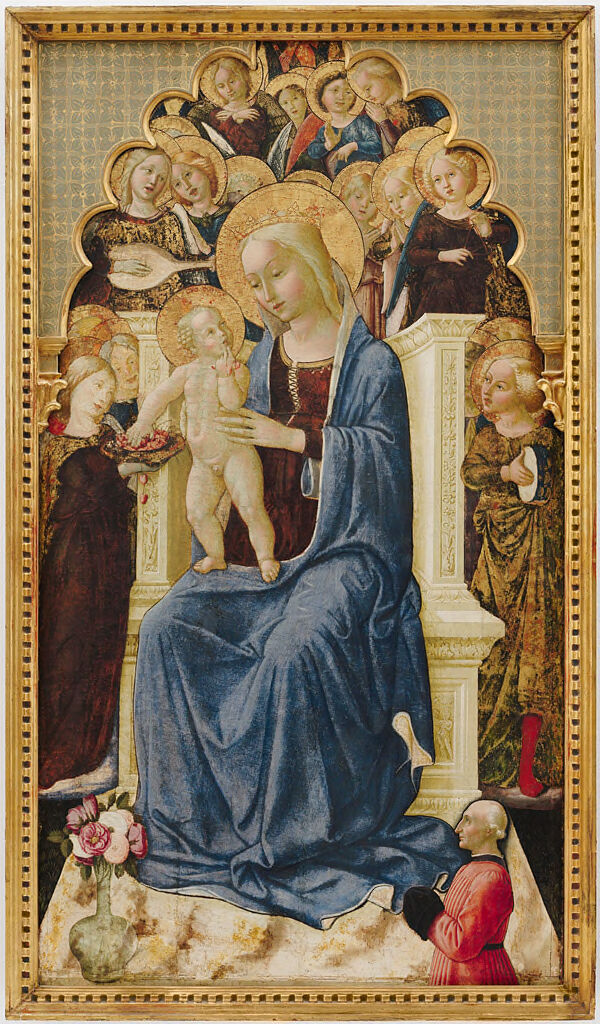
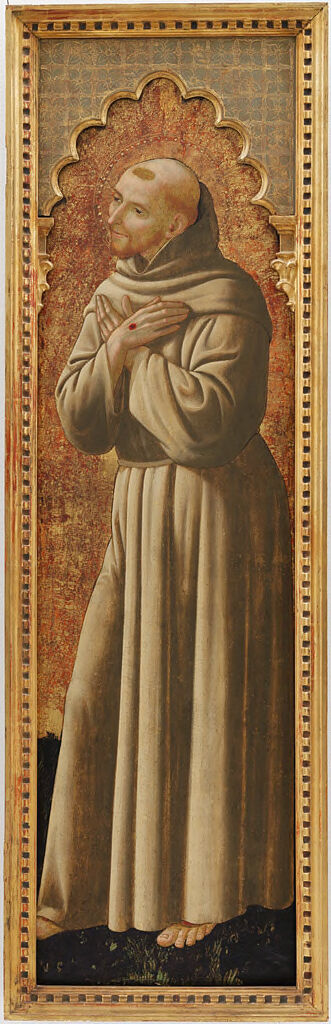
Did the painter know this moment would outlive them? The ethereal glow of light captured in the scene seems to suggest an eternal resonance, a fleeting moment elevated beyond time. Focus on the luminous figure of Saint Sebastian, positioned to the left, bathed in a divine cascade of golden light that radiates from an unknown source. Notice the intricate detail of the arrows piercing his flesh, rendered with an unflinching precision and a stark contrast to the soft palette of blues and greens surrounding him.
As your gaze travels across the panel, the gentle brushwork evokes a sense of movement, inviting you to explore the subtleties of the scene. The interplay of light and shadow creates an emotional tension, underscoring the duality of suffering and divine grace. The soft expressions of the onlookers mirror the viewer’s empathy, forcing an engagement with their shared humanity. Beneath the surface, there’s a palpable sense of sacrifice and redemption; the martyr's agony is juxtaposed with the serene beauty of the landscape, symbolizing hope amid despair.
Niccolò da Foligno painted this side panel in the 15th century, during a period marked by the rise of humanism and a renewed interest in classical themes. Working in Italy, he found himself influenced by the emerging styles of the Renaissance, while simultaneously addressing deep spiritual narratives. This work exemplifies the era's quest to blend the corporeal with the divine, reflecting broader shifts in perception within the world of art.