Seven Chinese Immortals — History & Analysis
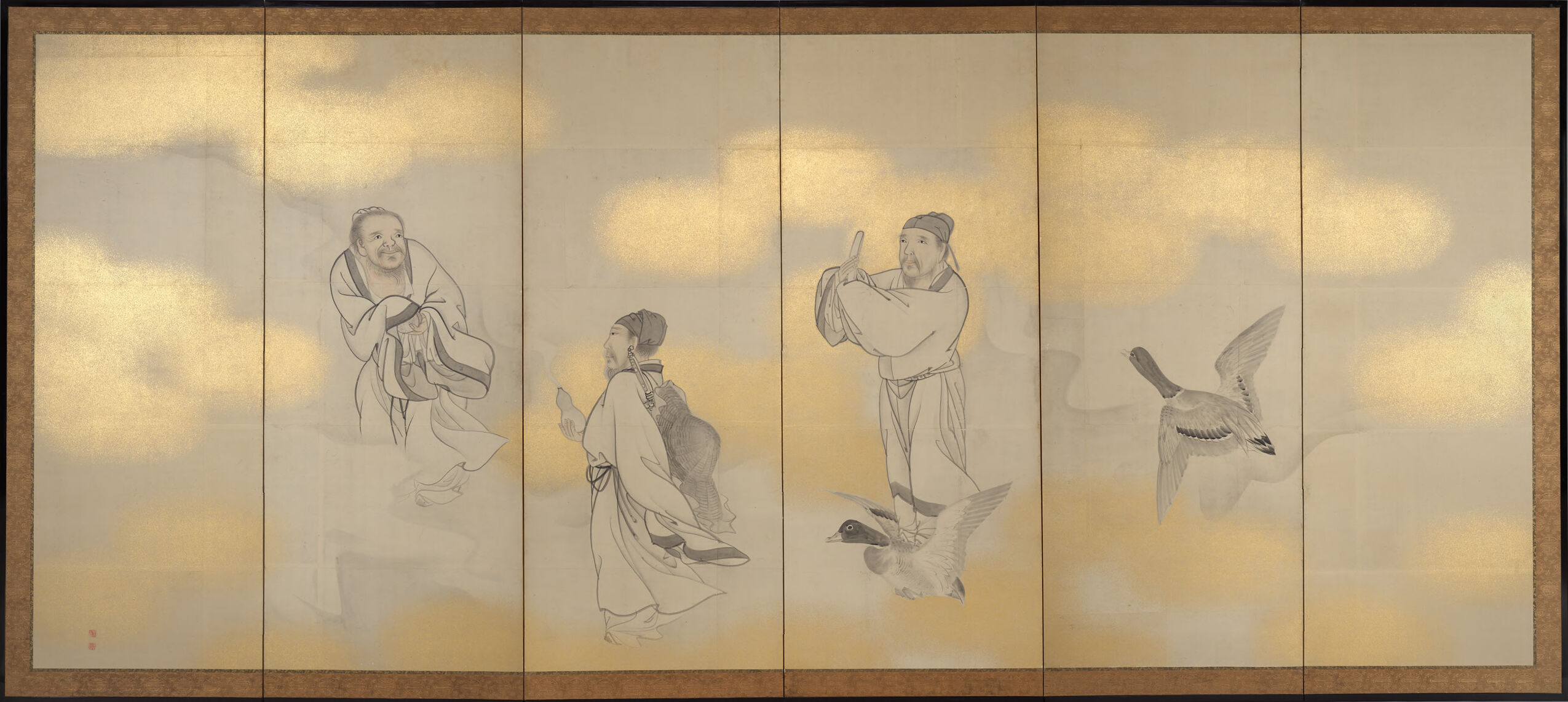
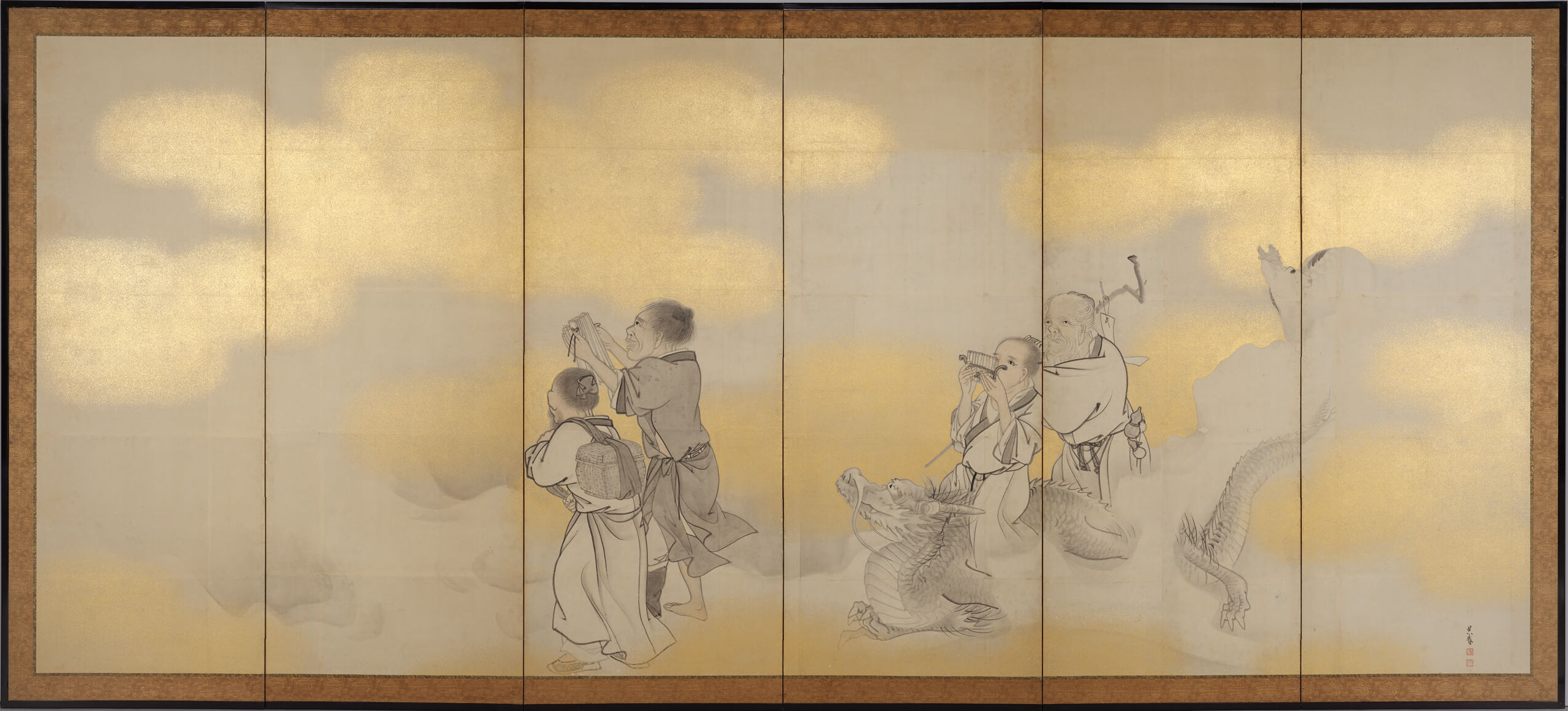
“Sometimes beauty is just pain, disguised in gold.” This notion resonates deeply within the intricate strokes and vibrant colors of a world where hope and despair coexist. The Seven Chinese Immortals evokes a sense of serenity woven through a tapestry of mythology and human emotion. On the surface, it captivates with its ornate figures, yet beneath its allure lies a narrative of resilience. Look to the left at the prominent figure of Hotei, the jovial deity, whose laughter seems to echo through the canvas. The artist employs rich hues of red and gold, accentuating the divine presence of the Immortals, each rendered with exquisite detail, from their flowing garments to their expressive faces.
Notice how the lush landscape envelops them, with delicate cherry blossoms framing their serene gathering. This intricate composition invites the viewer to explore each Immortal's unique traits, creating a harmonious yet dynamic tableau. Delve deeper into the subtleties of the painting, where contrasts arise; the Immortals, revered and eternal, juxtaposed against the ephemeral beauty of the blossoms. Each figure embodies a quality—wisdom, wealth, or longevity—yet their smiles hide stories of sacrifice and struggle.
The serene expressions are a reminder that joy is often tempered by the trials of existence, embodying a complex interplay of fortune and hardship that defines the human experience. In the late 18th to early 19th century, Goshun created Seven Chinese Immortals during a time of artistic flourishing in Japan, amid the shifting tides of societal norms and cultural exchanges. As Japan opened its borders, Goshun found himself immersed in a world where Eastern and Western influences began to intertwine. This moment in history not only shaped his artistic vision but also reflected the resilience of the human spirit in the face of change.