Seven Chinese Immortals (left screen) — History & Analysis
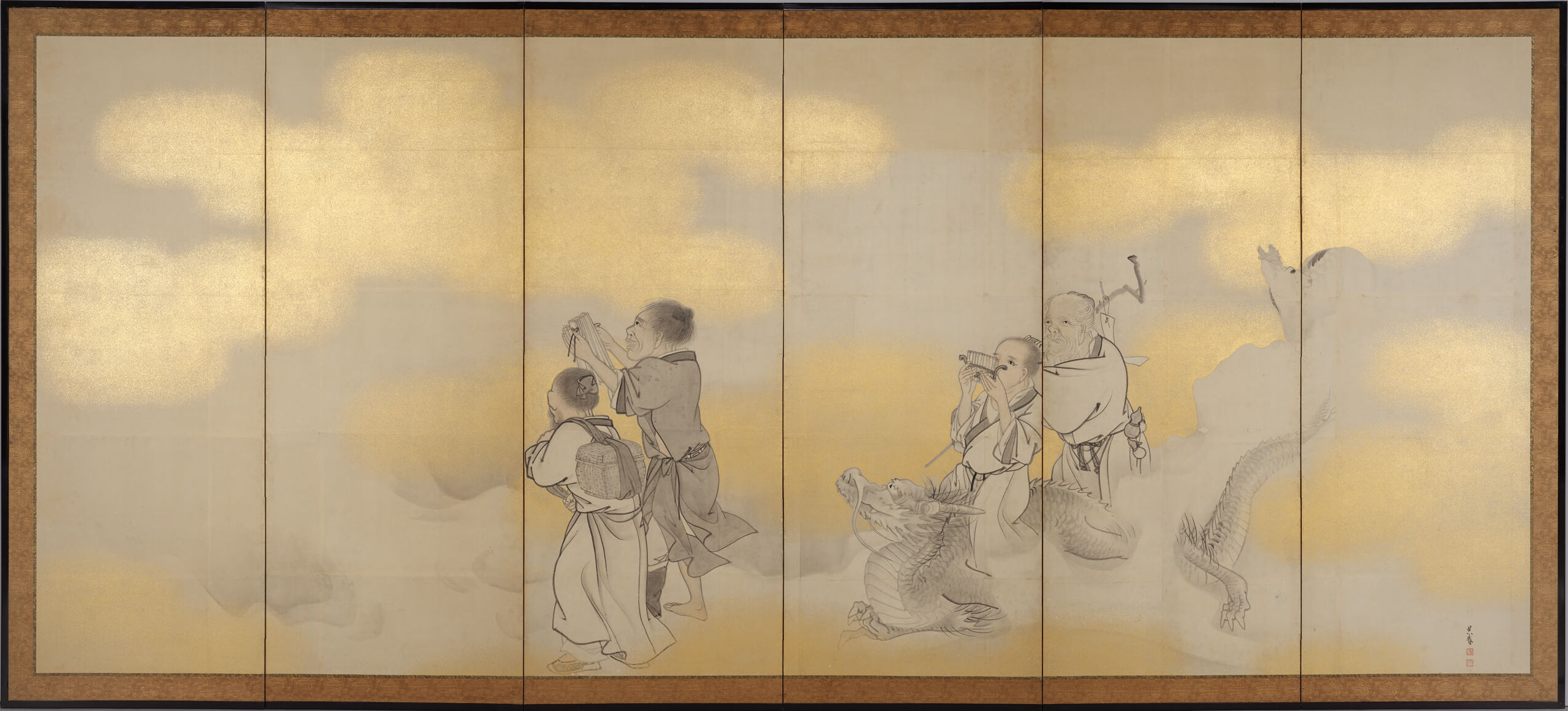
When did color learn to lie? In a world where hues can mask truth, serenity emerges, inviting contemplation and stillness. The viewer’s gaze is drawn first to the ethereal figures gracefully arrayed across the canvas. Notice how the figures of the Immortals are adorned in flowing robes, their postures a delicate balance of tranquility and wisdom. The soft pastels — blues, greens, and gentle beiges — blend seamlessly, evoking a sense of harmony that envelops the observer.
The subtle gradients of color suggest an almost dreamlike quality, enhancing the calmness of the scene while the meticulous brushwork brings a tactile dimension to each character. As you explore further, hidden narratives unfurl behind the serene expressions and poised gestures. Each immortal carries a symbolic item: the gourd, the peach, the bamboo — all resonating with themes of longevity and enlightenment. The contrast between their serene demeanor and the fleeting nature of earthly existence offers a poignant meditation on impermanence.
The pastoral background, with its soft mountains and whispering trees, further underscores a sanctuary untouched by conflict — a place where the spiritual and natural realms coalesce. In the late 18th to early 19th century, the artist created this work during a time of rich cultural synthesis in Japan, where traditional themes mingled with the influences of the Western art that were beginning to permeate the scene. Goshun, a master of capturing both the ephemeral beauty of nature and the profound wisdom of myth, found inspiration in the timeless tales of the Immortals. As Japan navigated the complexities of its identity, his art offered a moment of peace, inviting viewers to reflect on the deeper layers of existence.