Square Man — History & Analysis
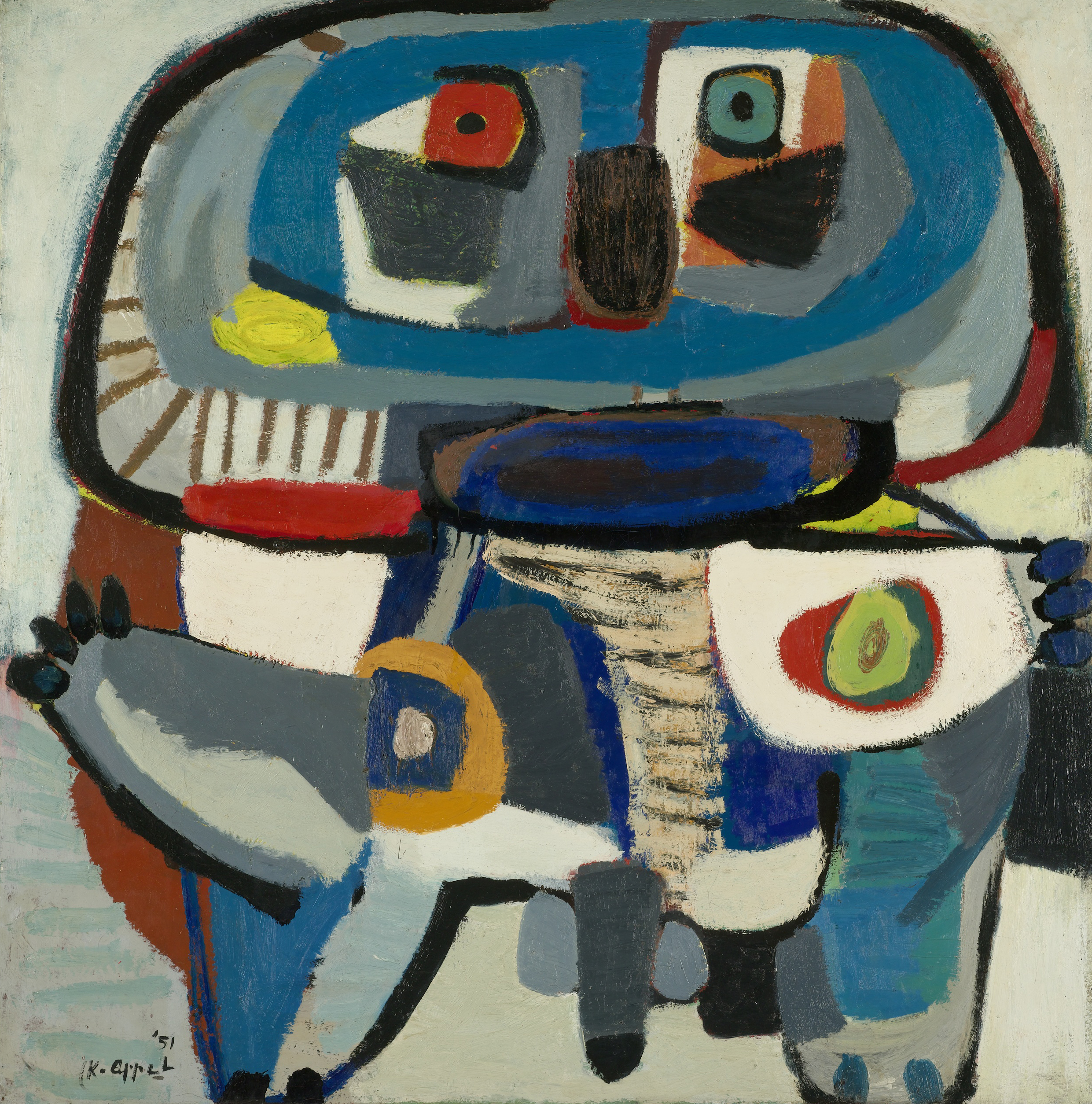
When did color learn to lie? In the vibrant chaos of Square Man, questions of truth and perception collide. Look to the center of the canvas, where a figure emerges from a tapestry of bold, unrefined brushstrokes. The hues are audacious—fiery reds, electric blues, and earthy yellows blend in a riotous dance, yet the form remains resolute.
Notice how Appel’s thick application of paint creates a palpable texture, urging you to touch the surface, to feel the emotion contained within. The eyes, unblinking and stark against the frenetic backdrop, draw you in, inviting introspection. Beneath the raw energy lies a profound tension: the figure’s square shape, a symbol of stability, contrasts sharply with the unrestrained chaos surrounding it, suggesting an internal struggle between the desire for order and the chaos of existence. The vibrant colors, while initially joyous, convey an unsettling undercurrent, perhaps revealing the dissonance between appearance and reality.
It forces the viewer to confront the idea that what is presented may not be the truth—an unsettling revelation in an age where perception is fluid. Karel Appel created Square Man during a period of artistic upheaval in the mid-20th century, in post-war Europe. As a founding member of the CoBrA movement, Appel sought to break away from traditional artistic constraints, aiming to express raw emotion through abstraction. His work reflected a world grappling with the aftermath of conflict, where color and form transcended conventional representation to evoke deeper truths about the human condition.