Steiniges Ufer — History & Analysis
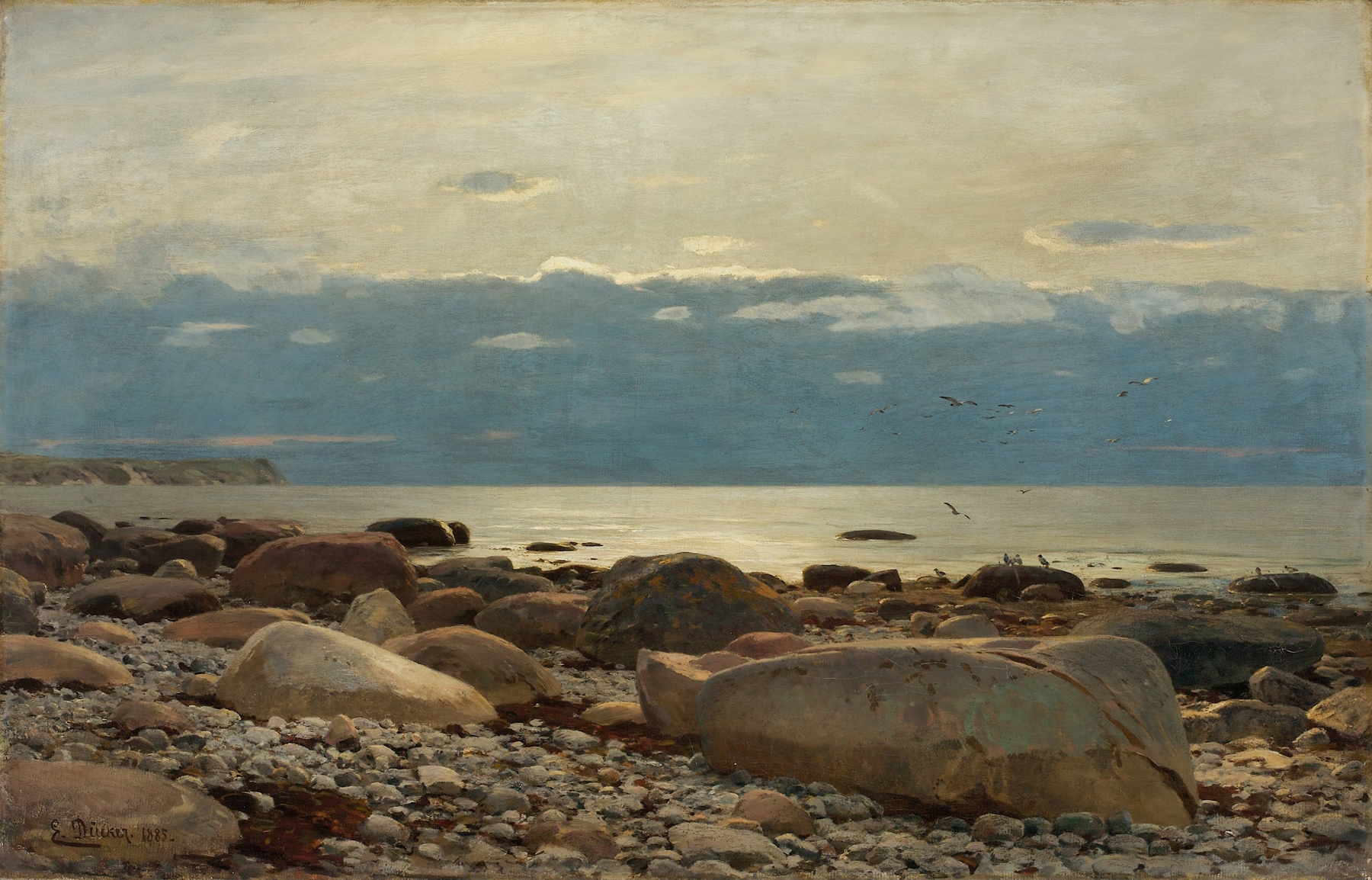
What secret hides in the quiet of the canvas? Each brushstroke captures a world where reality blurs, inviting the viewer to ponder the illusion of tranquility. Focus first on the foreground, where the rocky shoreline juts into a shimmering expanse of water. The cool blues and greens of the river contrast sharply with the warm, earthy tones of the stones, creating a dynamic interplay that draws the eye.
Notice how the gentle ripples reflect the surrounding colors, allowing the viewer to feel the serene movement of nature, while the textured rocks seem to hold the weight of time itself. Hidden within this tranquil scene lies a tension between permanence and transience. The rugged stones appear steadfast, yet they are perpetually shaped by the water’s ebb and flow, symbolizing the passage of time and nature's relentless force. This juxtaposition invites contemplation on the fleeting moments we often overlook in our daily lives, emphasizing the beauty found within stillness.
As you explore deeper, observe the nuances of light dancing upon the surface, an illusion that captures both reflection and depth, suggesting hidden currents beneath the serene exterior. Eugen Dücker painted this piece during a period when he was immersed in the natural landscapes of Northern Europe. Living primarily in Germany around the late 19th century, he sought to convey the essence of nature in his works, amidst a growing movement that celebrated the beauty of the outdoors. This moment in his career reflected a blend of realism and emotional expression, revealing both his technical skill and profound appreciation for the natural world.