Still life with a Gilded Beer Tankard — History & Analysis
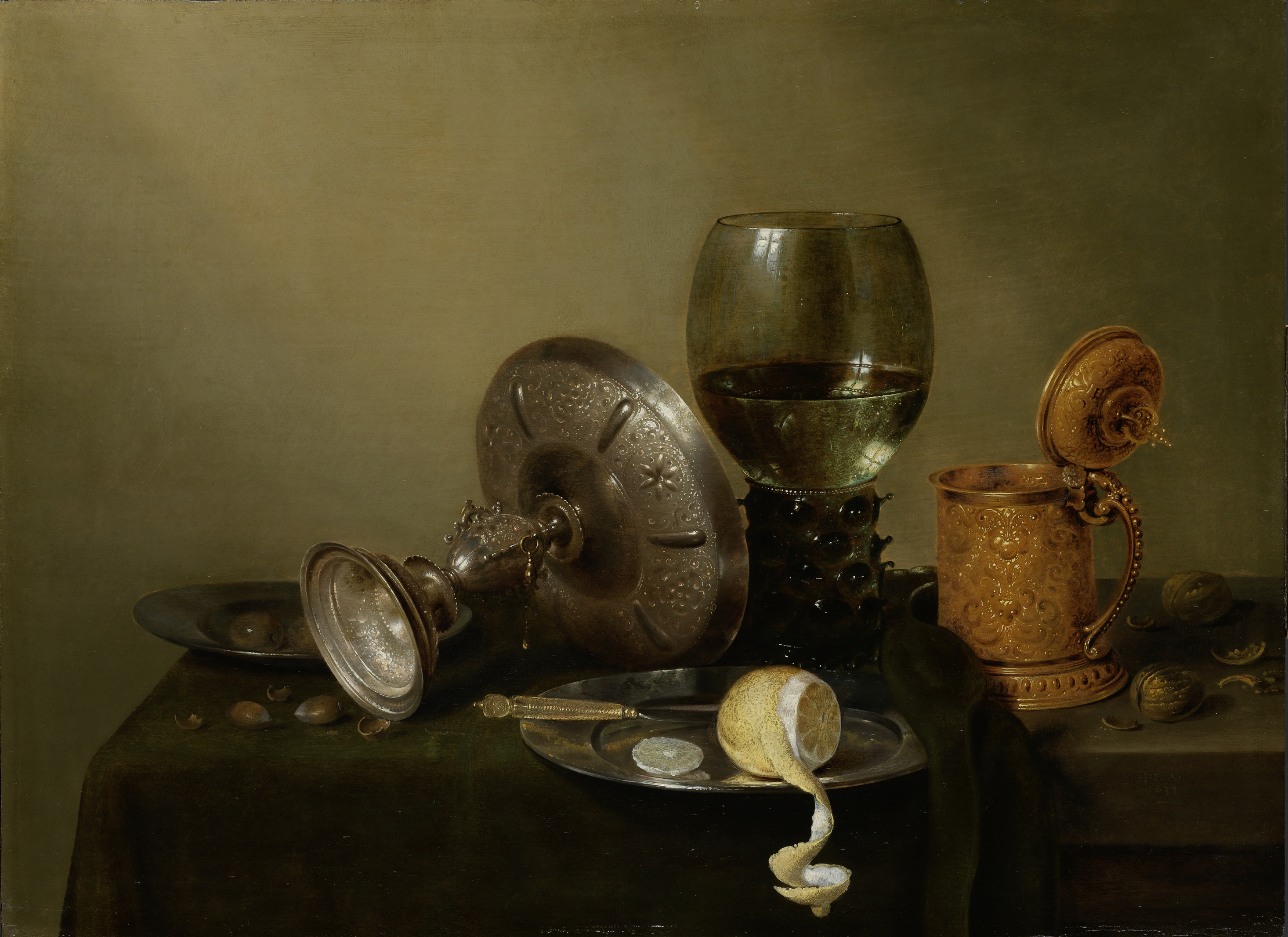
“Sometimes beauty is just pain, disguised in gold.” In the intricate world of still life, desire manifests itself in the simplest of objects, transcending their mundane existence. Look to the right at the lavish beer tankard, its gilded surface gleaming under a soft, amber light that casts gentle shadows across the table. Notice how the glint of glass reveals a hint of liquid within, promising refreshment and revelry, while the surrounding fruits and bread, rendered in rich, earthy tones, invite you to indulge in their bounty. The meticulous arrangement is no accident; each element is carefully chosen to create a sense of harmony and balance, drawing the viewer’s eye across the canvas.
Yet beneath this calm tableau lies a tension of contrasts. The gleaming tankard symbolizes both wealth and desire, while the decaying fruit hints at the fleeting nature of pleasure and life itself. The juxtaposition of opulence and decay invites contemplation on the temporality of indulgence, suggesting that even the most beautiful moments are ultimately transitory. Here, Heda captures not just a moment in time, but the emotional resonance of longing that underpins human experience.
In 1634, while painting this work, Heda was establishing his reputation as a master of still life in the Netherlands. The Dutch Golden Age was marked by flourishing trade and wealth, which allowed artists to explore themes of everyday life and material culture. During this time, Heda’s intricate compositions reflected both the prosperity of his context and a deeper philosophical inquiry into the nature of beauty and desire.