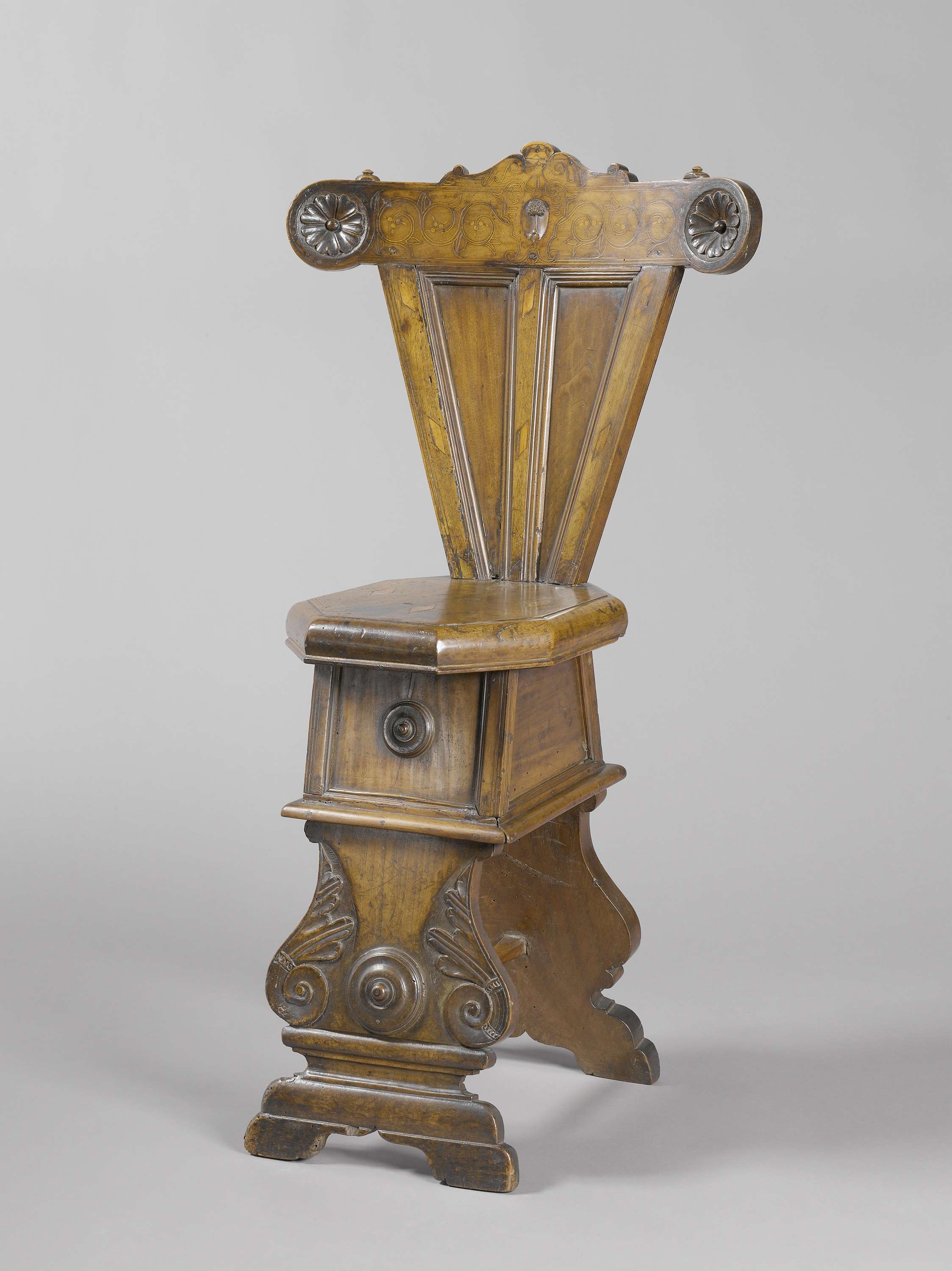
Stoel van notenhout, met achthoekige zitting. Schild met boom en versieringen in intarsia — History & Analysis
Could beauty survive in a century of chaos? The intricacies of this wooden chair speak to the resilience of art amidst the tumult of the 1500s, where grief and hope twined through the fabric of daily life. Look closely at the octagonal seat, where rich walnut wood gleams softly under a subtle play of light. Notice how the meticulous inlays of trees and ornate décor draw the eye to its center, creating a focal point that invites contemplation.
The craftsmanship is exquisite; each detail seems to breathe life, as if nature herself has been captured in this mundane object, transforming utility into beauty. Yet, within this elegant design lies a quiet grief. The intertwining branches echo the fragility of life, while the decorative elements suggest a longing for stability in a world rife with uncertainty. The chair's very presence embodies a sanctuary, a refuge crafted from the turmoil outside—an emblem of human endurance against the backdrop of sorrow and strife.
Each curve and ornament reflects a desire to hold onto beauty when chaos looms large. This piece emerged between 1500 and 1600, a time marked by political upheaval and spiritual transformation in Europe. Created by an unknown artist, it reflects the late Gothic to early Renaissance transition, where artisans began to infuse personal sentiment into their work. Amidst societal changes, the chair stands as a testament to the enduring spirit of creation, channeling both the pain of its era and the beauty it sought to preserve.