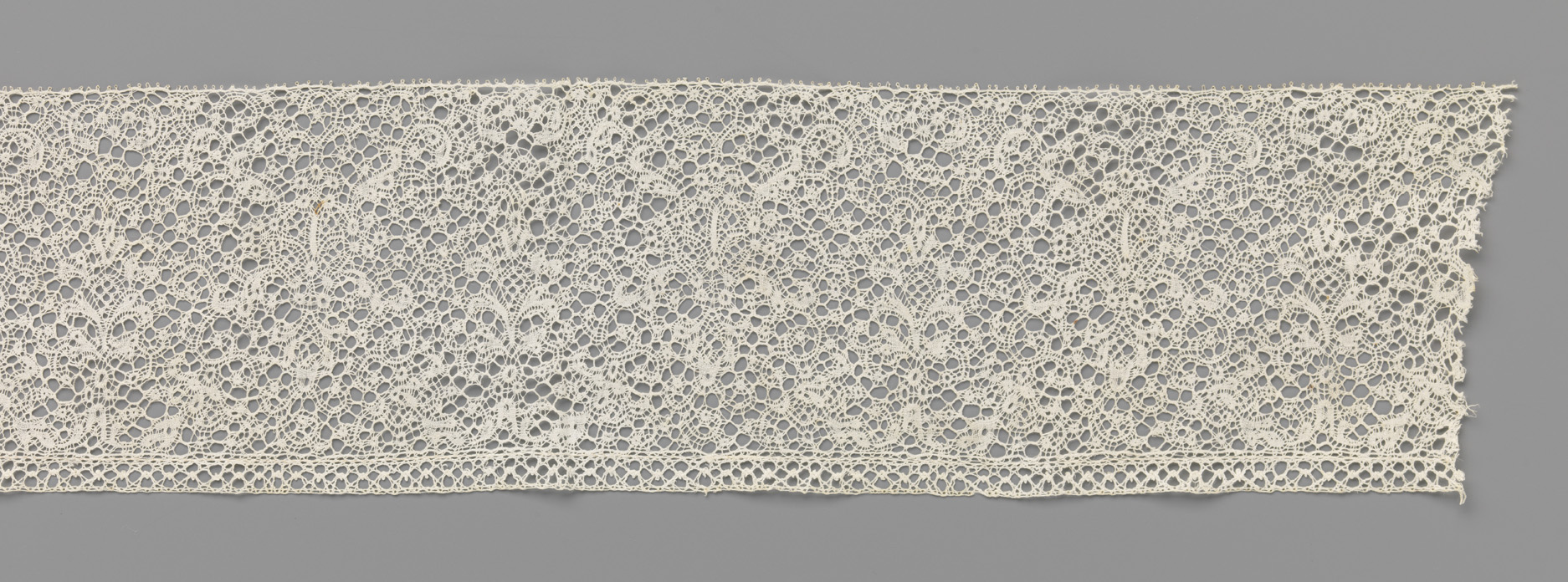
Strook kloskant met twee kandelabermotieven — History & Analysis
Can beauty exist without sorrow? This delicate lace cloth, woven with intricate candelabermotifs, speaks to the fleeting nature of time and the quiet weight of history. Look closely at the fine threads interlacing in the design. The candelabra motifs, with their graceful curves, draw your eye to the center, where the detailed craftsmanship comes alive. Observe how the light catches the delicate edges, revealing a soft white glow that dances upon the surface, contrasting with the deeper shadows that rest within the patterns.
Each stitch is not only a celebration of technique but a testament to the labor and love infused in its creation. Beneath the surface, the interplay of light and shadow in the lace embodies a deeper narrative, reflecting both the beauty and transience of life. Each pattern can be seen as a metaphor for the illumination of joy amidst the darkness of time’s passage. The repetition of the candelabrum represents both a source of light and a reminder of its inevitable extinguishment.
This creates a profound tension, inviting the viewer to contemplate the impermanence of beauty itself. This work was crafted between 1690 and 1699, a period marked by intricate textile arts in Europe. The artist remains unknown, yet their contribution reflects a time of flourishing craftsmanship and guild traditions. During this era, the demand for luxury goods surged, blending artistic expression with everyday objects, allowing the beauty of such pieces to transcend their utilitarian purpose and speak to the souls of those who encounter them.