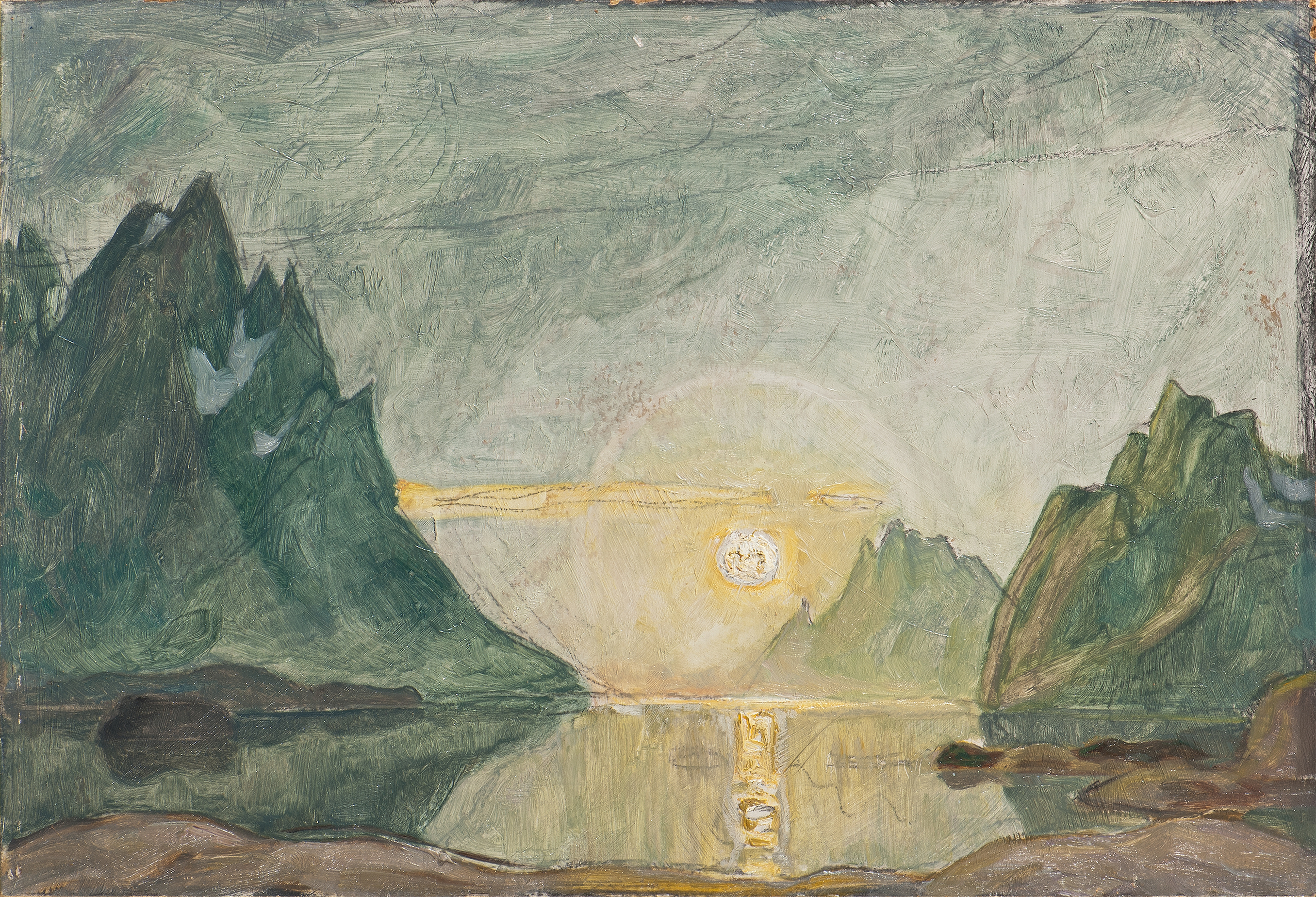
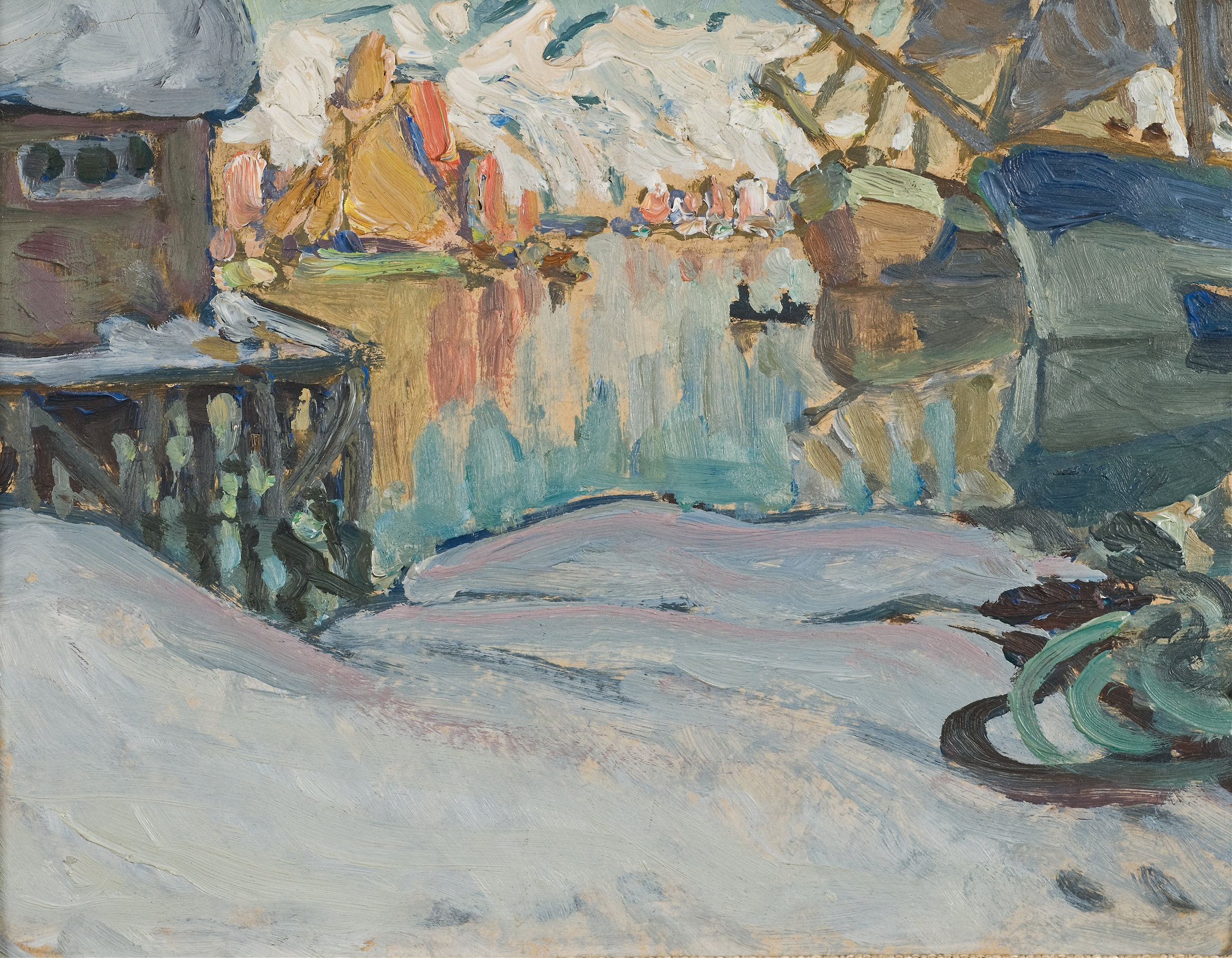
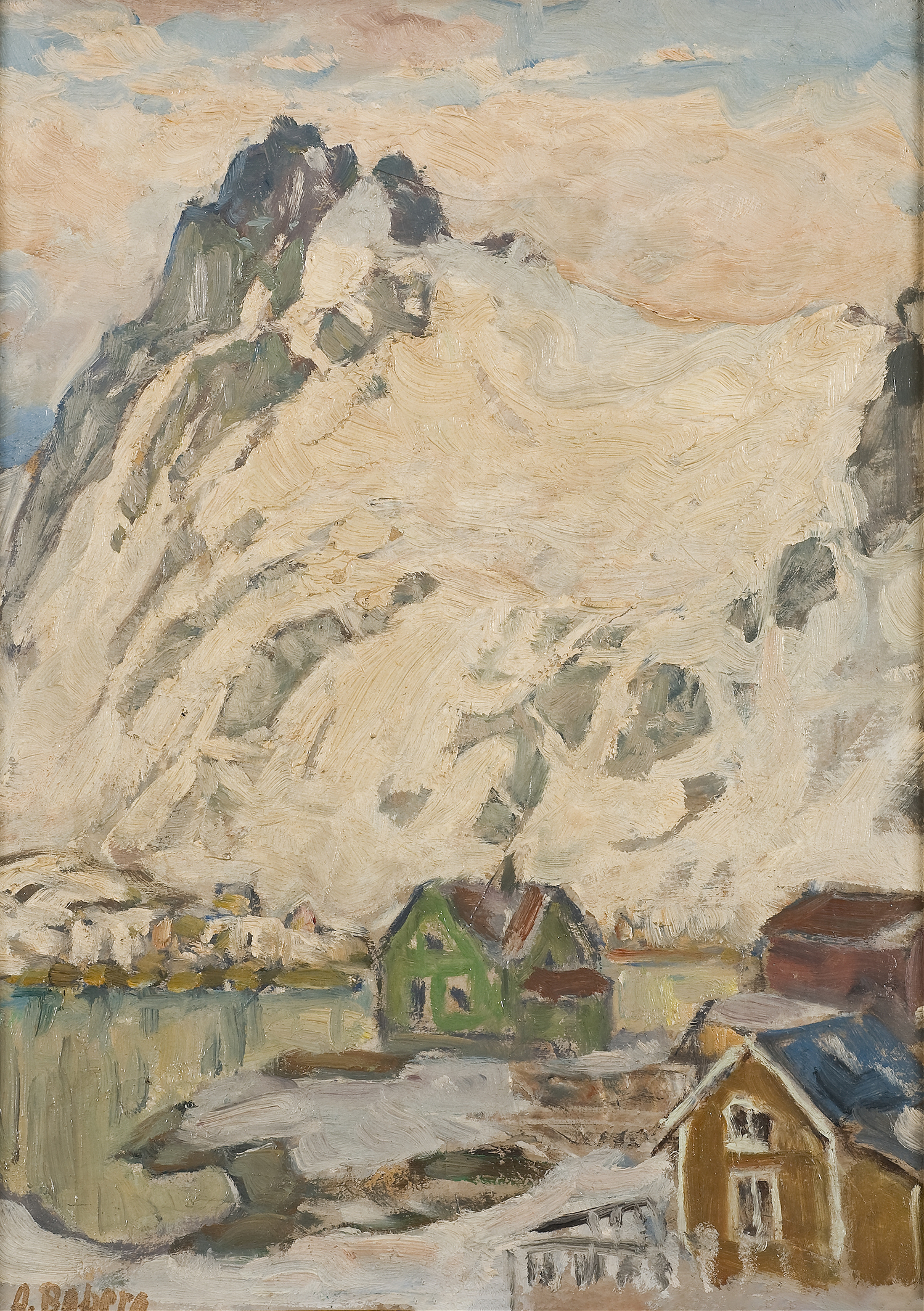
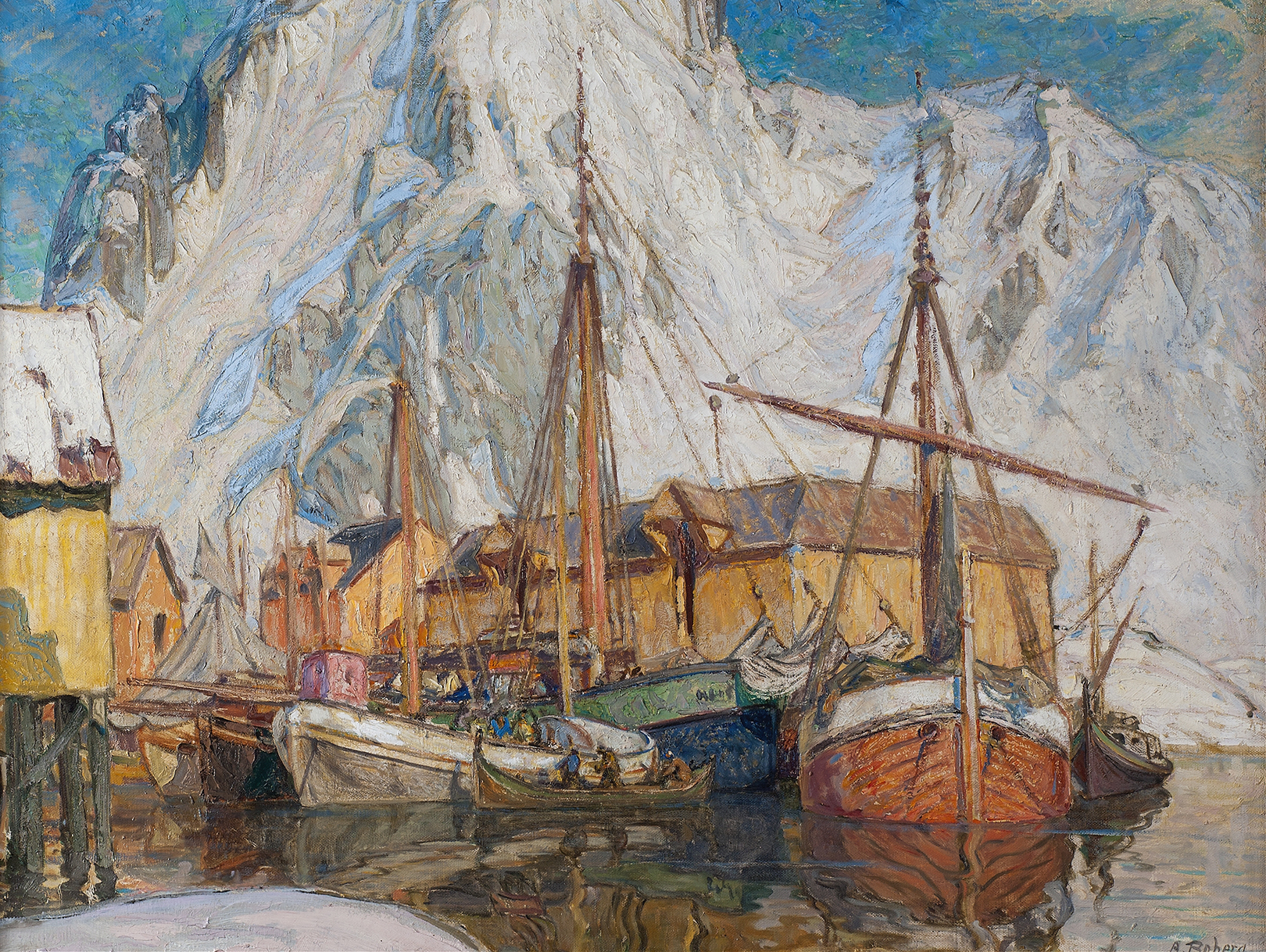
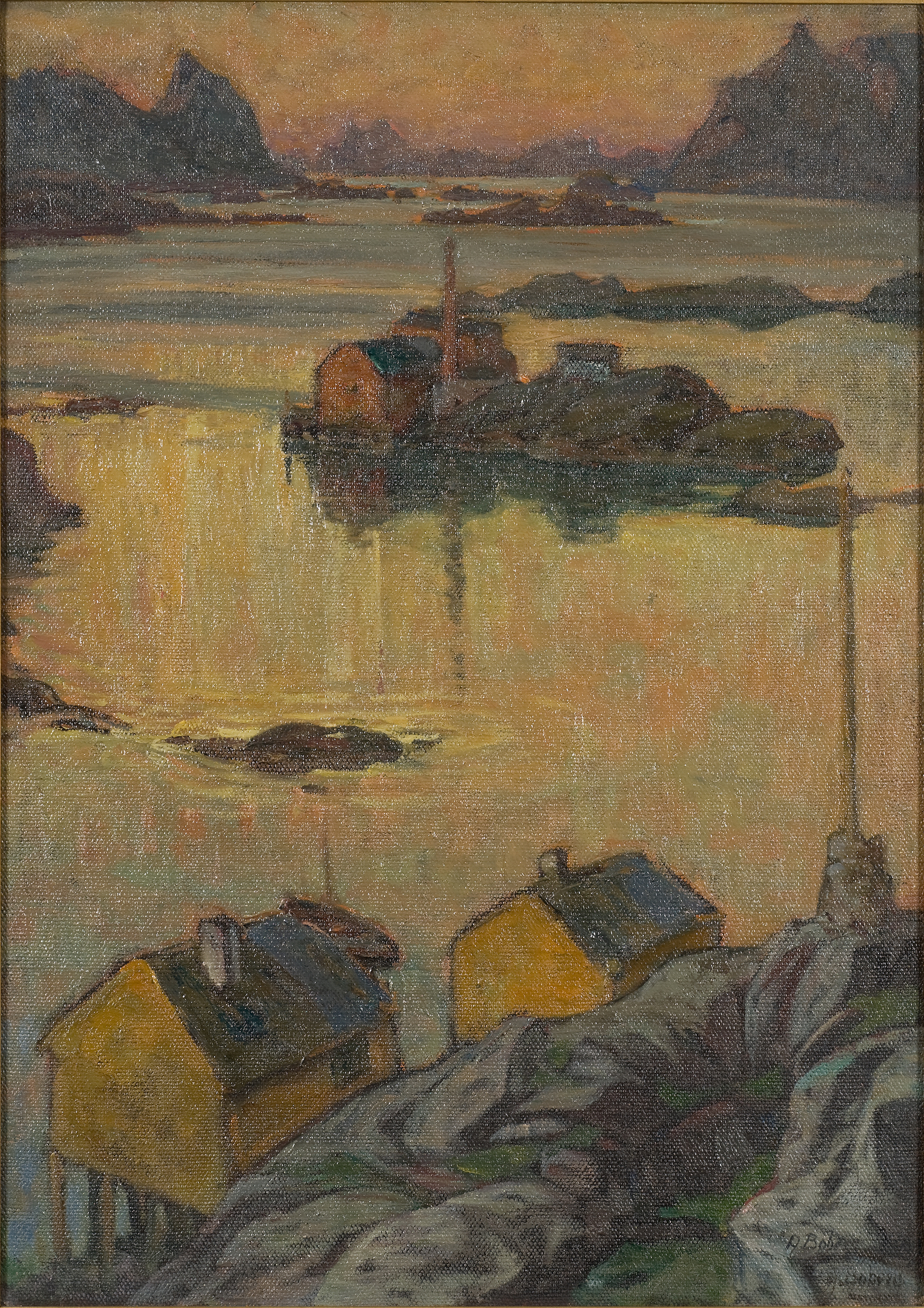
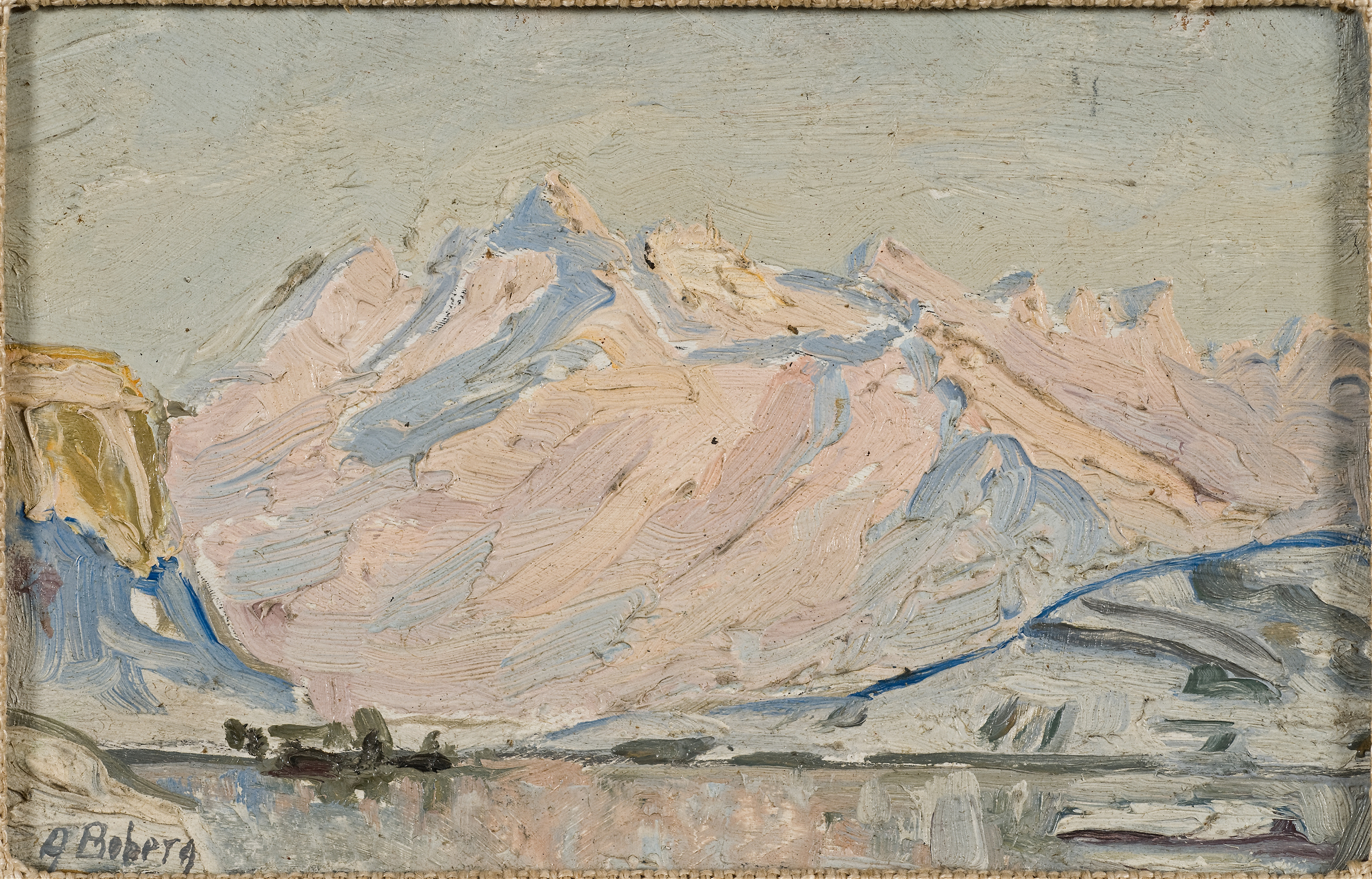
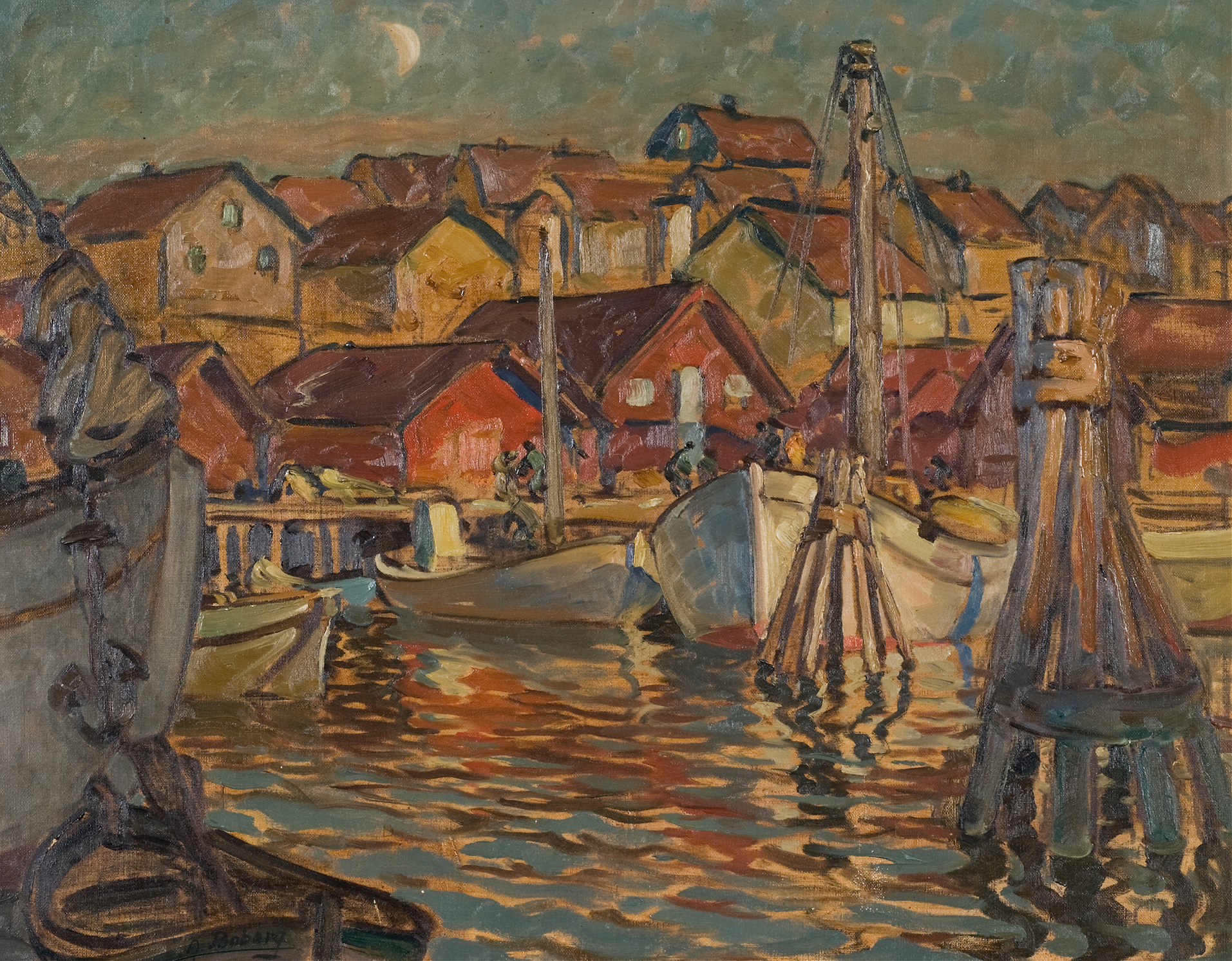
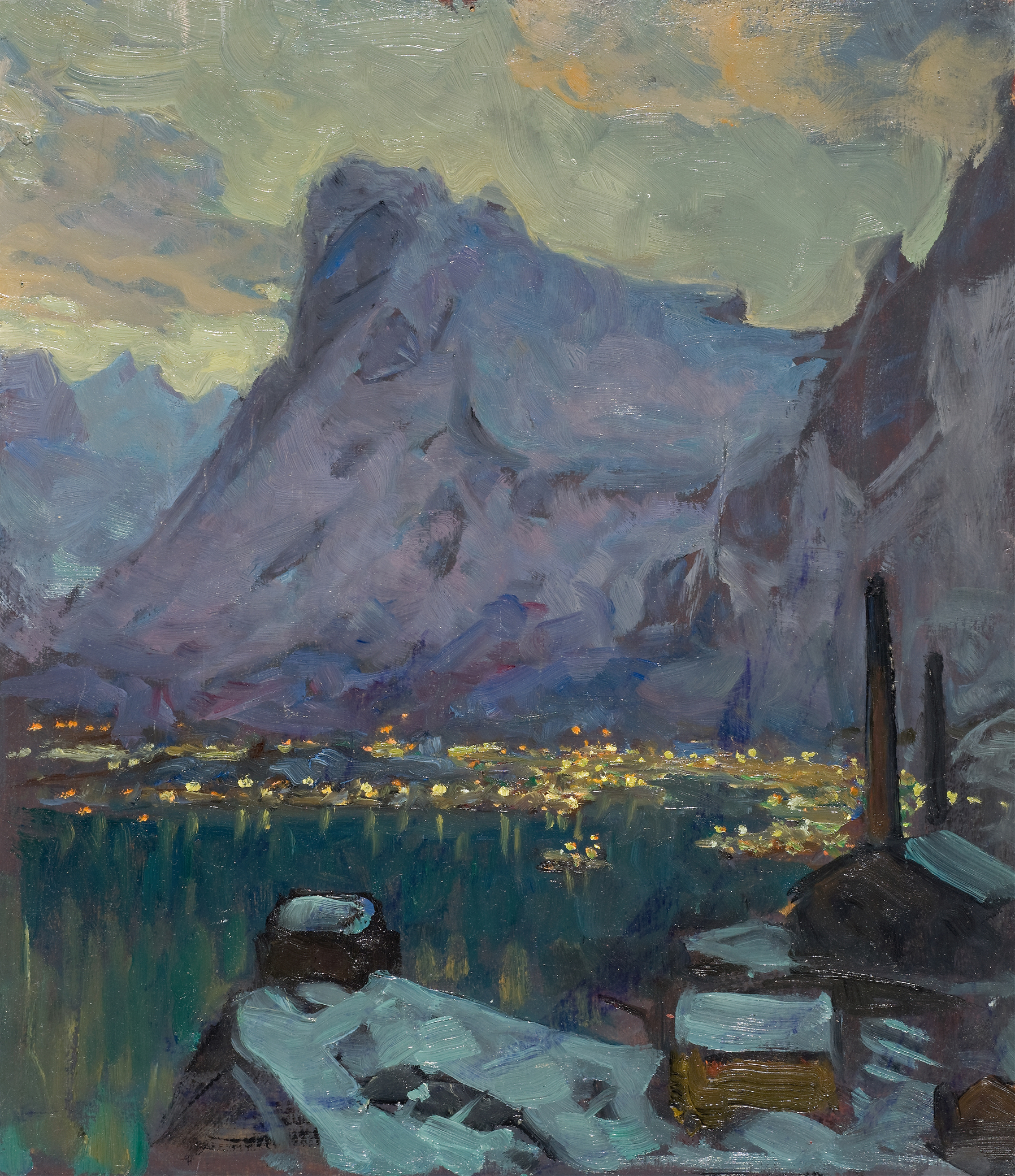
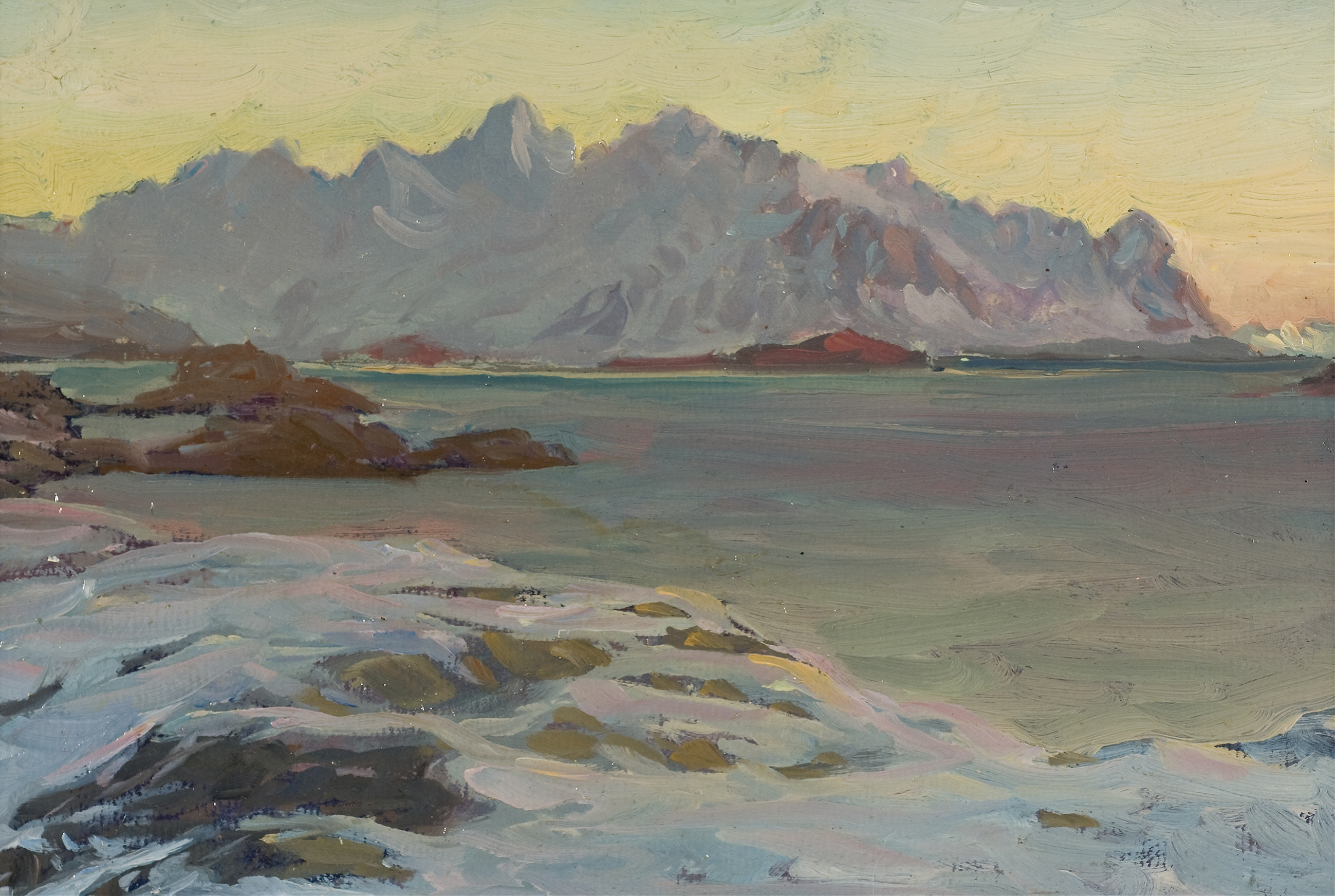
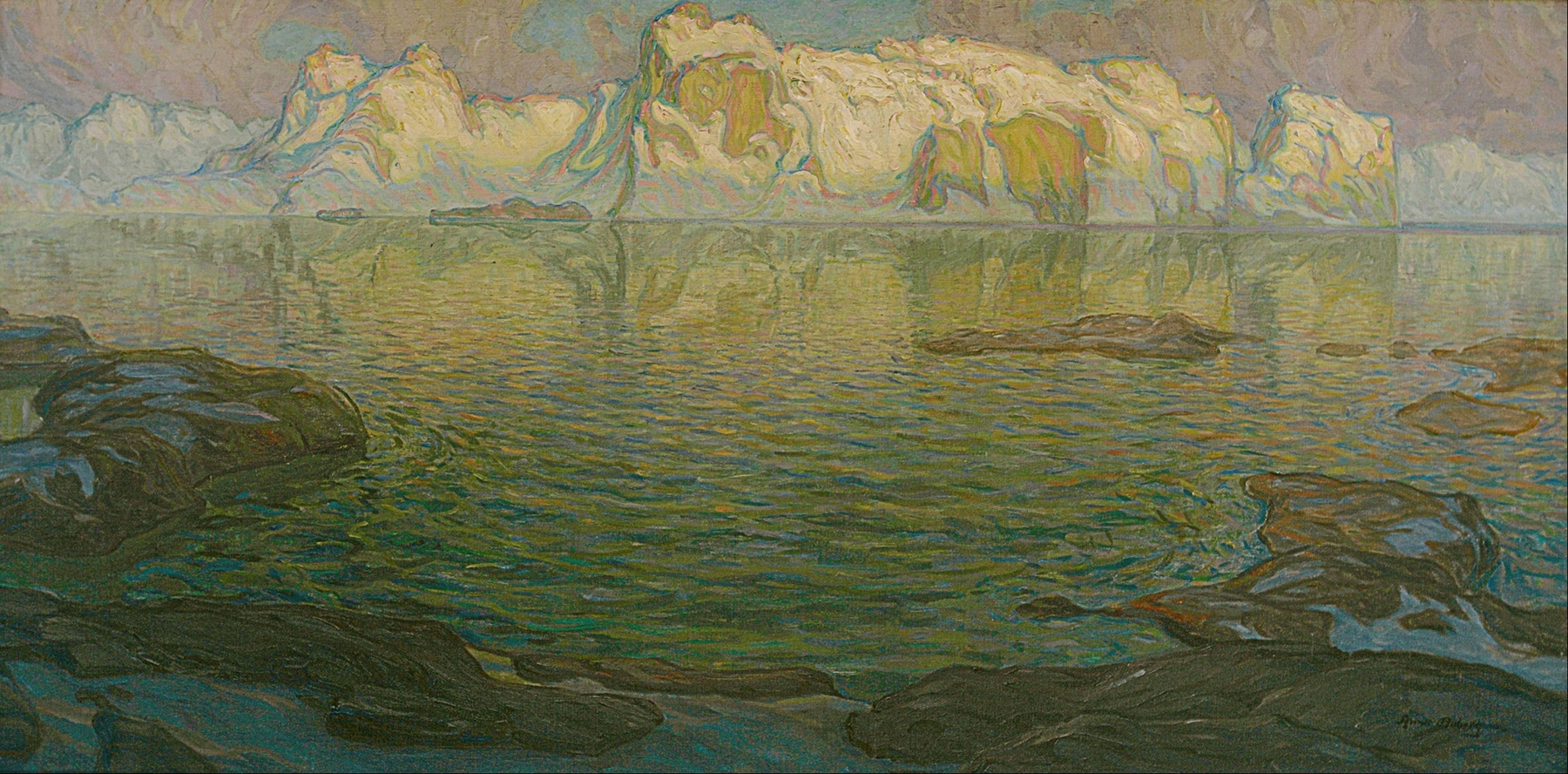
Summer, Store Molla. Study from Lofoten — History & Analysis
“Under the brush, chaos becomes grace.” In the fleeting moments before summer fades, the brush of the artist captures a world teetering between vibrant life and the dread of the inevitable change that autumn brings. Fear whispers in the colors, urging viewers to confront the essence of transience. Look to the left at the swirling blues and greens that dance in the water, evoking both the serenity of a warm day and the trepidation of an approaching storm. The bold strokes of the foreground, lush with foliage, draw the eye to where land meets sea—each brushstroke imbued with texture that suggests movement, as if the very essence of summer is alive.
Notice how the sunlight spills over the scene, illuminating the contrasts between shadow and brilliance, echoing the subtle tension that underlies this idyllic summer escape. Hidden within the lively facade is a deeper narrative of fear—of loss, of what lies beneath the surface. The juxtaposition of flourishing flora against the looming, darkening horizon hints at an unsettling duality; beauty is accompanied by the specter of decay. The interplay of light and shadow speaks to the fleeting nature of warmth and joy, reminding us that every bright moment is shadowed by the approaching chill of reality.
In the midst of an evolving art scene in the early 20th century, the artist found herself deeply influenced by the coastal landscapes of Norway while painting this piece. Anna Boberg, active in the late 1800s to early 1900s, was inspired by the harmonic relationship between nature and emotion, often reflecting the broader societal anxieties of her time, caught between the romantic ideal and the harshness of existence. Her dedication to capturing the beauty of the Lofoten Islands speaks to both the artist's personal journey and the collective fears of an unpredictable world.