The Bewitched Mill — History & Analysis
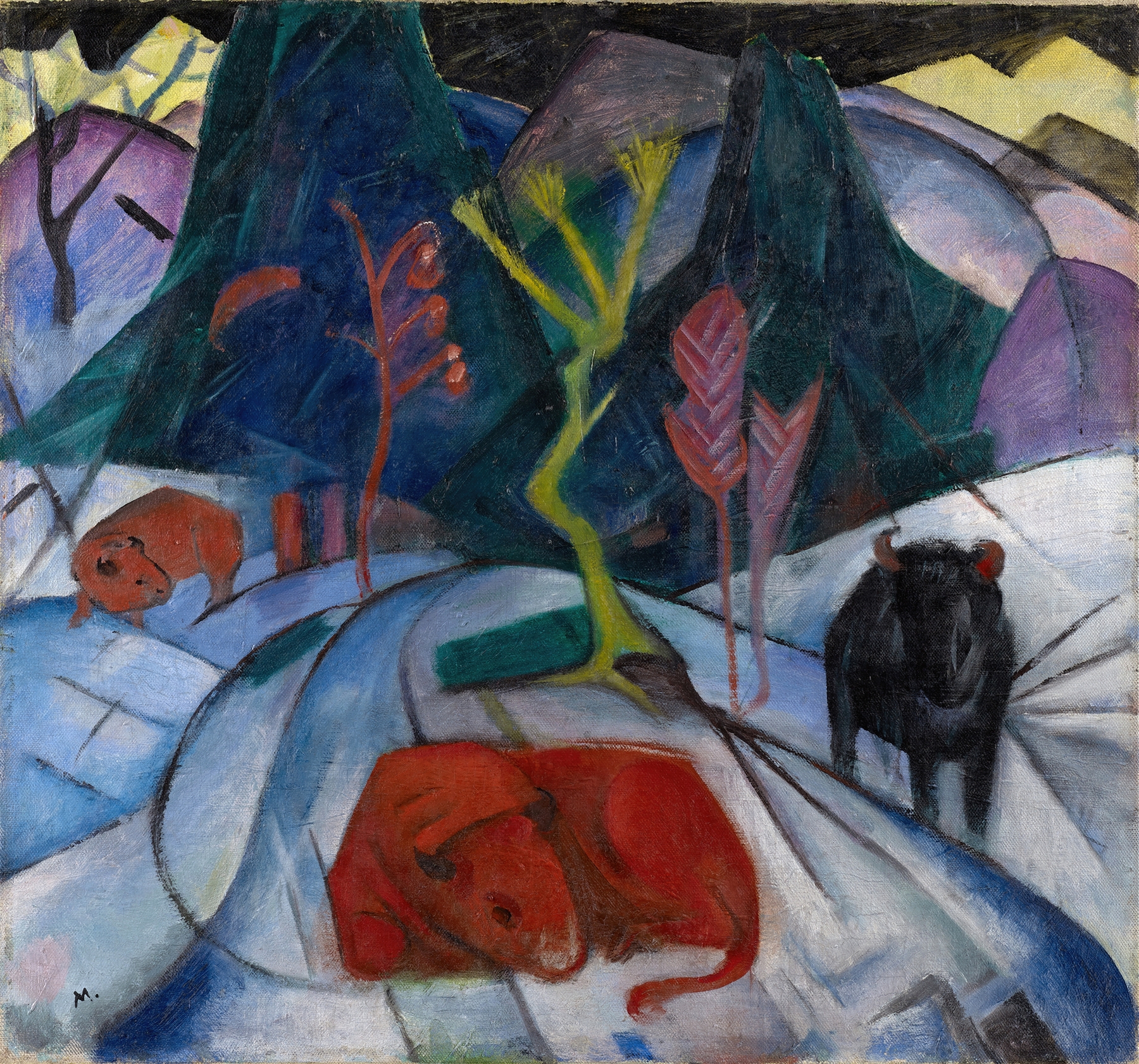
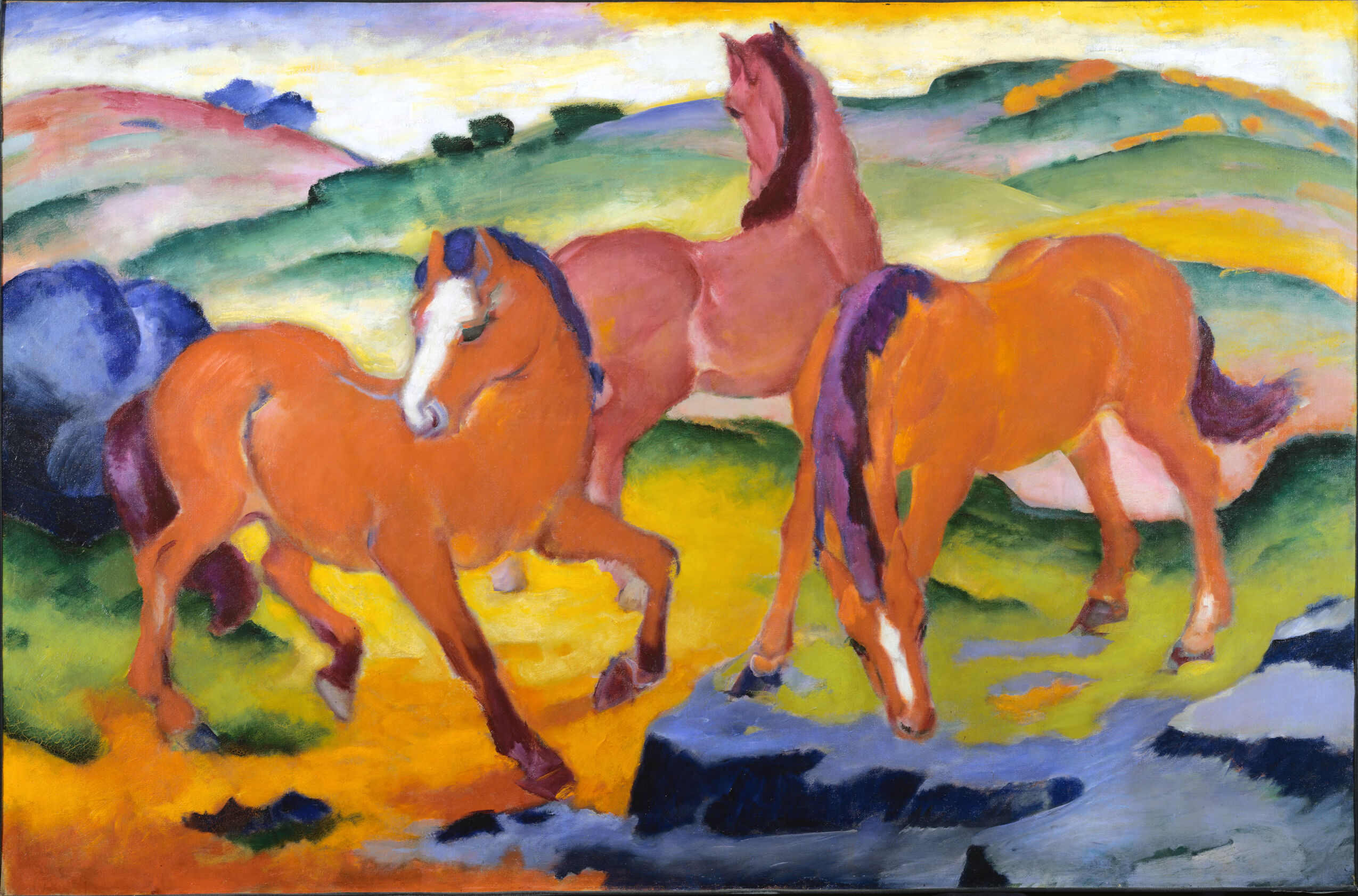
“Art reveals the soul when the world turns away.” In the swirling landscapes of existence, our mortality whispers through vibrant hues and dynamic forms. Look to the center where the mill stands, its structure almost consumed by the riot of colors around it. The bold strokes of yellow and blue echo a sense of movement, as if the very essence of nature pulsates with life. Notice the way Marc employs elongated shapes, creating a rhythmic flow that captures the tension of a world in flux.
The colors, vibrant and passionate, come alive, inviting you to explore not only the surface but the depths of feeling beneath. Yet, amidst this animated chaos, we sense an underlying fragility. The juxtaposition of the sturdy mill and the tumultuous backdrop evokes a contrast between permanence and impermanence, life and death. The slashes of red interspersed throughout hint at a darker narrative, a reminder of the vulnerability that lingers even in the most lively of scenes.
The animals depicted, with their stylized forms, serve as both guardians and specters of the landscape, further emphasizing the transient nature of existence. In 1913, while creating this piece, the artist was residing in Germany, navigating through an era filled with artistic experimentation and burgeoning expressionism. The world around him was edging toward a cataclysmic shift, yet the canvas remained a sanctuary where he could both confront and escape the impending chaos. Marc’s work during this time illustrated not only his deep connection with nature but also his profound contemplation of life and death, capturing the essence of humanity's struggle against oblivion.