Eichenstämme im Vorfrühling — History & Analysis
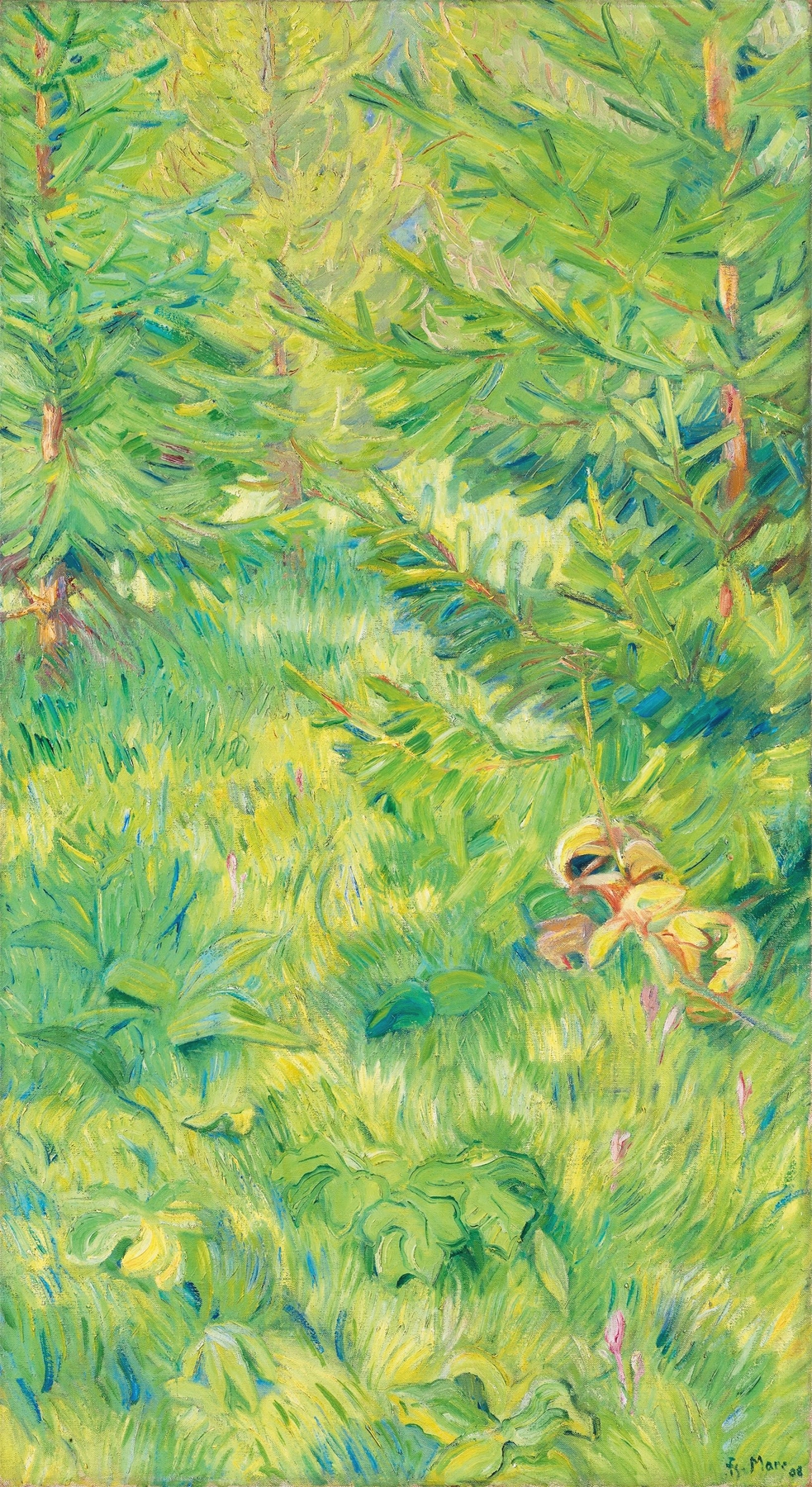
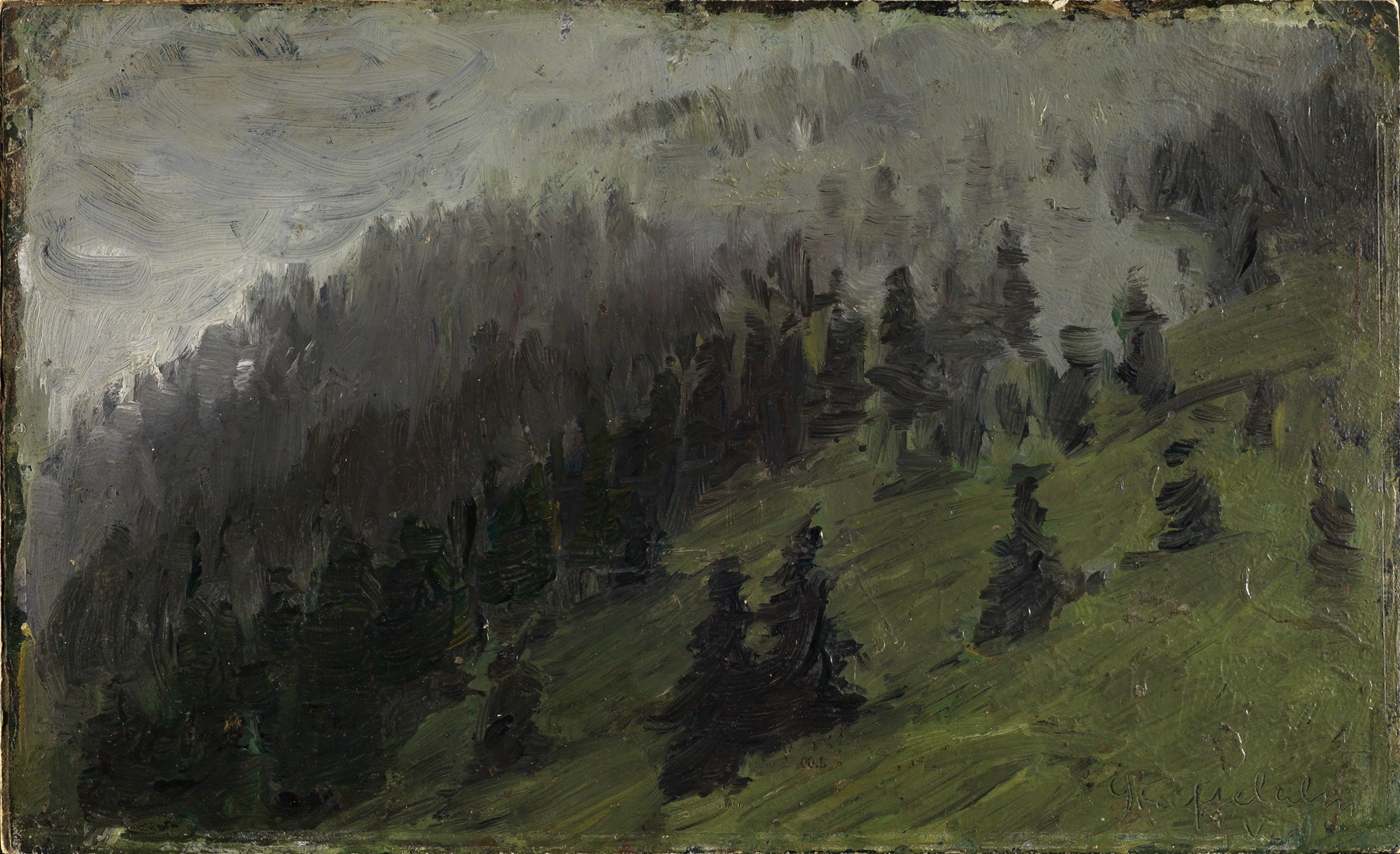
When did color learn to lie? In Eichenstämme im Vorfrühling, the vibrancy of hues beckons us into a world where nature speaks in whispers and reflections. This painting does not merely depict a landscape; it invites the viewer to question the essence of reality through the lens of emotion. Focus first on the striking interplay of ochre and emerald, which seems to breathe life into the bark of the oak trees. Observe how the rich, earthy tones contrast with the light, airy blue of the sky, creating a dialogue between the solid and the ethereal.
The brushstrokes, dynamic yet controlled, guide the eye across the canvas, emphasizing a sense of movement as spring edges closer to reclaim the landscape from winter’s grasp. Hidden within the canvas are layers of meaning, revealing a duality of existence. The dense textures of the tree trunks evoke a sense of stability, while the soft gradients of color suggest the ephemeral beauty of nature. This juxtaposition reflects the tension between permanence and transience, urging us to contemplate the fleeting moments of beauty that exist within the cycle of life.
As the viewer, we find ourselves caught between the tangible and the abstract, questioning our own perceptions of reality. Franz Marc painted this work in 1902 while living in Germany, at a time when he was exploring emotional responses to nature through color and form. The early 20th century was a period of artistic innovation and upheaval, characterized by movements such as Expressionism and Fauvism. Marc’s work, including this piece, was pivotal in shaping the foundations of modern art, as he sought to depict not just the external world but also the internal experience of viewing it.