The Dreamer (La Rêveuse) — History & Analysis
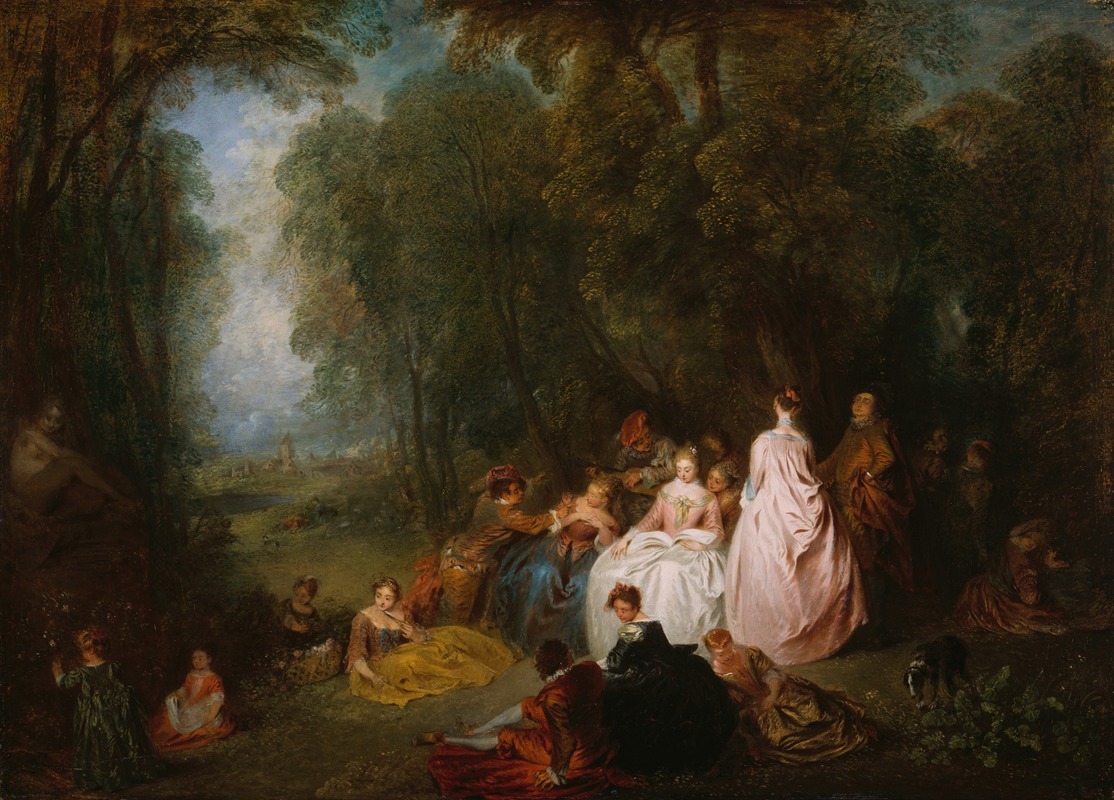
What if silence could speak through light? In Jean Antoine Watteau's The Dreamer, that unvoiced whisper enchants the canvas, revealing the delicate boundaries between reverie and reality. Look to the center of the painting, where a young woman reclines against a soft cushion, her gaze distant and contemplative. The warm, muted colors envelop her like a gentle embrace, while the dappled light streams through the foliage above, creating a serene interplay of shadow and brilliance. Notice how her delicate fingers lightly touch the fabric of her garment, a subtle gesture that speaks volumes about her introspection.
The composition draws the viewer’s eye to her expression, inviting you to share in her private daydream. Within the lush scenery lies a profound tension between freedom and confinement. The dreamer's posture suggests a moment of escape, yet her environment—lush yet enclosed—implies a paradox of longing and restraint. Each element, from the blooming flowers to the intricate drapery, plays a role in hinting at the broader themes of desire and unattainable aspirations.
The painting encapsulates a sense of awakening, where dreams flutter tantalizingly just beyond reach. Created between 1712 and 1714, this work emerges from Watteau’s prolific period in France, where he navigated the transitional waters of the Rococo style. During this time, he faced both personal and professional recalibrations, seeking to capture the essence of emotion and experience. His exploration of the dreamlike state, combined with the fashionable themes of the era, marked a significant moment in art history, one that resonated with the emerging interest in the inner life of individuals.