The East Indiaman William Pitt, in three positions off Dover — History & Analysis
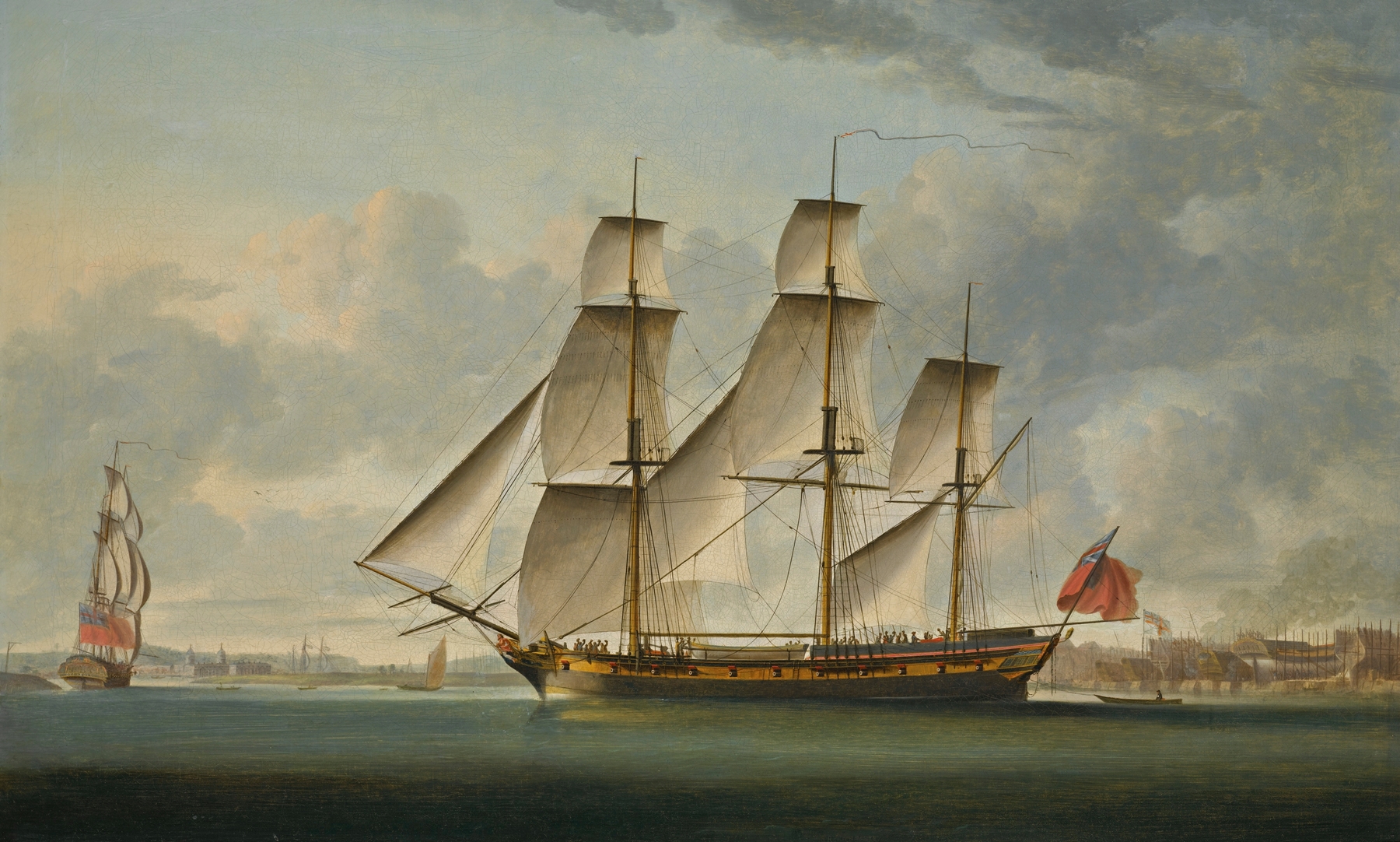
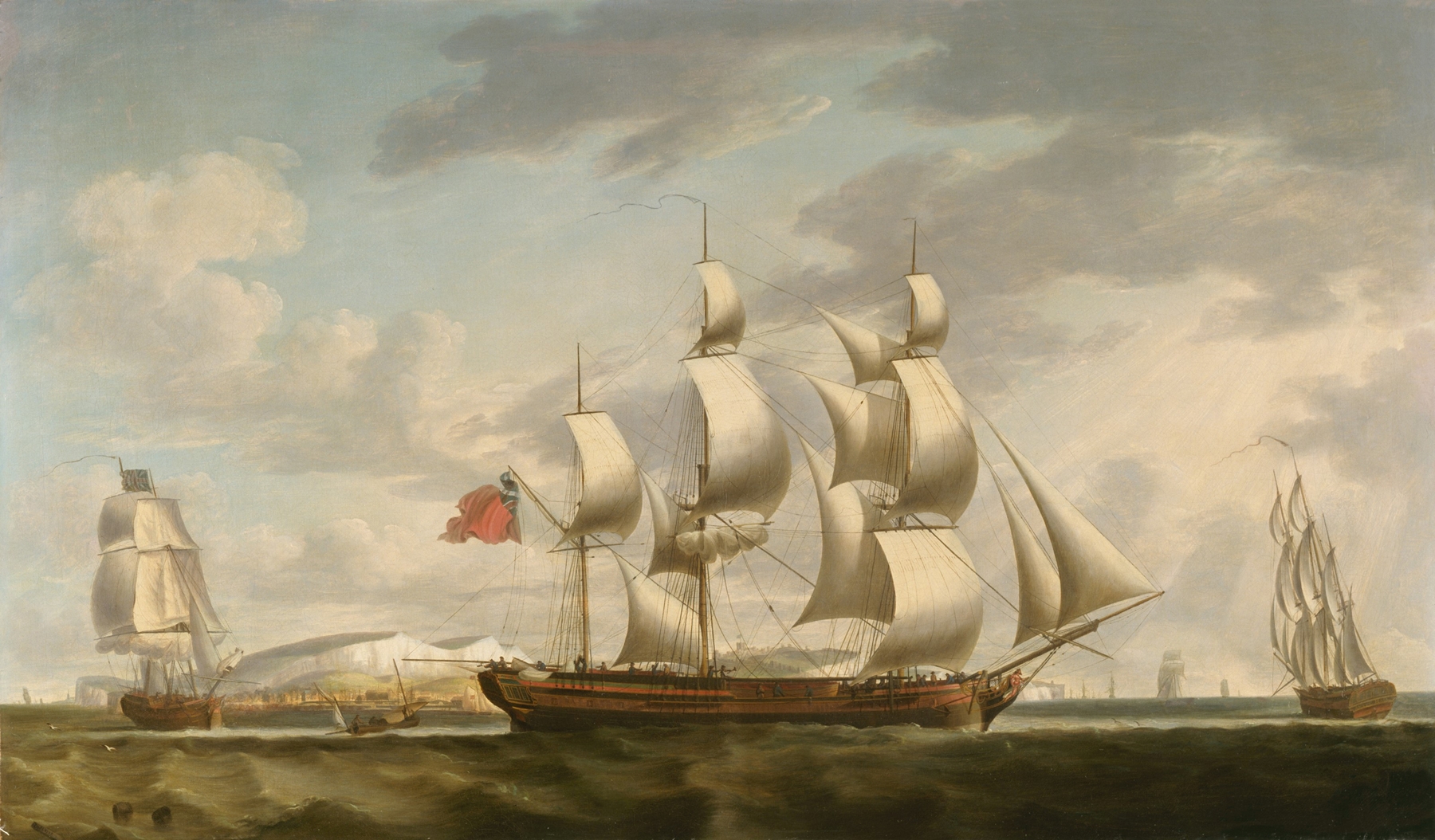
Could beauty survive in a century of chaos? In the delicate interplay of maritime life and land, Robert Dodd’s The East Indiaman William Pitt, in three positions off Dover captures the fleeting essence of memory amidst the relentless tides of history. Look to the left at the striking silhouette of the ship, its sails taut against the wind, each fold crafted with meticulous precision. The intricate details of the vessel stand in stark contrast to the soft, muted waves that cradle it, while the pale horizon suggests an unyielding distance.
Notice how the light dances upon the water's surface, creating a shimmering path that leads your gaze across the painting, connecting the three positions of the ship, echoing its journey and the passage of time. Dodd imbues the scene with a sense of nostalgia, evoking the significance of maritime trade in the late 18th century. The positions of the ship illustrate its movement, suggesting the idea of progress and exploration, while the calm blue sky looms over the action, hinting at the tension between human ambition and the vast, uncontrollable natural world. The juxtaposition of the ship's intricate details against the serene backdrop serves as a reminder of both human ingenuity and the fragility of existence, as each wave may carry memories of triumph and peril.
Created in 1787, during a time of burgeoning trade and conflict, the artist painted this work while residing in England, as the maritime world experienced both innovation and challenges. The East Indiaman was emblematic of the era's colonial enterprise, reflecting the complexities of commerce and empire. Dodd’s painting not only signifies a vessel but also encapsulates the spirit of exploration that defined an epoch.