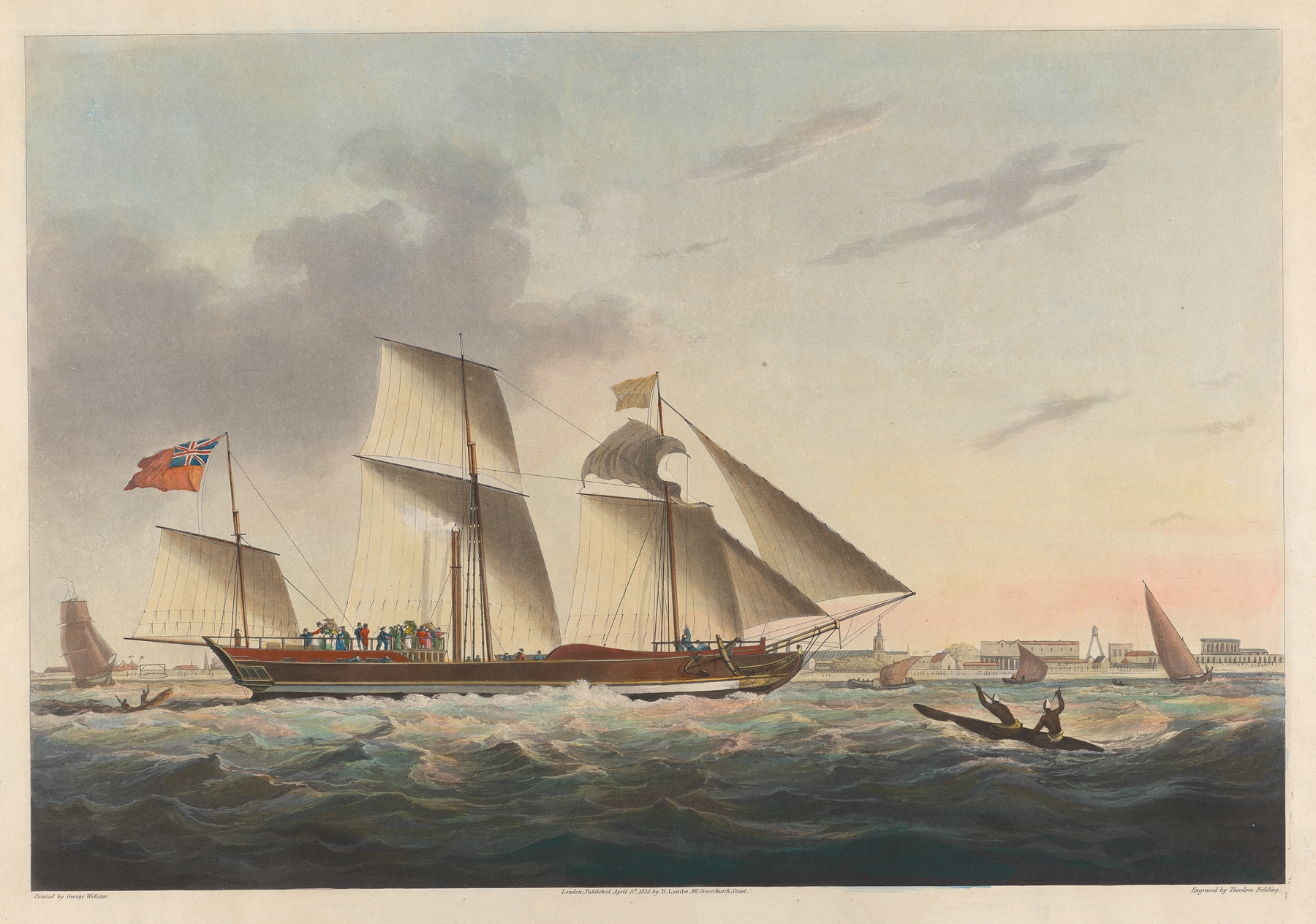
The Enterprize Steam Vessel, passing through Madras Roads — History & Analysis
Can paint confess what words never could? In George Webster's The Enterprize Steam Vessel, passing through Madras Roads, the canvas transforms into a vessel of legacy, capturing an ephemeral moment that speaks volumes. Look to the left at the majestic steam vessel, its billowing smoke mingling with the pallid sky. Notice how the finely detailed sails and the rippling water reflect the artist's meticulous attention to both grandeur and movement. The balance of warm and cool tones creates a sense of harmony, while the textured brushwork brings the scene to life.
Your gaze will naturally follow the diagonal lines of the horizon, leading you to the distant shore, where the outline of looming palm trees offers a serene contrast to the industrial marvel at the forefront. Yet, beneath the surface, the painting reveals deeper meanings. The interplay between the vessel and its surroundings symbolizes the tension between nature and human innovation, reflecting a period of rapid change during the early 19th century. The fading light hints at the fleeting nature of progress, a reminder of the impermanence of both industry and the land it overtakes.
The calm waters may suggest tranquility, but they also embody the shifting tides of history, evoking a sense of nostalgia for a world on the brink of transformation. In 1825, George Webster painted this work in Madras, India, during a time when British colonial expansion was reaching its zenith. This era was marked by significant technological advancements and an increasing interest in maritime exploration. Webster's detailed rendering of the steam vessel was a response to both the engineering innovations of the time and the broader implications of empire, capturing a pivotal moment in cultural and industrial history.