The Oude Kerk, Delft — History & Analysis
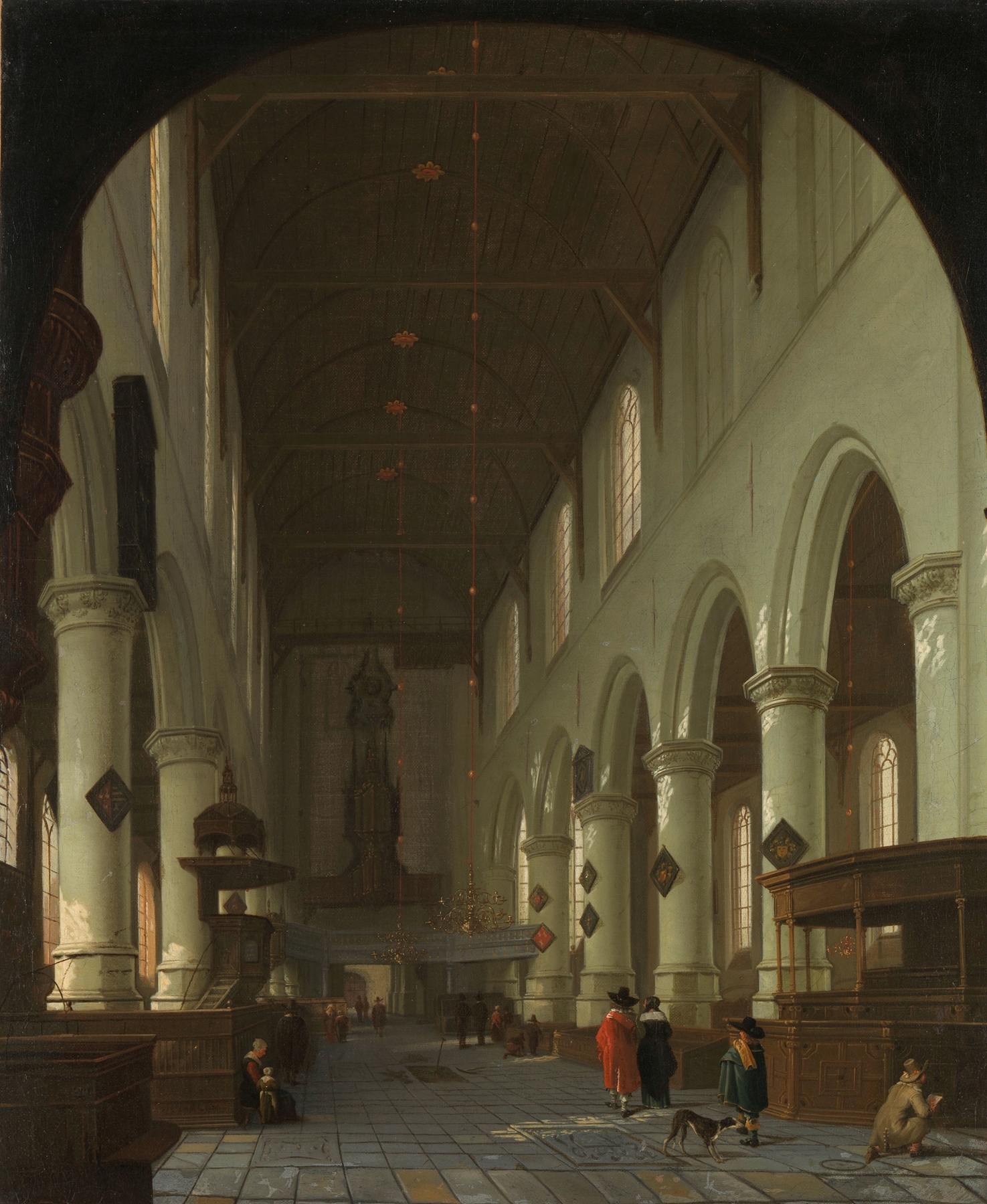
Did the painter know this moment would outlive them? In capturing the tranquility of the Oude Kerk, a profound emptiness resonates, inviting the viewer to reflect on the passage of time and the stillness that encircles both faith and absence. Look to the left at the towering spire, its pointed architecture reaching skyward, a silent witness to centuries of prayer and reflection. Notice how the gentle light cascades through the stained glass, illuminating patches of worn stone and casting soft shadows across the nave.
The composition, with its meticulous attention to detail and a harmonious palette of muted earth tones, invites your gaze to wander from the ethereal glow of the windows to the serene emptiness of the pews beneath, evoking a poignant sense of solitude and contemplation. Within this work lies a tension between the sacred and the mundane. The empty church speaks volumes—each vacant seat tells a story of those who once filled it, creating an invisible dialogue between past congregants and present observers. The interplay between light and shadow emphasizes this contrast, suggesting a fleeting moment where the sacred intersects with the ordinary, hinting at the transient nature of human experience.
Cornelis de Man painted The Oude Kerk in Delft around 1665, during a period when the Dutch Golden Age was flourishing. As an artist, he navigated the changing tides of realism and spirituality, capturing the essence of architectural beauty while reflecting the societal shift towards personal faith and introspection. This work not only underscores his artistic prowess but also encapsulates a moment in history where art served as a vessel for deeper emotional and philosophical exploration.