The Whale-oil Refinery near the Village of Smerenburg — History & Analysis
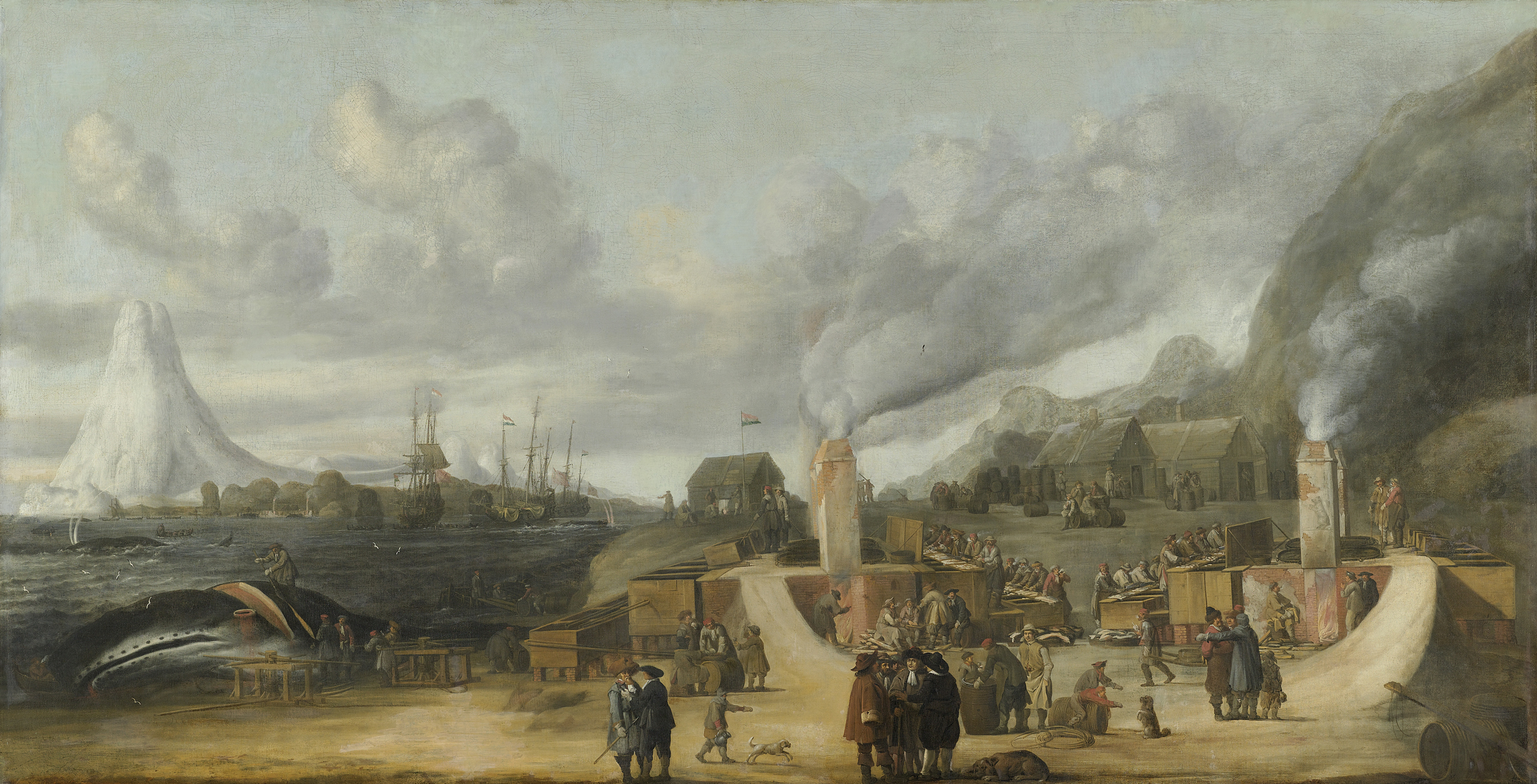
“Every brushstroke is a heartbeat remembered.” In the quiet expanse of Cornelis de Man's work, solitude lingers, echoing the desolation of industry in a time that calls for connection. Focus first on the vast expanse of the water, where muted blues and grays meld seamlessly, drawing your gaze toward the horizon. As you move left, the imposing structure of the whale-oil refinery rises, its stark lines contrasting with the soft, rolling hills of the village nearby. Notice the delicate interplay of light and shadow, which reveals a world poised between the rawness of nature and the encroachment of human enterprise.
Here lies an emotional tension that speaks volumes. The distant figures, small and almost insignificant against the backdrop of the refinery, evoke a sense of isolation amidst industriousness. The billowing smoke seems to whisper of forgotten dreams and lost connections, while the tranquil water reflects a profound stillness, hinting at the loneliness that accompanies progress. It’s a poignant reminder of how ambition can often overshadow the human experience.
Painted in 1639, the artist was navigating a period marked by rapid maritime expansion and exploitation, capturing a moment in a world where the demand for whale oil surged. De Man, working in the Netherlands, found himself influenced by the rise of Dutch realism, using his art to depict not just scenes, but the underlying stories of societal shifts. In this work, he meticulously immortalized the delicate balance between industry and the serene landscape, revealing the unseen loneliness embedded within human endeavor.