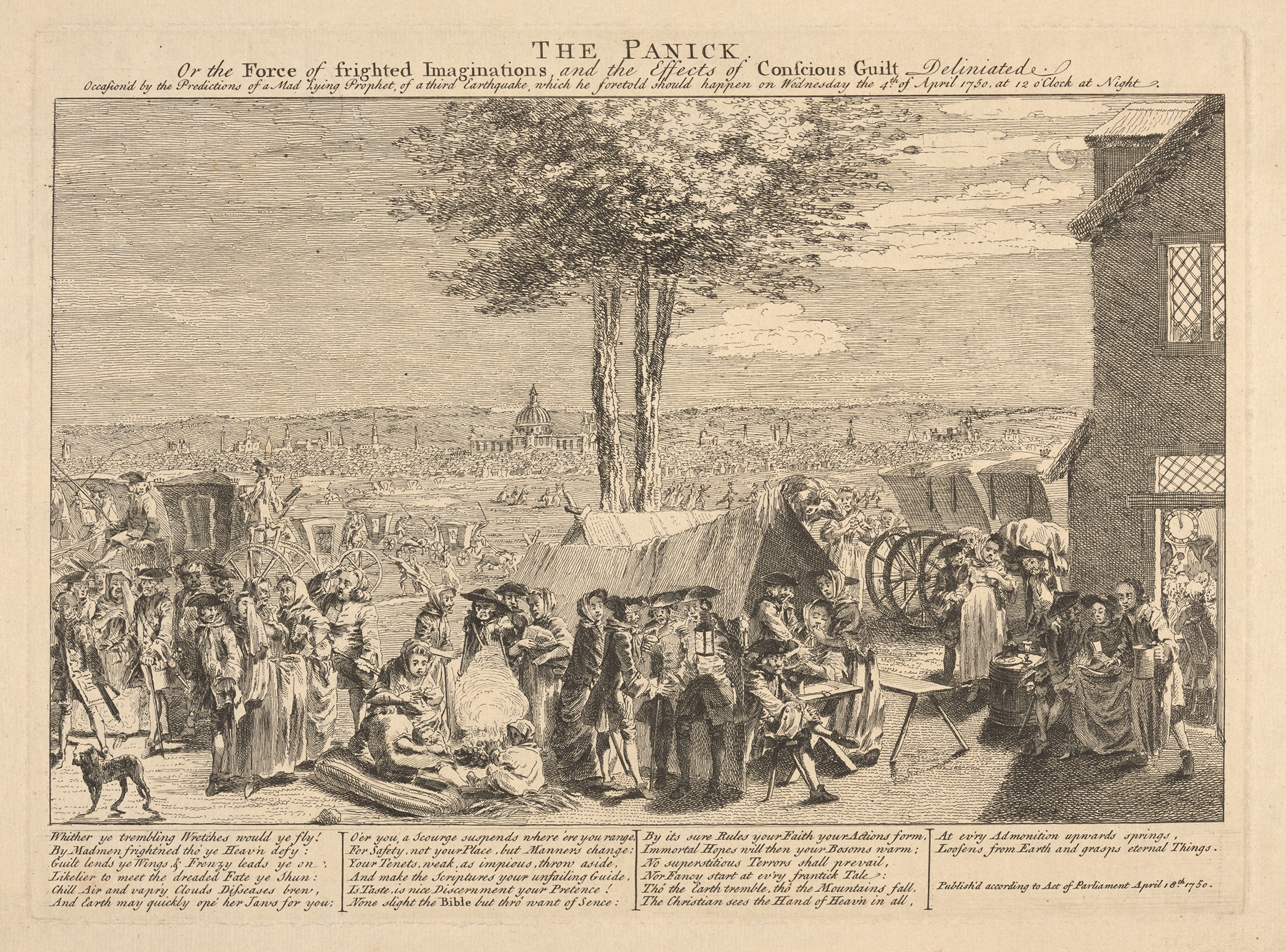
The panick, or the force of frighted imaginations, and the effects of conscious guilt delineated. — History & Analysis
Can beauty exist without sorrow? In the heart of the 18th century, this question echoed within the minds of artists, beckoning them to explore the tangled interplay between joy and anguish. The unknown artist who crafted this haunting piece delves into the shadows of human consciousness, illuminating the complexities of guilt and fear that haunt the human experience. Look closely at the figures, their faces contorted in expressions that oscillate between terror and despair. The central character, a woman with unkempt hair, is flanked by ghostly apparitions swirling around her, their translucent forms rendered in a ghostly palette of pale blues and grays.
Notice how the brushwork is both frenetic and delicate, mirroring the chaos of her mind. The chiaroscuro effect enhances the drama, casting dark shadows that swallow parts of the scene while illuminating the stark terror in her eyes. Beneath the surface, this artwork unravels the tension between the visible and the unseen—the tangible fear of the figures juxtaposed against the invisible force of collective guilt. The swirling specters may represent the haunting memories that ensnare the mind, while the woman's posture suggests a desperate fight for freedom from her own conscience.
The emotional weight of this piece lies in its exploration of how inner turmoil manifests outwardly, creating a resonating legacy that questions the very nature of beauty and sorrow. Created in 1750, this work emerges from a time when the Enlightenment was reshaping ideas about human emotion and morality. Artists began to address the depths of the human psyche, grappling with themes that transcended mere aesthetics. The creator, though lost to history, contributes to a rich dialogue of the era, capturing the essence of fear and guilt that continues to resonate in contemporary art.