The Return from the Flight into Egypt — History & Analysis
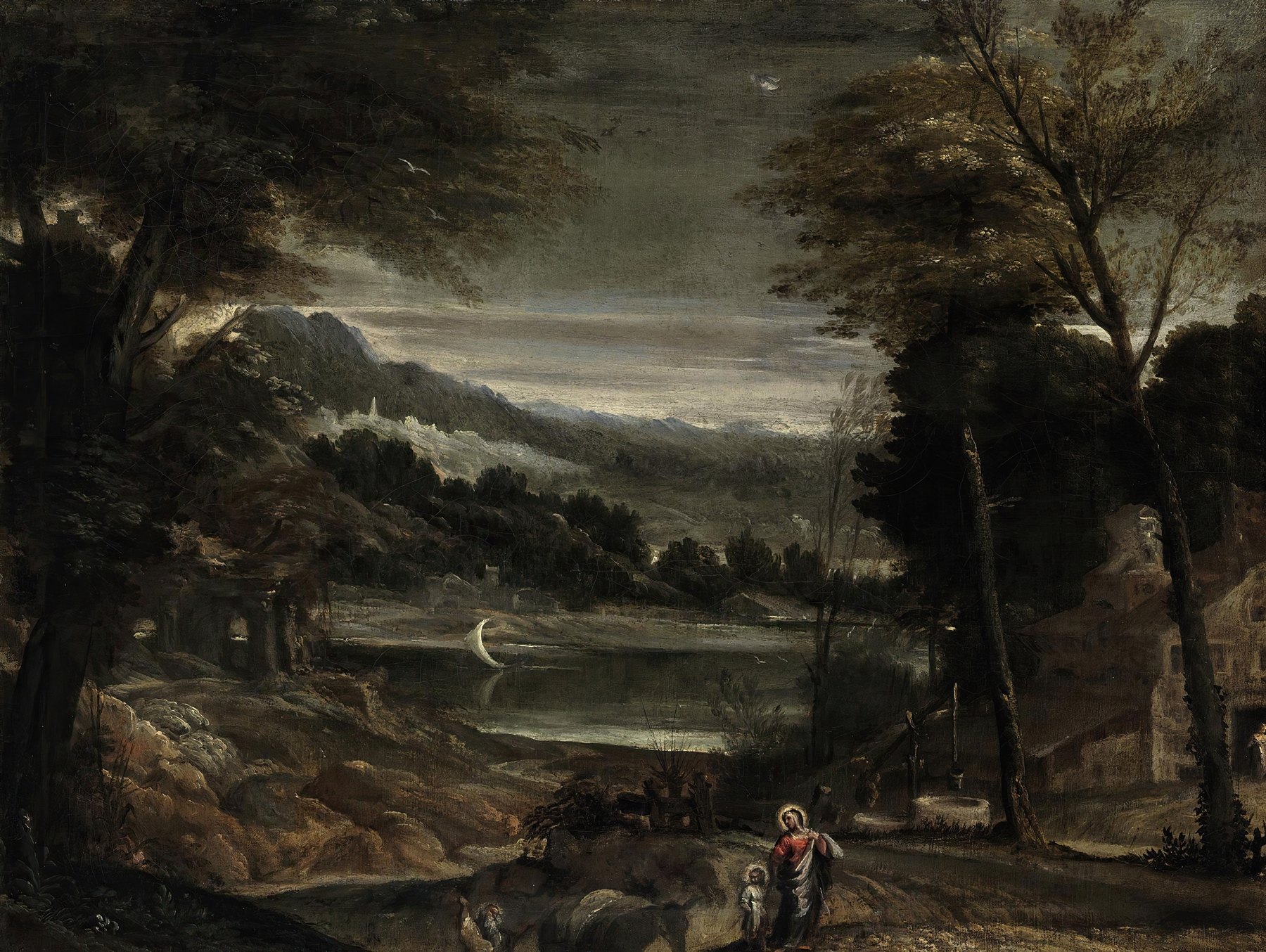
Could beauty survive in a century of chaos? In a world where grief intertwines with resilience, the essence of loss can transform into a poignant testament of faith and hope. Focus first on the gentle embrace of light falling upon the figures in the foreground. The Holy Family stands at the heart of the composition, illuminated with a soft glow that contrasts against the muted earth tones of their surroundings. Notice the delicate interplay of shadow and light upon their faces, which reveals an intimate moment of solace amid their journey.
The swirling drapery of their garments hints at movement, suggesting both the weight of their sorrow and the promise of new beginnings. The emotional tension nestled within this piece lies in the duality of the figures’ expressions. On one hand, there is a profound sense of weariness etched into Mary’s face, a haunting reflection of the burdens they carry. Yet, there exists an unyielding bond between the characters—each supporting the other through their shared ordeal.
The distant landscape, characterized by a fading horizon, further amplifies the sense of longing and the bittersweet nature of their return, where hope stirs even in the depths of grief. Carracci created this work during the late 16th or early 17th century, a time marked by significant upheaval in Europe. Emerging amidst the transition from Mannerism to Baroque, he was dedicated to reinvigorating classical themes and naturalism in art. While navigating his own artistic identity, he sought to capture the emotional depth of biblical narratives, making them relatable to a contemporary audience grappling with their own uncertainties.