The Schoolmaster — History & Analysis
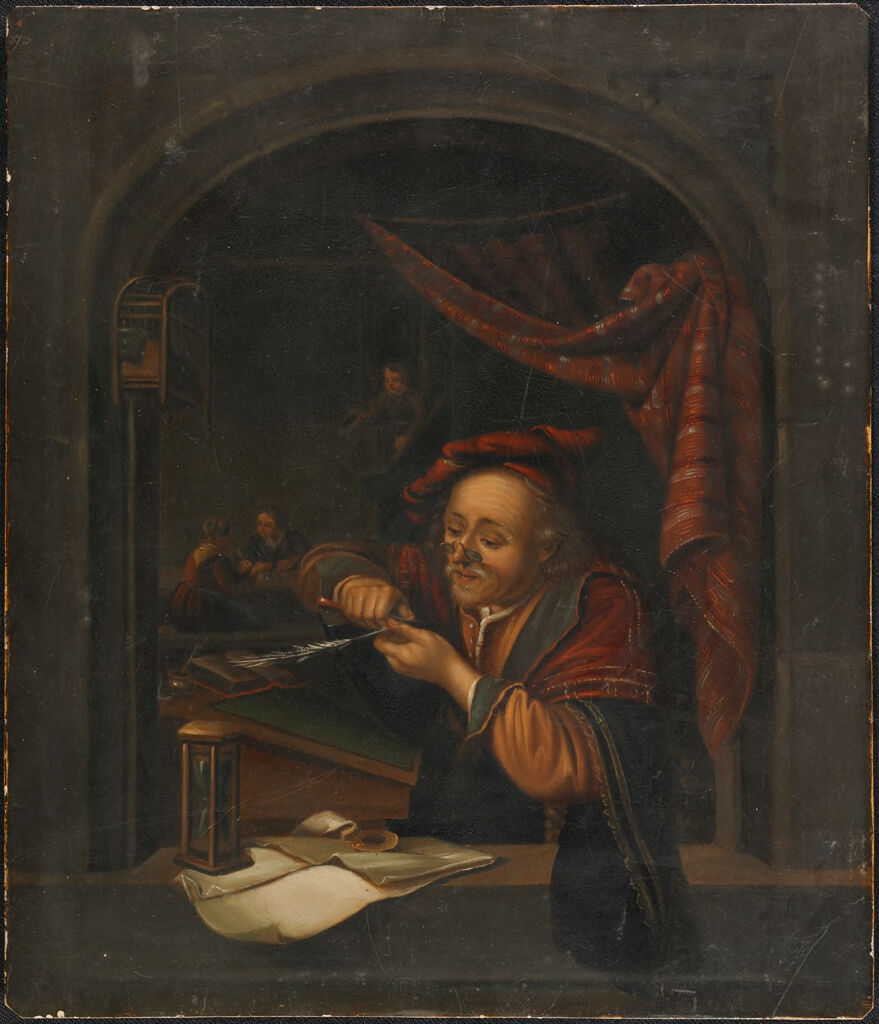
In a quiet, sun-drenched room, a schoolmaster stands before a wooden desk, his face etched with concentration. A small boy, pencil in hand, gazes up with a mixture of awe and trepidation, the weight of knowledge hanging thick in the air. Sunlight streams through the window, casting long shadows that seem to hold the silent promise of wisdom and the burden of expectation. Look to the left at the intricate details of the schoolmaster's garments, each fold and texture meticulously rendered to reflect both his status and the time period. Notice how the warm light falls upon the boy’s eager face, illuminating his youthful innocence, while the rich hues of the wooden furniture create a sense of stability and tradition.
The composition draws your eye naturally from the master to the pupil, emphasizing their roles in this delicate dance of education. The painting speaks volumes beyond its serene surface. The tension between the figures encapsulates the struggle of mentorship—the schoolmaster's authority juxtaposed with the boy’s hopeful yearning. Silence reigns, yet it vibrates with unspoken words, the potential for failure and success swirling in the air.
Each element, from the open book on the desk to the carefully arranged objects around them, symbolizes the weight of knowledge being passed down through generations. Gerhard Dou created The Schoolmaster in the 17th century while working in Leiden, a city rich in artistic innovation. This period marked the rise of Dutch Realism, where artists strived to capture everyday moments with unparalleled precision and emotional depth. Dou was at the forefront of this movement, reflecting his personal experiences as both a master and a student in a rapidly changing world, where education began to be seen as the cornerstone of society.