The Virgin and Child — History & Analysis
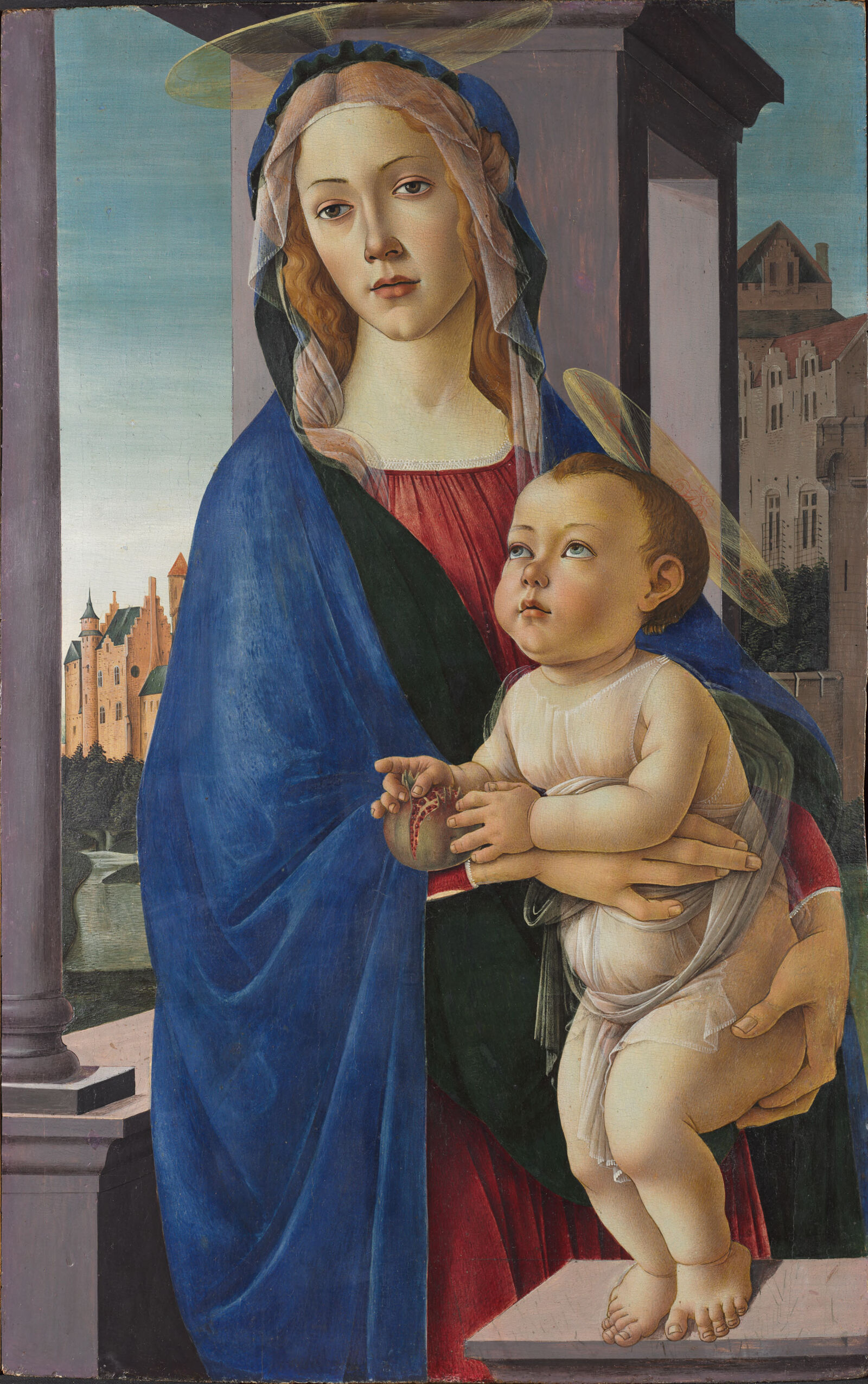
What if silence could speak through light? In The Virgin and Child, a gentle illumination bathes the figures in a serene embrace, whispering the promise of hope amidst the stillness. Look to the center of the composition where the Virgin Mary cradles the infant Jesus, her tender gaze mirroring his innocent wonder. Notice how the light falls upon their faces, casting soft shadows that enhance the intimate connection between mother and child.
The rich, deep hues of blue and red in Mary's robes evoke both purity and passion, while the delicate, golden halo encircling her head signifies divinity, drawing the eye immediately to this sacred bond. Delve deeper into the intricate details: the lilies in Mary's hand symbolize purity, a subtle reminder of her role as the Mother of Christ. The gentle contours of their faces, the way Mary's hand delicately supports her child's head, all convey an emotional tension that speaks to the vulnerability and strength of motherhood. This harmonious union suggests a sacred promise, invoking feelings of protection and nurturing that transcend time and circumstance.
Created around 1490, this masterpiece emerged during a period of profound artistic exploration. Botticelli, influenced by the ideas of humanism and the revival of classical themes, painted this work in Florence when the city was a hub of creativity and innovation. It reflects both the spiritual fervor and artistic ambition of the Renaissance, capturing a moment of divine connection in the midst of a world striving for enlightenment.