
Mystic Crucifixion — History & Facts
In a dim chamber, shadows flicker across the walls as twilight descends, wrapping the scene in a cloak of reverential silence. At the center stands a crucifix, its figure both haunting and serene, surrounded by a gathering of figures, their expressions a blend of sorrow and awe. Light spills softly from an unseen source, casting a warm glow that dances upon the rich colors of their robes, illuminating the deep emotional currents of the moment. Look to the foreground, where the vivid reds and greens of the figures' garments draw your eye, forming a striking contrast against the muted browns and blues of the background.
Notice how Botticelli’s masterful use of color creates a palpable tension — the vibrancy of life tempered by the somberness of the crucifixion. As your gaze wanders upward, the intricate detailing of the drapery and the expressions etched on each face tell a story of communal grief, inviting you to linger on their sorrowful gazes. Hidden within the layers of this work are the tensions between life and death, faith and despair. The figures’ body language, reaching out yet rooted in their place, encapsulates a struggle with the divine; the soft interplay of light and shadow enhances the emotional weight.
The central figure on the cross, though painted with agony, seems to emanate a tranquil acceptance, suggesting themes of sacrifice that resonate deeply through the ages and evoke a profound sense of contemplation. Created around 1500, during a time of great change and reflection in Florence, this piece was born from Botticelli’s complex relationship with spirituality and the evolving art scene. The artist, having witnessed both artistic triumphs and personal challenges, infused his work with a sense of introspection that mirrored the societal shifts of the Renaissance. In this pivotal moment of his career, as traditional themes collided with new perspectives, Mystic Crucifixion stands as a powerful testament to both his artistry and the emotional depth of his time.
More Artworks by Sandro Botticelli

Virgin and Child
Sandro Botticelli

Adoration of the Magi
Sandro Botticelli

Madonna and Child and the Young St John the Baptist
Sandro Botticelli

Madonna and Child with six angels and Saint John the Baptist as Child
Sandro Botticelli

Virgin and Child with the Young Saint John the Baptist
Sandro Botticelli
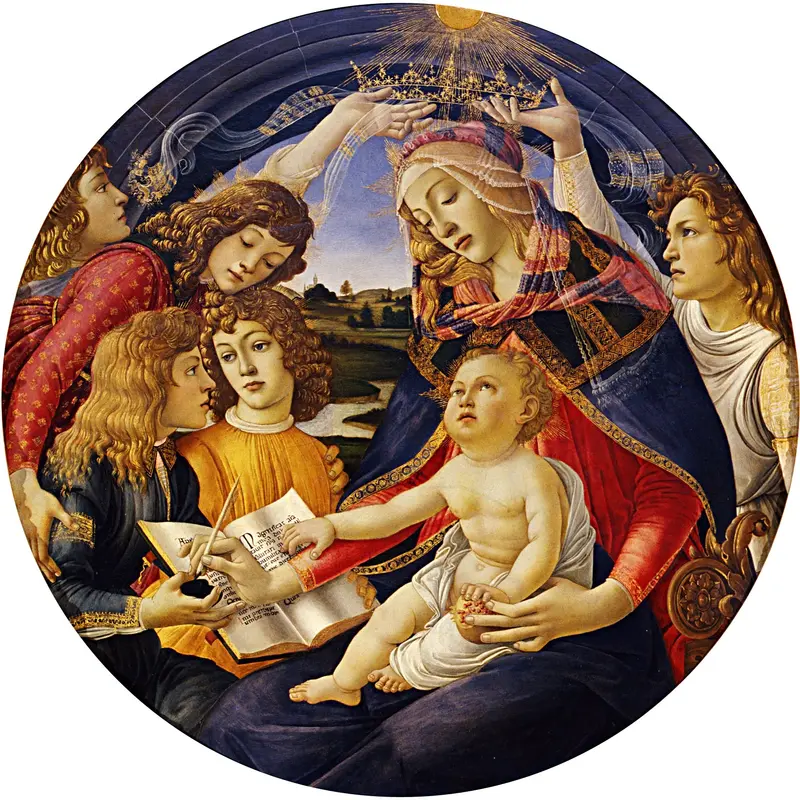
Madonna of the Magnificat
Sandro Botticelli
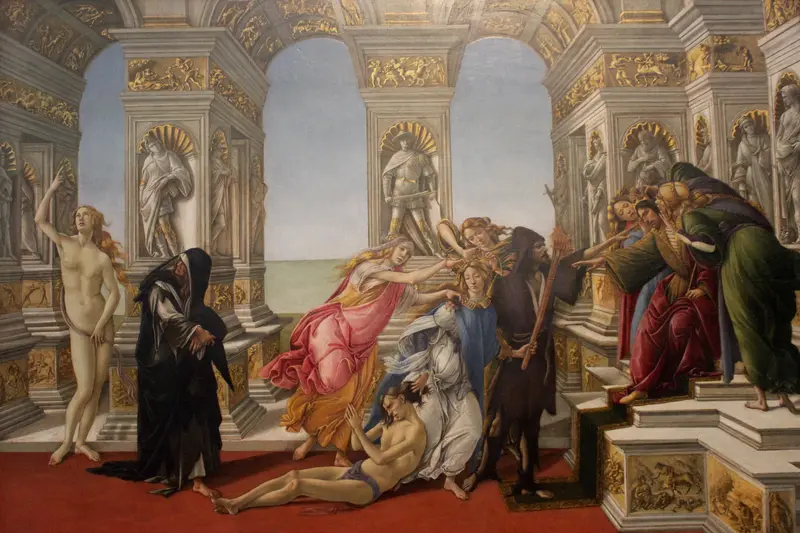
Calumny of Apelles
Sandro Botticelli

Portrait of a young man holding a roundel
Sandro Botticelli

The Trinity with Saint Mary Magdalene and Saint John the Baptist, the Archangel Raphael and Tobias
Sandro Botticelli

Idealized Portrait of a Lady (Portrait of Simonetta Vespucci as Nymph)
Sandro Botticelli





