The Waiting Room — History & Analysis
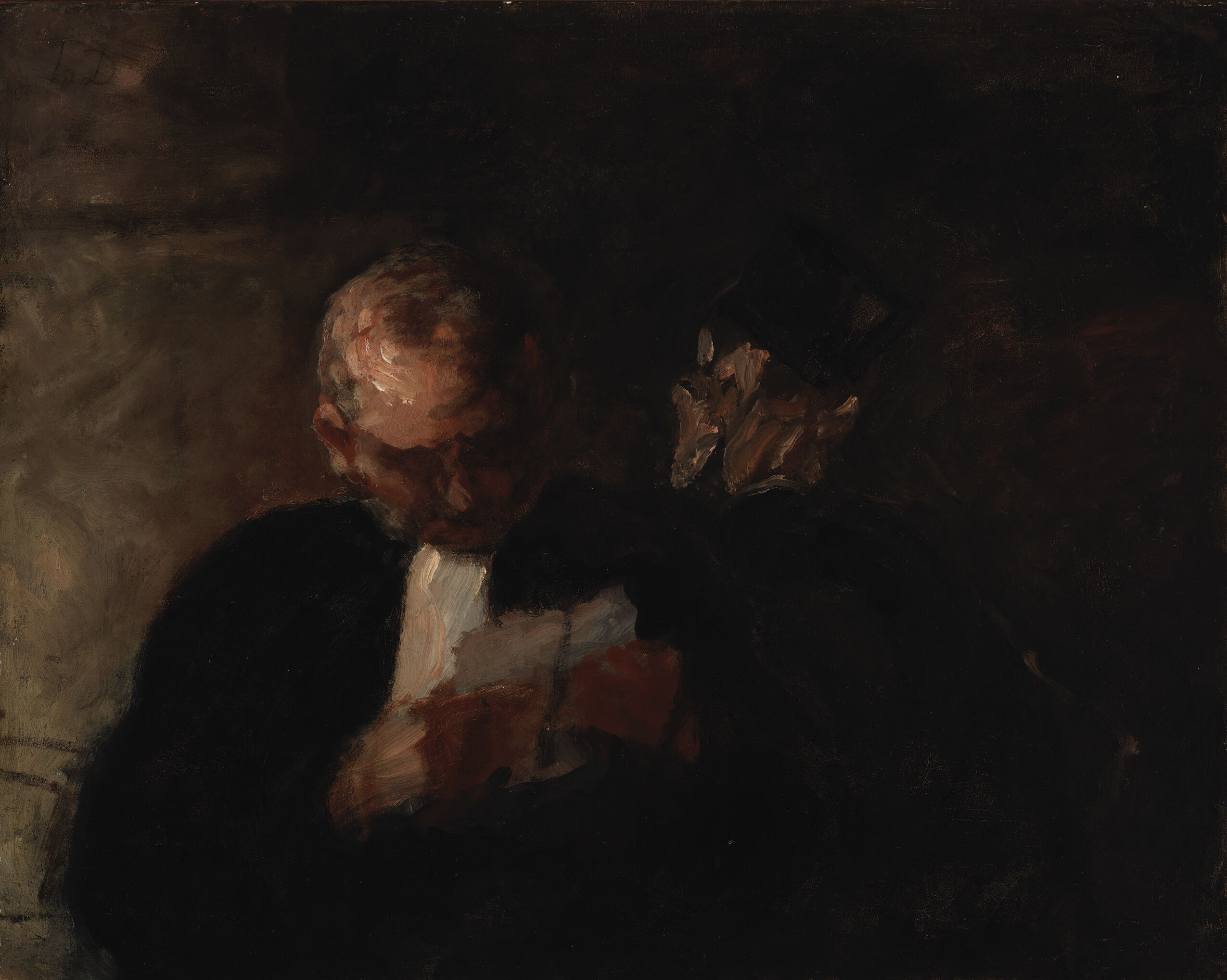
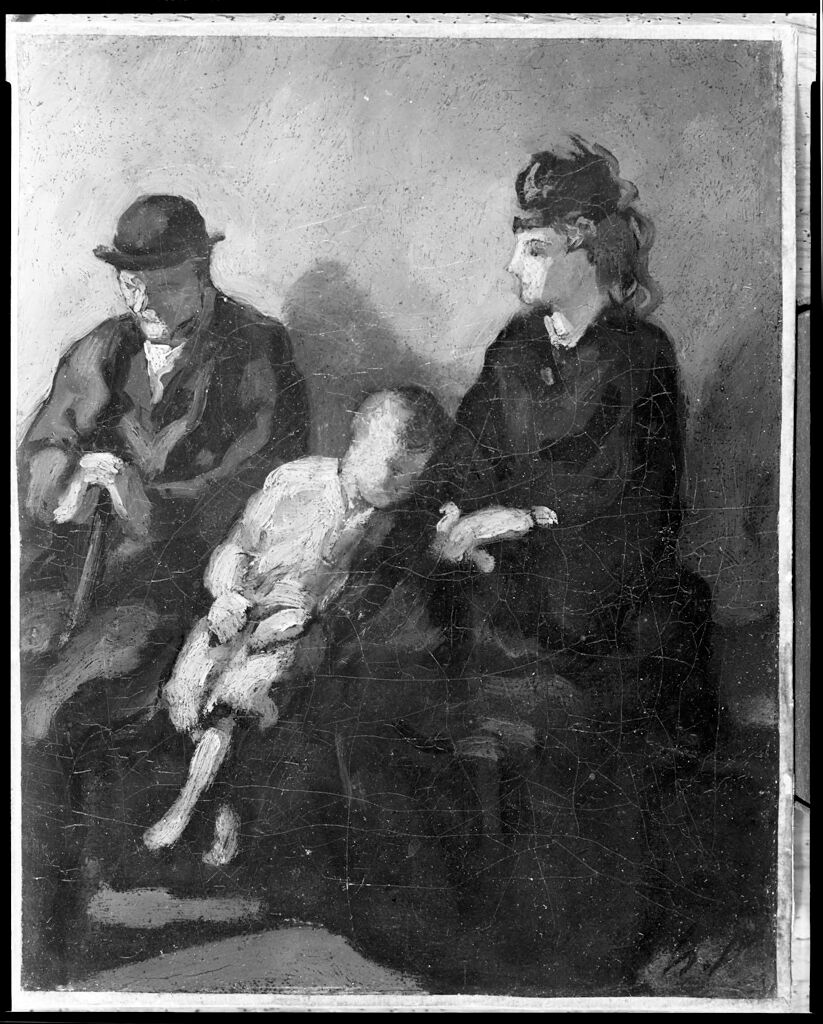
Could beauty survive in a century of chaos? In The Waiting Room, Honoré-Victorin Daumier encapsulates a moment of stillness amidst the relentless pace of 19th-century life, inviting us to ponder the fragile nature of serenity. Look to the foreground where a single figure occupies a hard wooden bench, head bowed in contemplation. The room is sparsely furnished, dominated by heavy shadows that contrast with the soft, diffused light filtering through a nearby window. Notice how the muted palette of browns and grays evokes a sense of weariness, yet the gentle illumination caresses the figure, suggesting an underlying hope.
Daumier's deft handling of space and form pulls the viewer into this intimate sphere, amplifying the tension between isolation and the shared human experience. The waiting room itself becomes a metaphor for the broader societal condition, a liminal space where despair and tranquility coexist. The posture of the figure speaks volumes—both resigned and contemplative, capturing the emotional weight of anticipation. Behind this solitary presence lies a sense of collective longing, as if the stillness of the room amplifies the noise of the world outside.
Daumier masterfully contrasts the promise of light with the stark reality of the scene, posing questions about patience, purpose, and the search for meaning in a turbulent era. Daumier painted The Waiting Room in a time when France was grappling with political upheaval and social change. Active in the 19th century, he was known for his satirical depictions of contemporary issues, using art as a vehicle for social commentary. At this juncture in his career, he was deeply engaged in exploring the human condition, capturing both the struggles and serenity that define life in a chaotic world.