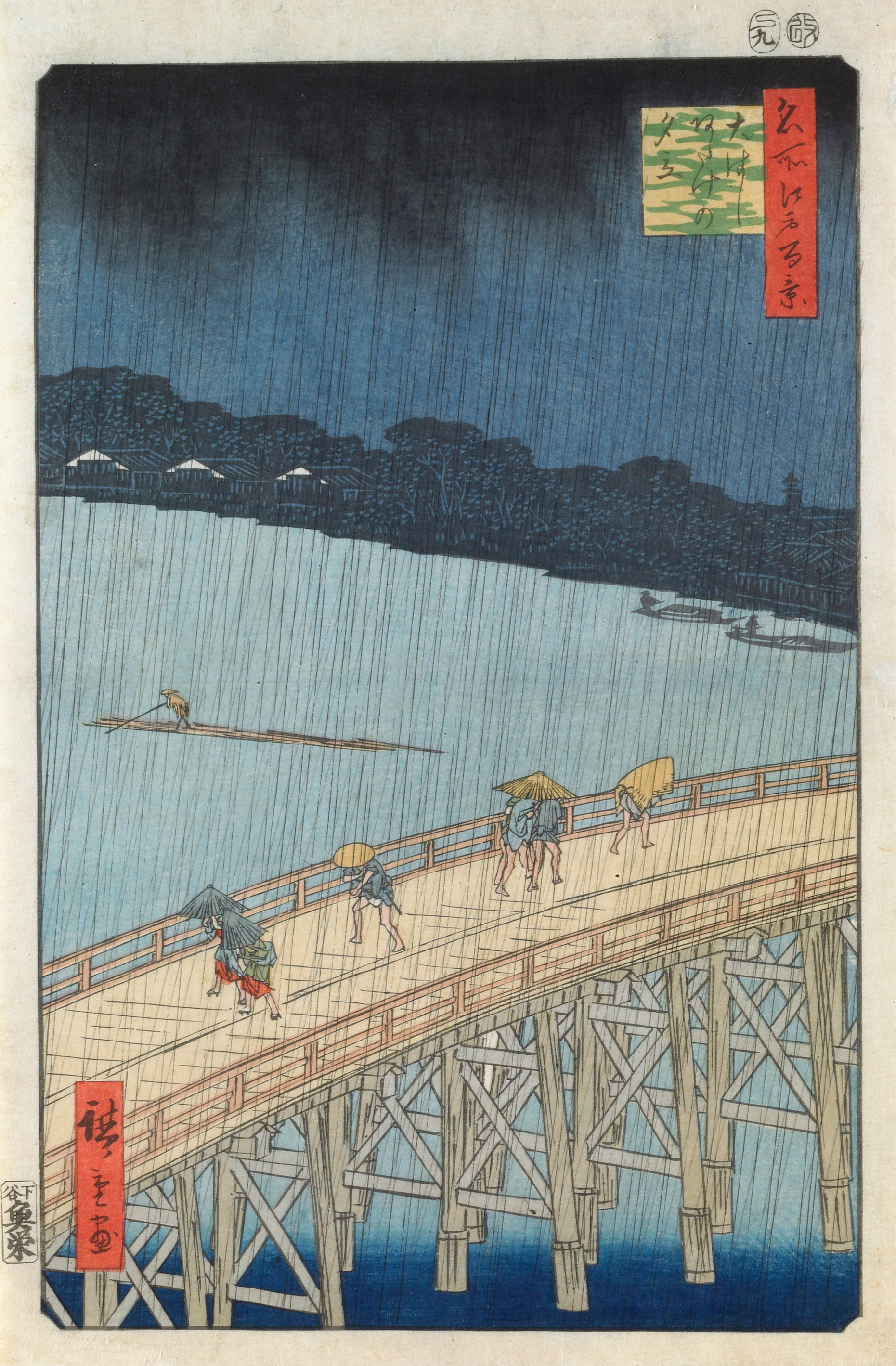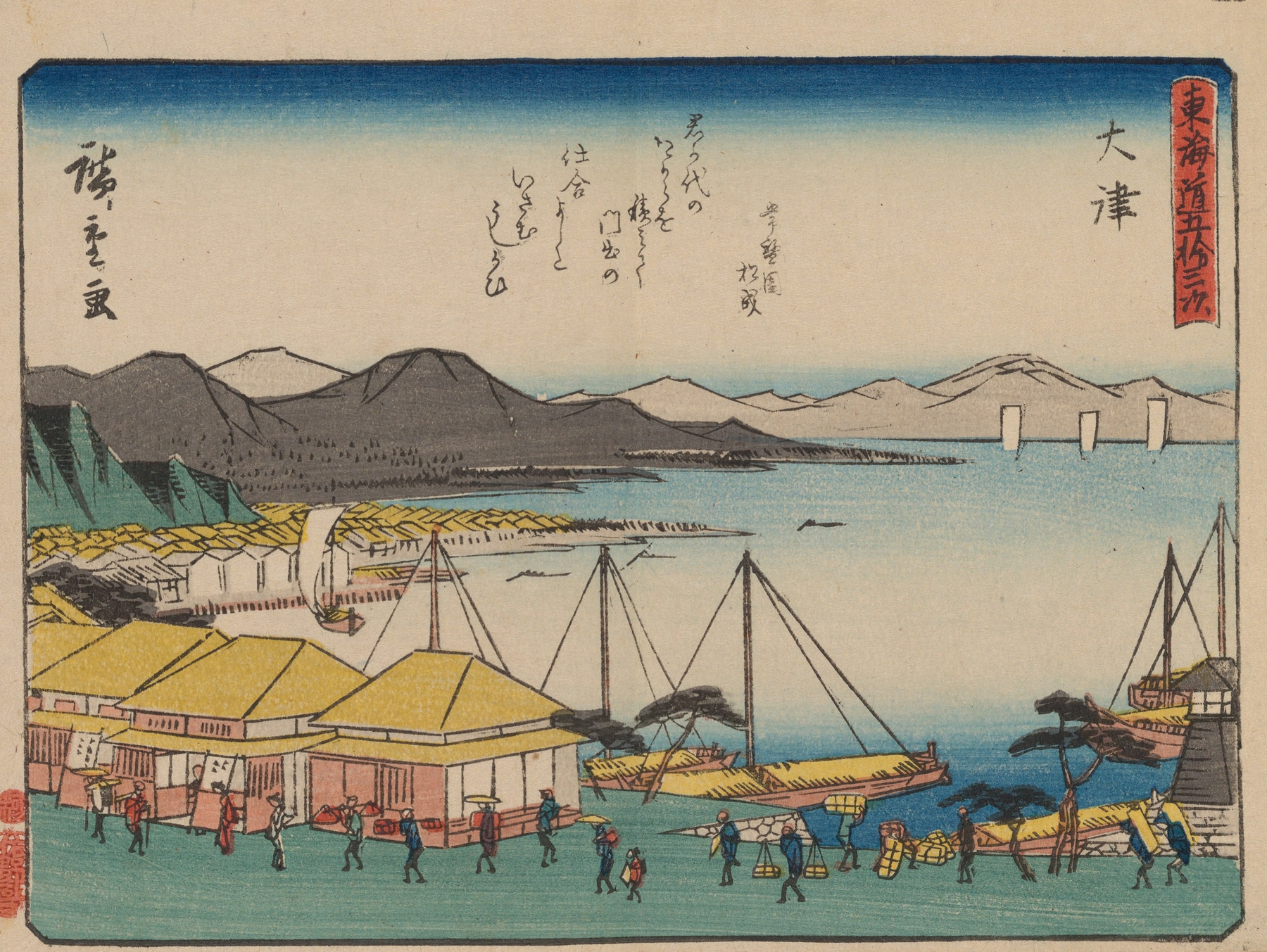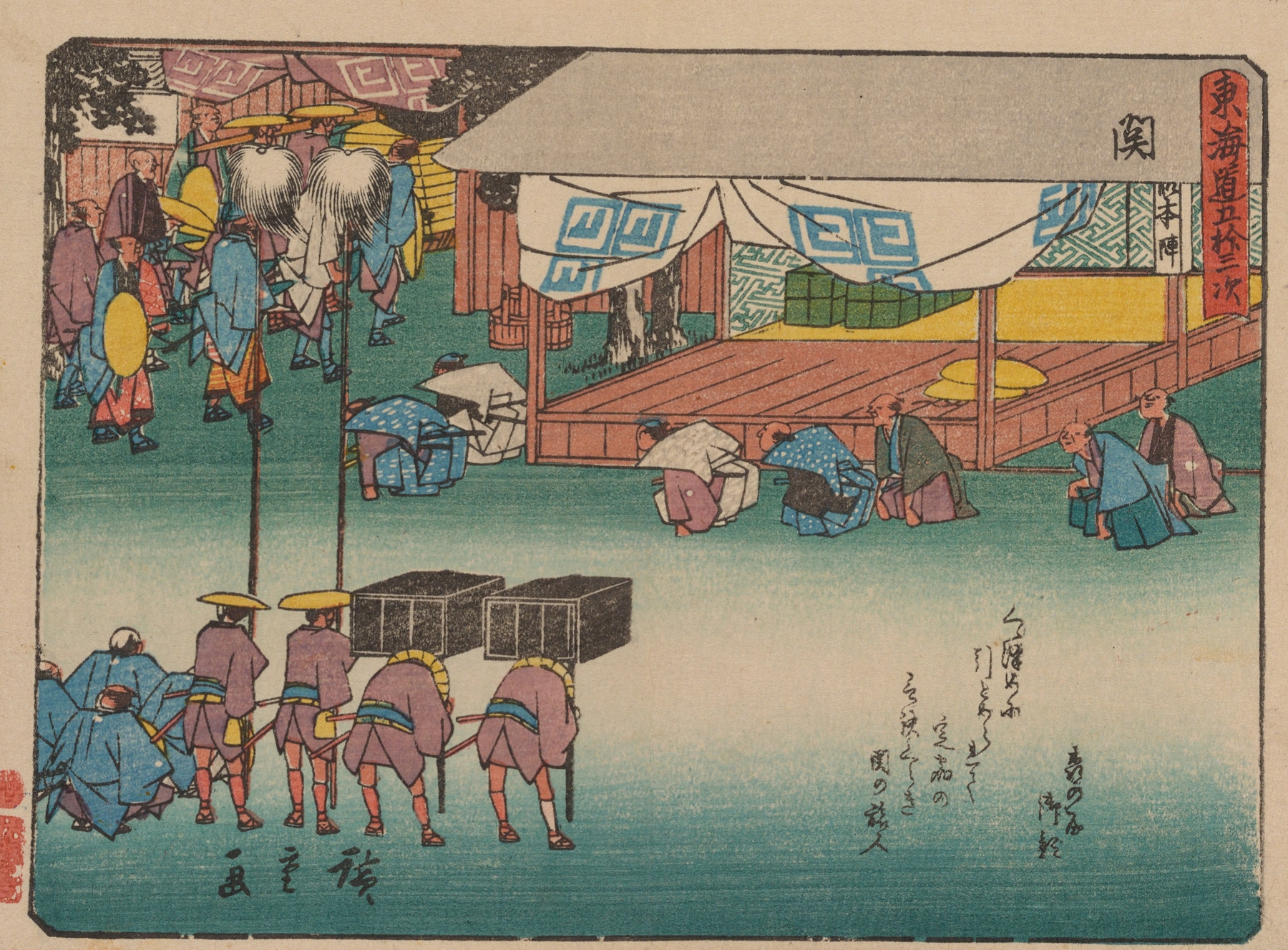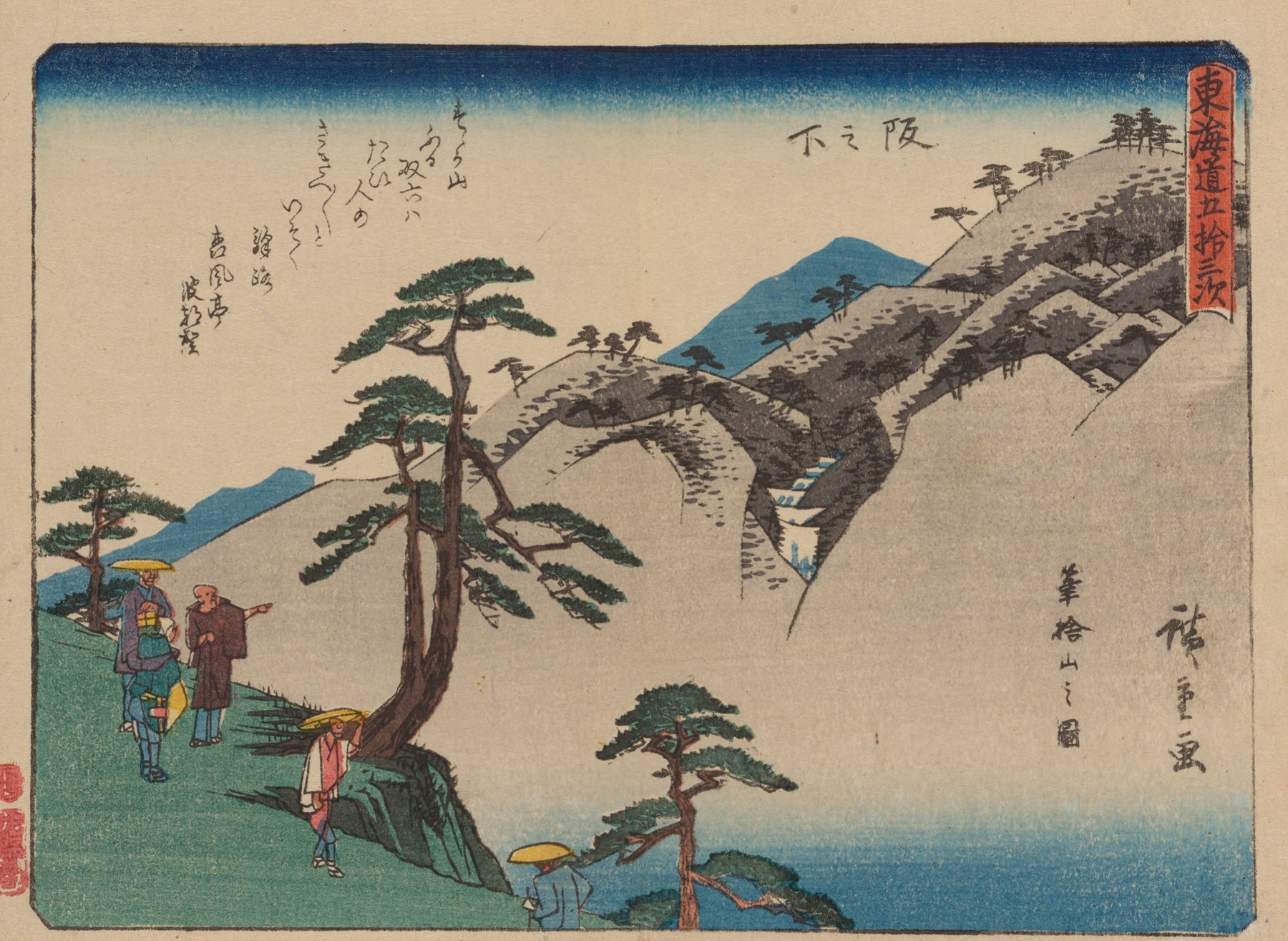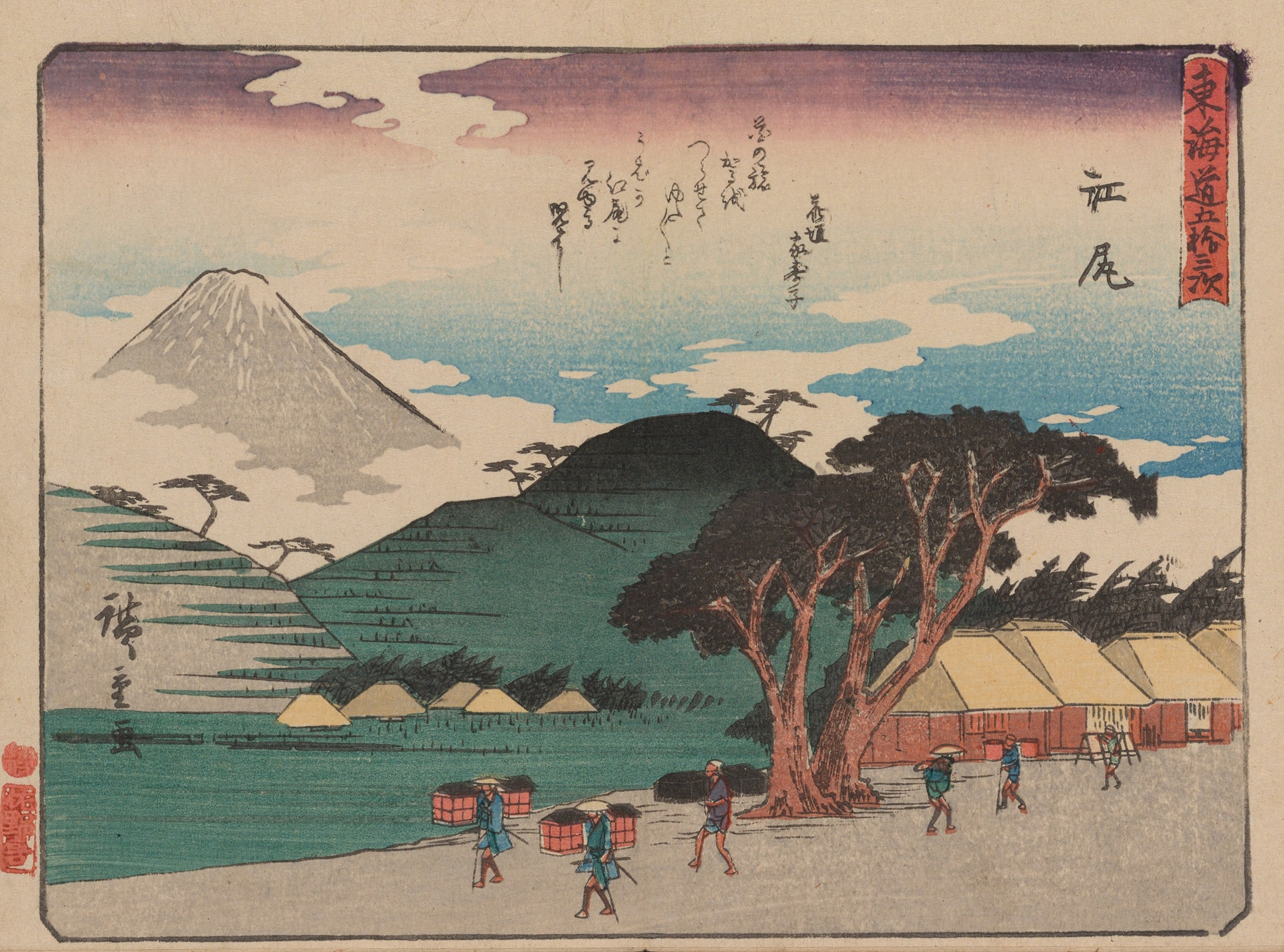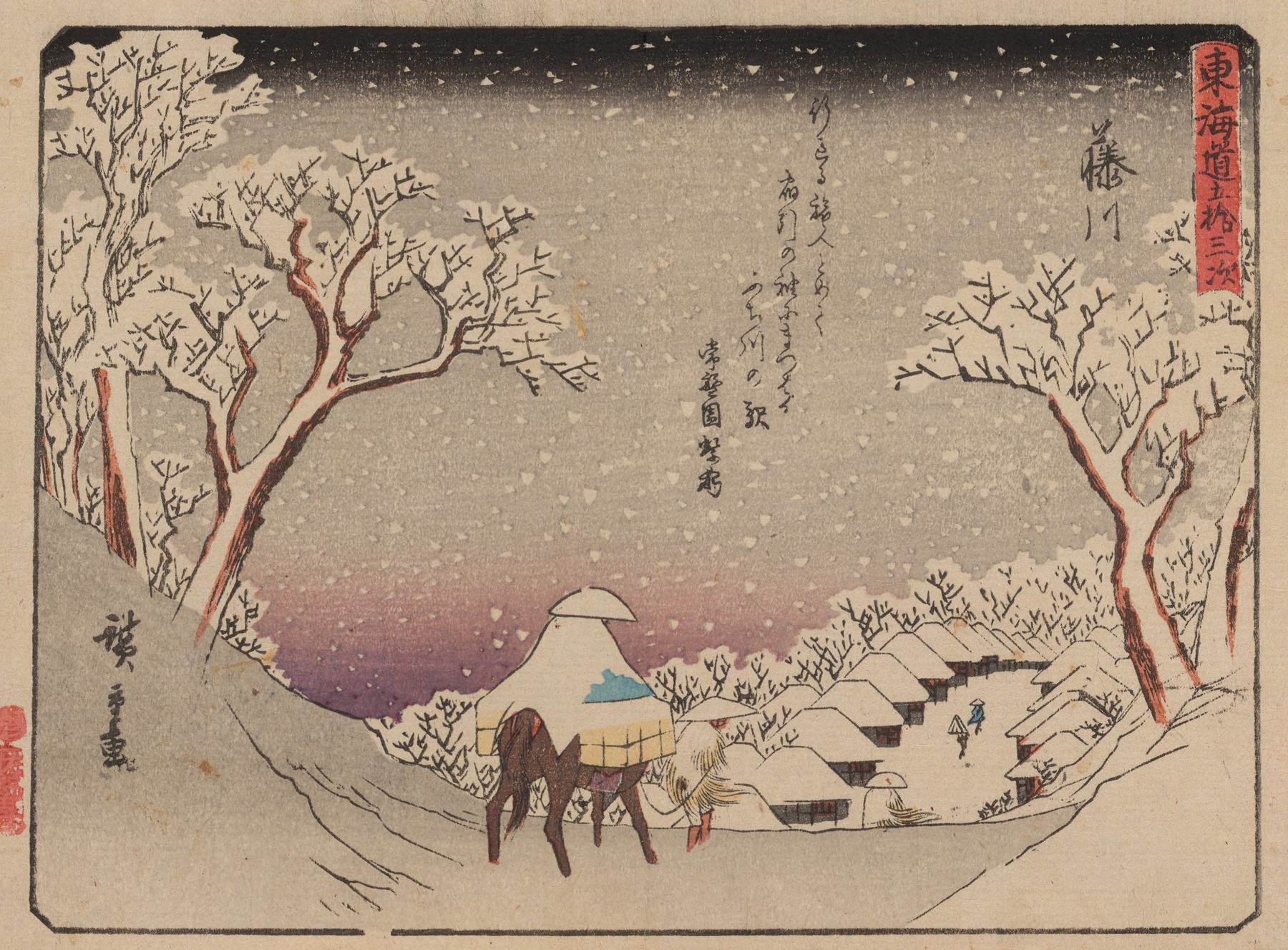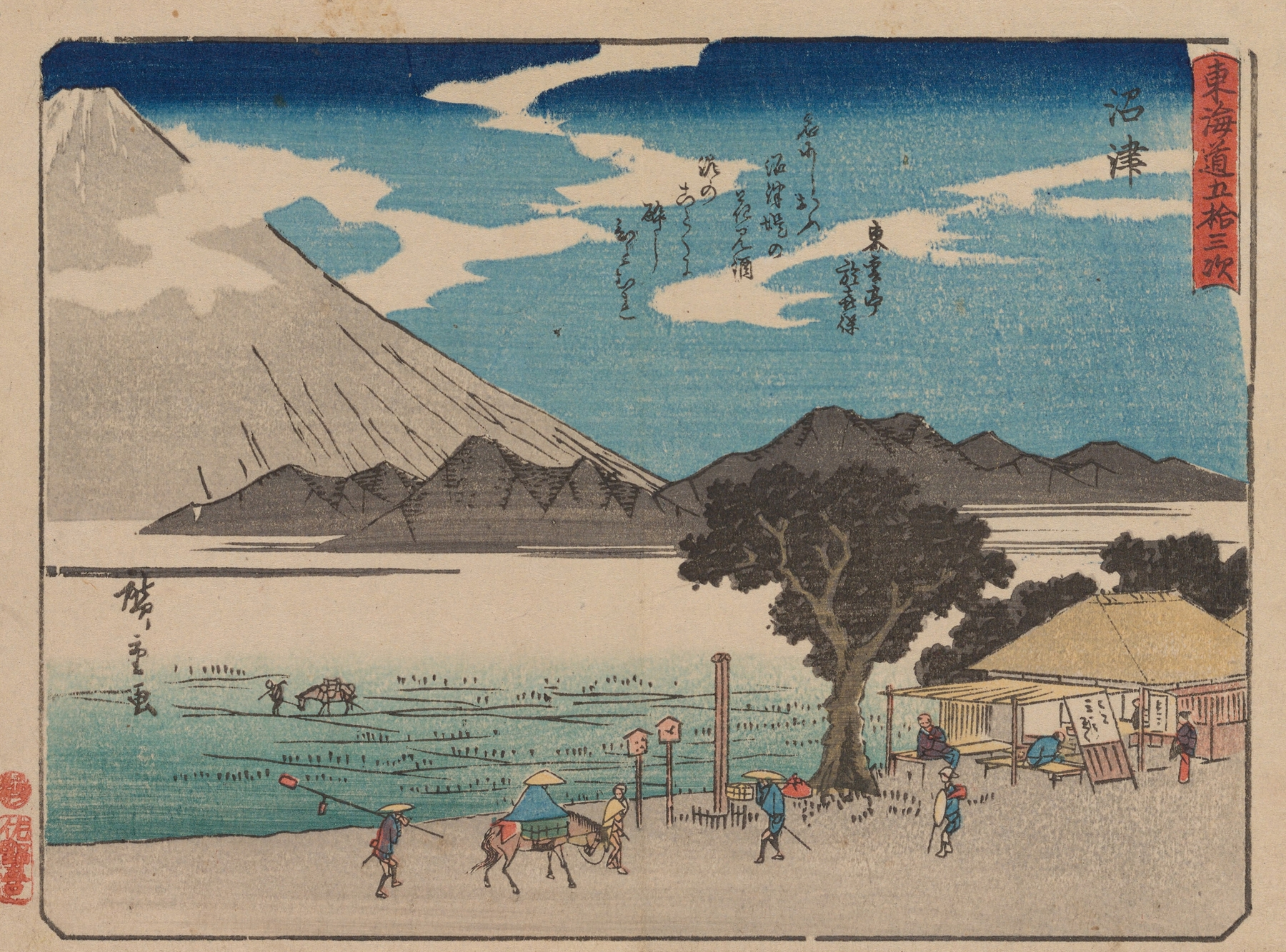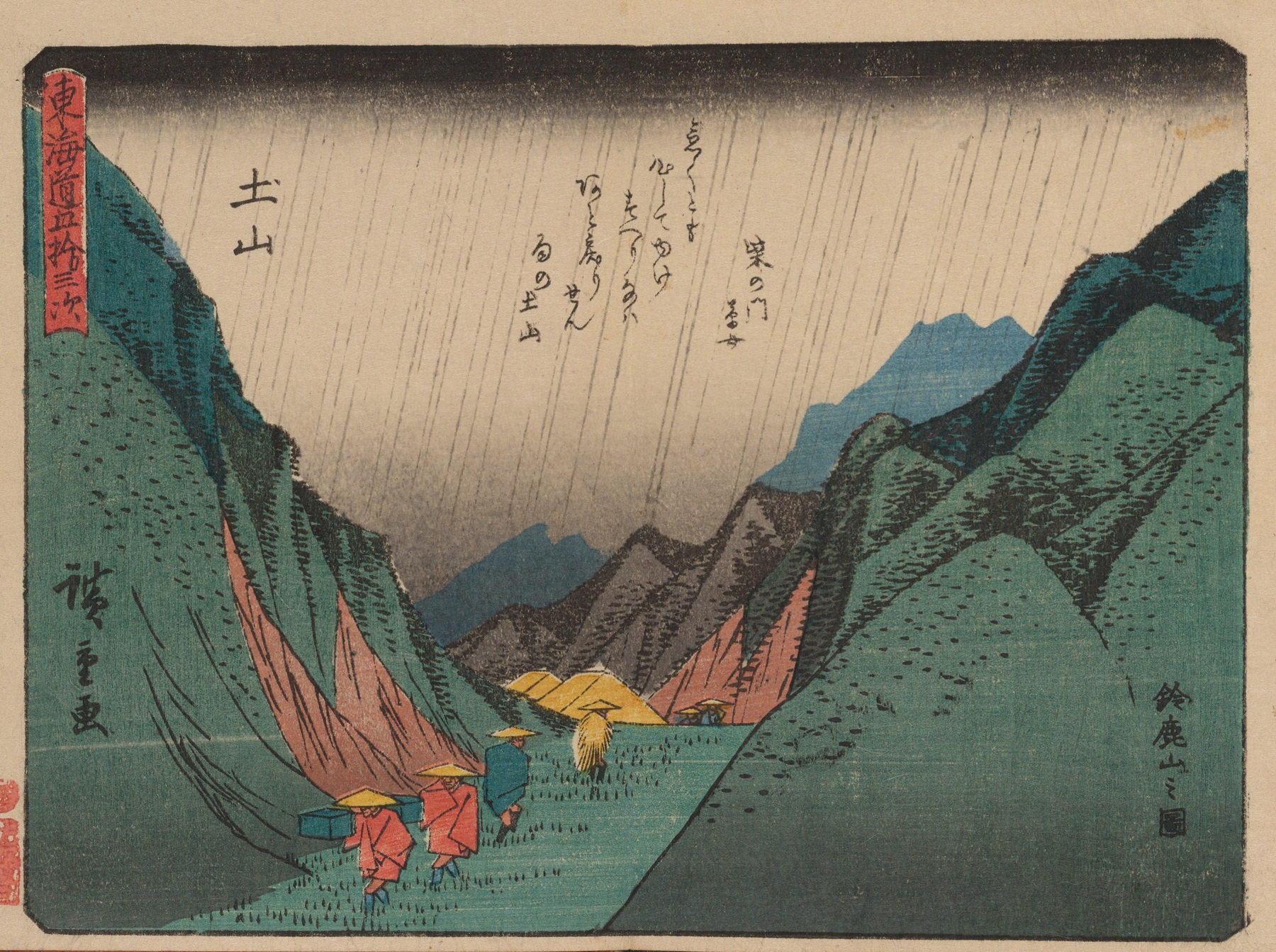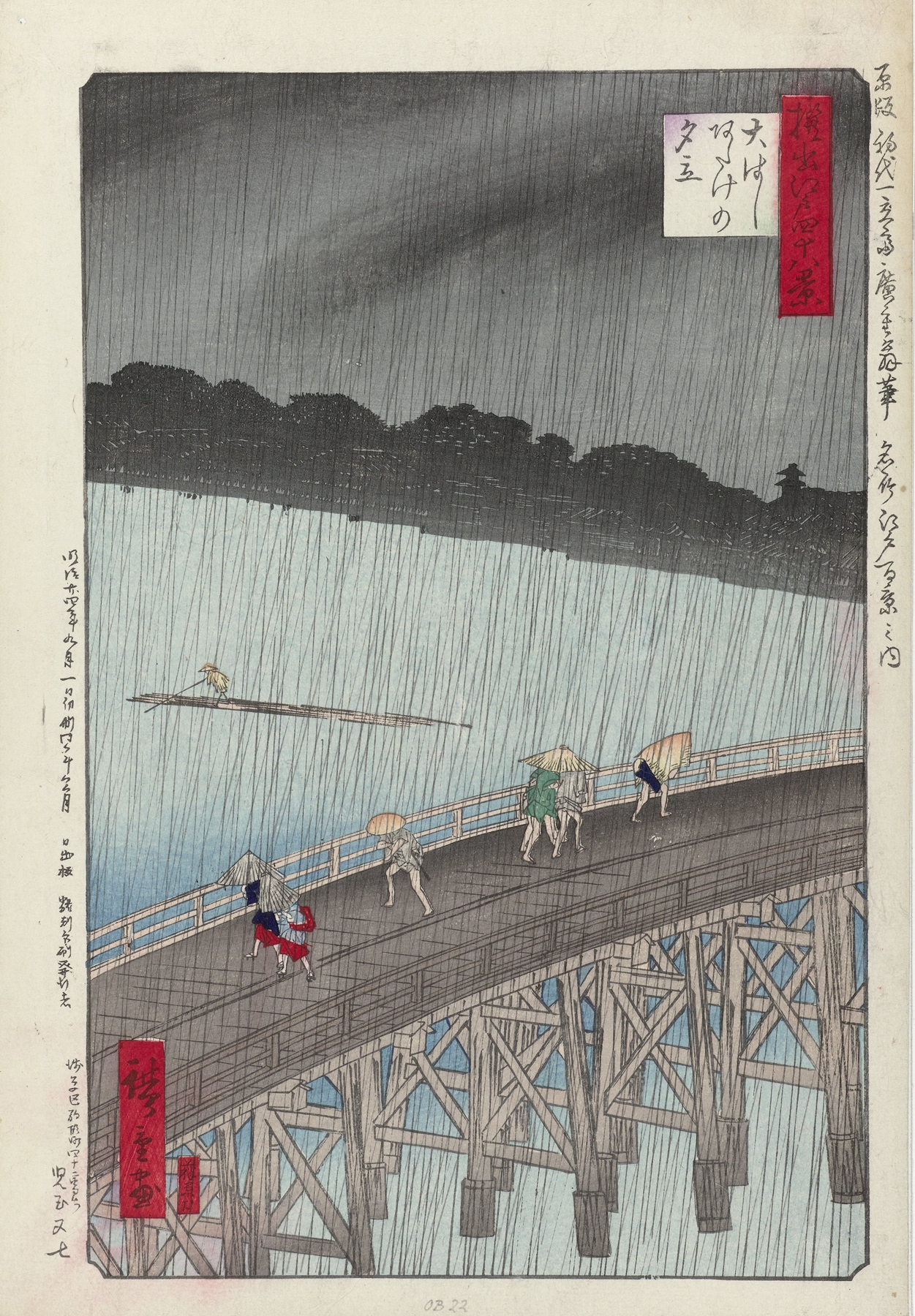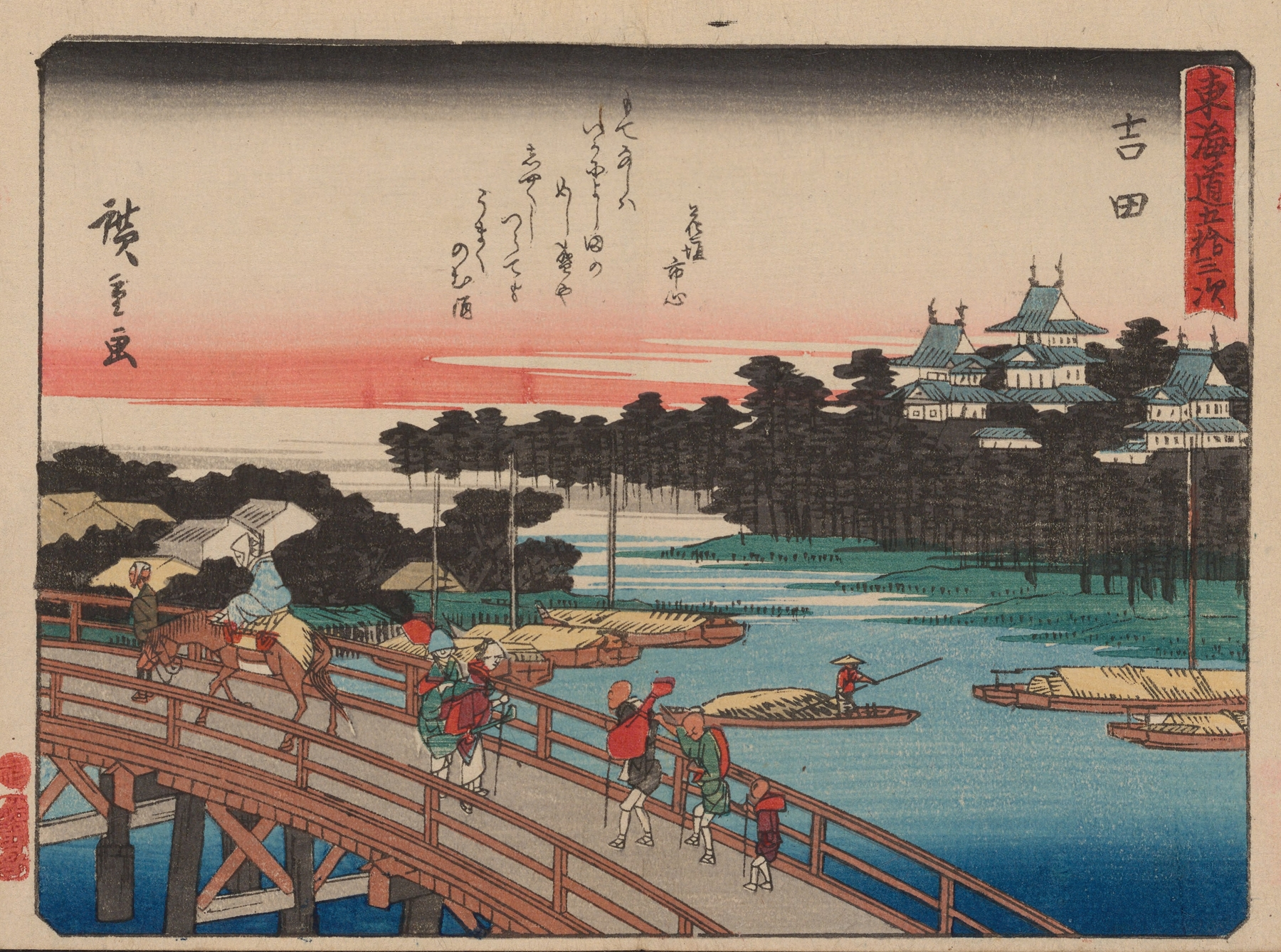

What secret hides in the quiet of the canvas? In the delicate interplay of light and shadow, *Tokaido gojusantsugi, Pl.35* invites us to explore a landscape where every brushstroke whispers stories untold. Look to the left at the gentle slopes of the mountains, cloaked in mist that softens their edges. Notice how the light dances on the surface of the water, creating a shimmering reflection that draws the eye. The artist skillfully employs a palette of blues and greens, with soft pastels that evoke a serene atmosphere. The composition balances these natural elements, inviting a sense of harmony and tranquility. Yet beneath the surface lies a deeper narrative. The solitary travelers on the path suggest a journey, both physical and metaphorical. The fading light hints at the passage of time, evoking the bittersweet nature of transient moments in life. Surrounding them, the lush landscape acts as a backdrop to their solitude, a reminder of the vastness of the world contrasted with individual experiences. This duality invites contemplation on the relationship between man and nature, as well as the fleeting nature of time itself. During the years between 1868 and 1912, Utagawa Hiroshige created this work in the context of Japan's Meiji era, a time marked by rapid modernization and change. As traditional ways of life began to dissolve, his art encapsulated the beauty of the landscapes that were being transformed. Hiroshige’s vision not only highlights the natural beauty of Japan but also serves as a poignant reflection on the transient nature of life during a pivotal moment in history.