Trasse der Zahnradbahn auf den Kahlenberg — History & Analysis
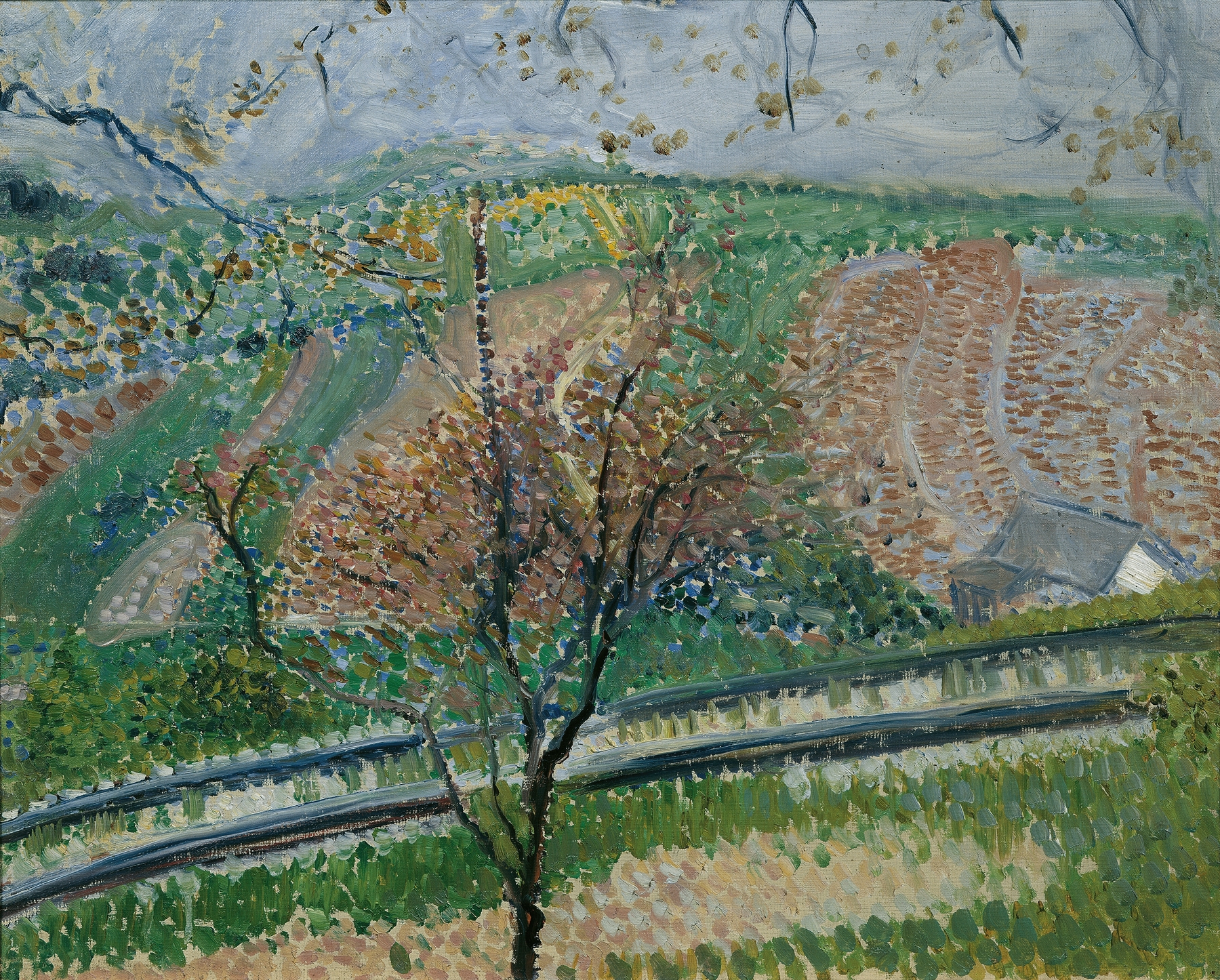
What if beauty was never meant to be finished? In Richard Gerstl's Trasse der Zahnradbahn auf den Kahlenberg, we encounter an unfinished journey through vibrant hues and dynamic strokes, inviting contemplation on the nature of aspiration and hope. Look to the lower left, where the winding tracks emerge from a lush, green landscape. The rich palette of greens and browns contrasts with the delicate interplay of blues in the sky above, drawing the eye upward along the path of the cog railway.
Notice how the expressive brushwork conveys a sense of movement, as if the train is poised to burst forth from the canvas, urging for a destination that lies just out of reach. As you absorb the details, consider the tension between the structured railway and the wildness of the surrounding nature. This contrast symbolizes the struggle between human ambition and the untamed forces of the world. The unfinished quality resonates with the theme of hope, suggesting that while destinations may elude us, the journey remains vital and filled with potential.
Each brushstroke whispers of aspirations and dreams yet to be realized, encapsulating the essence of possibility. In 1907, when this piece was created, Gerstl was navigating his own tumultuous life as an artist in Vienna, a time of great change and experimentation in the art world. This period was marked by a burgeoning expressionist movement, and Gerstl's work reflects both his personal struggles and the broader artistic shifts occurring around him, paving the way for future explorations of emotion and form.