Travellers outside the gate of a town, near a fountain — History & Analysis
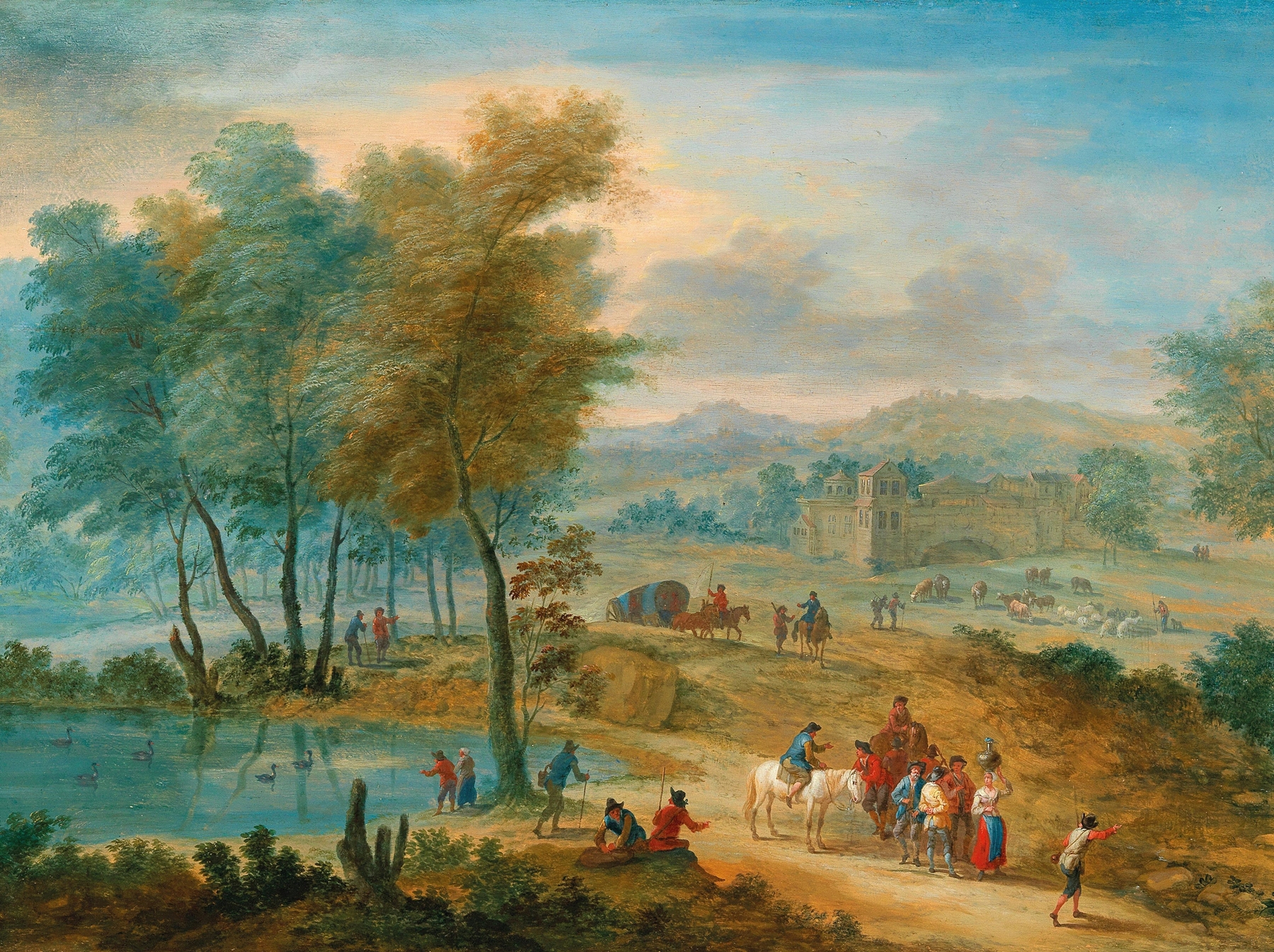
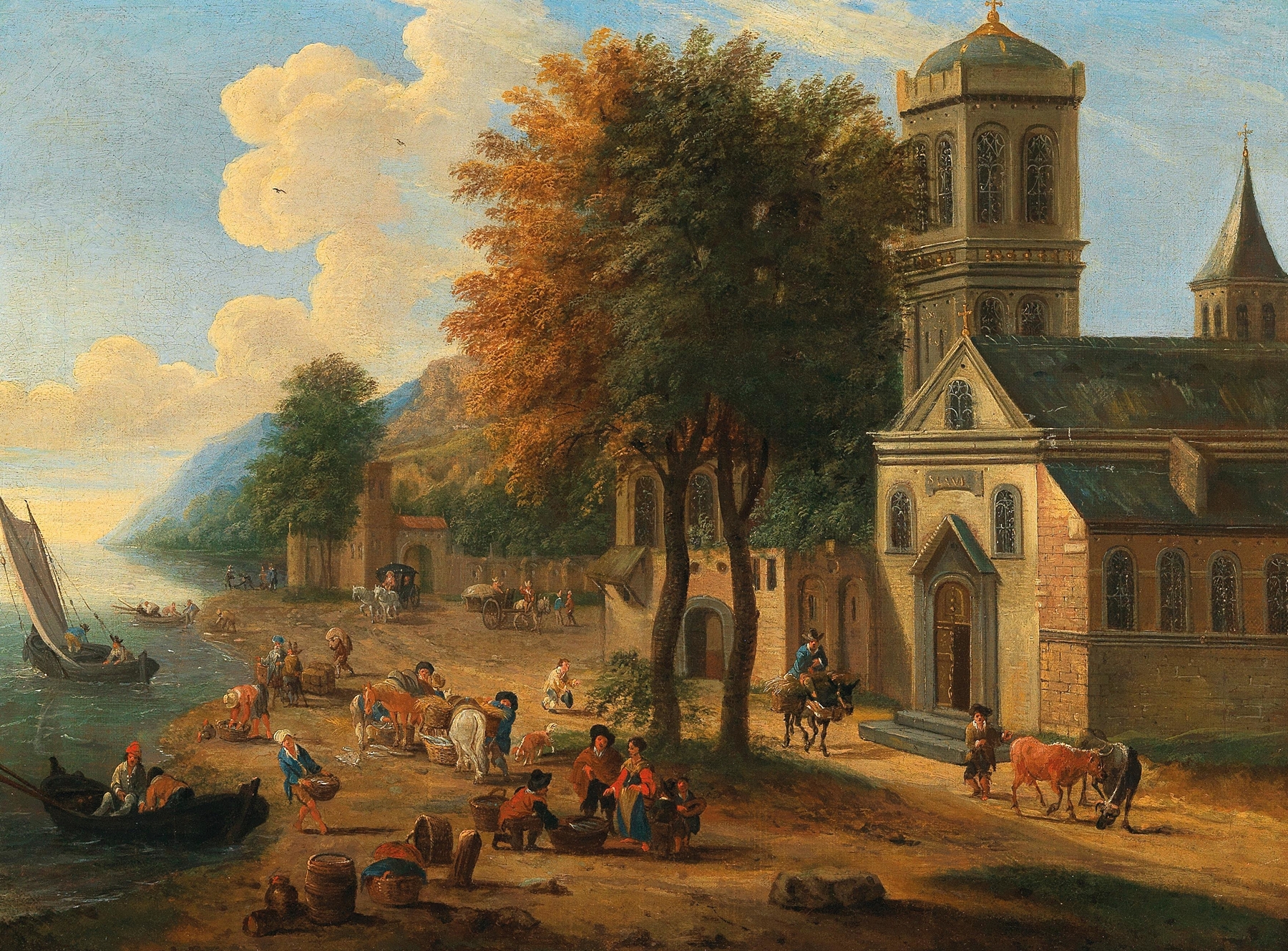
What if silence could speak through light? In Travellers outside the gate of a town, near a fountain, a moment captured in time whispers the stories of those on the cusp of journeying forth, their breaths mingling with the serene ambiance of the scene. Look to the left, where gentle sunlight dapples the cobblestone path, illuminating the figures cloaked in rich, earthy tones. The fountain, a focal point, draws the eye with its intricate details, the water cascading in silvery ribbons that shimmer in the soft light.
Notice the way the artist employs a delicate interplay of shadow and glow, inviting viewers to linger on the travelers’ expressions, each face reflecting a tapestry of emotions—curiosity, anticipation, and perhaps a hint of apprehension. The contrast of the vibrant fountain against the muted hues of the town gate suggests a gateway not just of stone but of possibility. The travelers seem suspended in a moment of choice; the calmness of the fountain serves as a counterpoint to the restless energy of the open road.
Each droplet of water resonates with the pulse of their journey, evoking a sense of awe for what lies beyond the gate and within their hearts. Mathys Schoevaerdts painted this work during an era when the landscape of art was shifting towards realism, yet still embraced the timeless allegories of exploration. While the exact date remains unknown, the artist's focus on the human experience aligns with the broader artistic movements of the late 17th century, a period marked by a deepening fascination with the nuances of daily life and the emotional undercurrents that shape our paths.