Trinity College, College Green, Dublin — History & Analysis
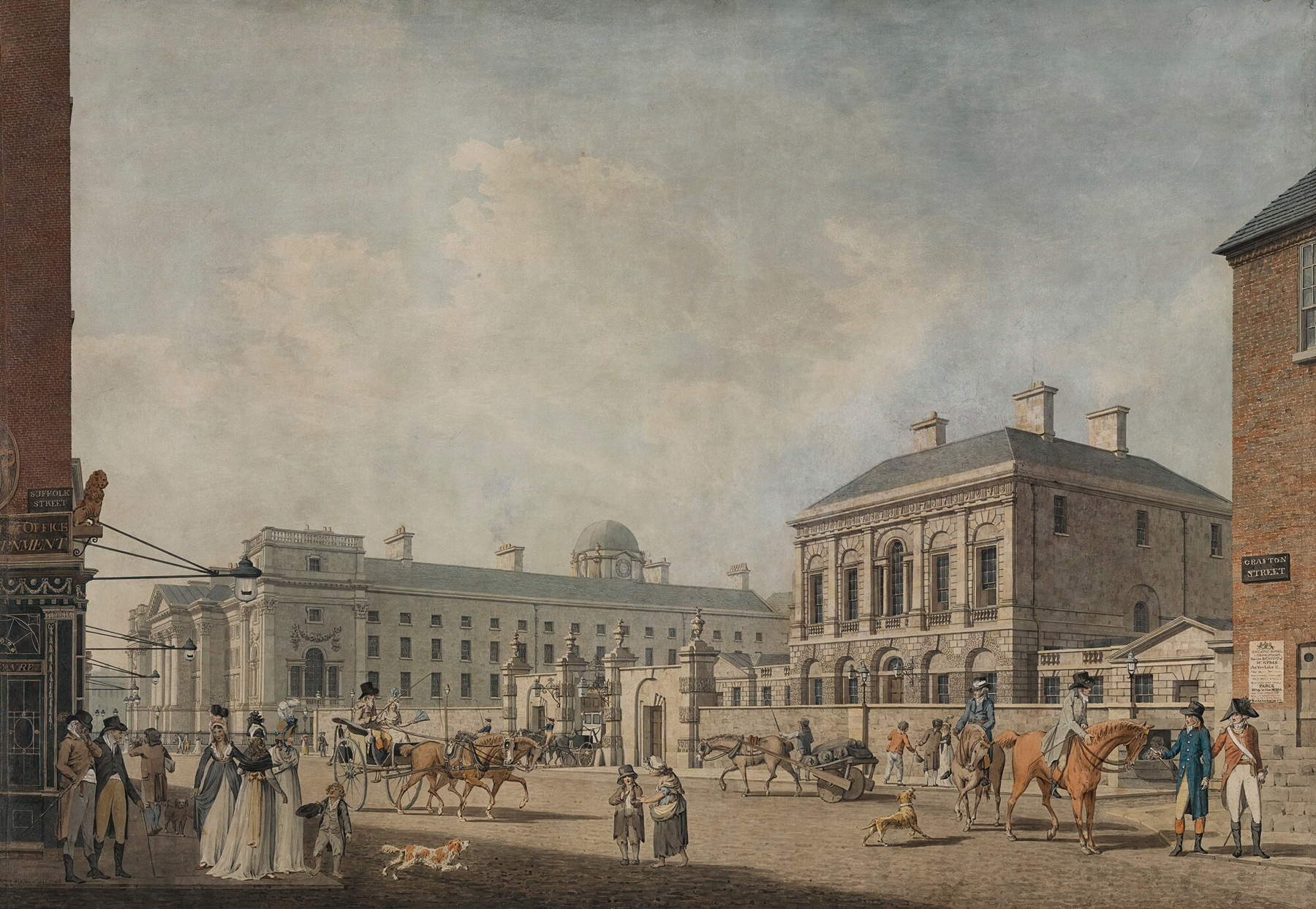
“Sometimes beauty is just pain, disguised in gold.” The elegance of a moment can mask a deeper sorrow, whispering tales of what has been lost. In the heart of Dublin, the grand structures stand resilient, yet they bear the weight of history, each stone echoing a silent lament. Look to the left at the prominent façade of Trinity College, its intricate details etched with precision. Notice the play of light that dances across the warm sandstone, casting shadows that breathe life into the stillness. The composition draws your gaze toward the archways, inviting you to step inside, while the surrounding greenery softens the rigid lines.
Malton’s palette, with its rich earth tones and the soft blues of the sky, creates a harmony that speaks of both permanence and transience. Yet, beneath the surface beauty lies an intricate tapestry of emotional contrasts. The timelessness of the college suggests a commitment to knowledge, yet also hints at the fleeting nature of youth and opportunity. The verdant surroundings, lush and inviting, juxtapose the stone's somber permanence, leaving one to reflect on the beauty of what can never return.
Each detail becomes a reminder of aspirations shaped by loss, a dialogue between grandeur and vulnerability. In 1796, James Malton painted this work during a period marked by change and uncertainty in Ireland. As the country grappled with political upheaval and societal shifts, Malton found solace in capturing the architectural splendor of Dublin. Living in a time when the arts flourished amidst turbulence, he sought to immortalize the beauty of his surroundings, layering his emotional experiences into the vibrant strokes of his brush.