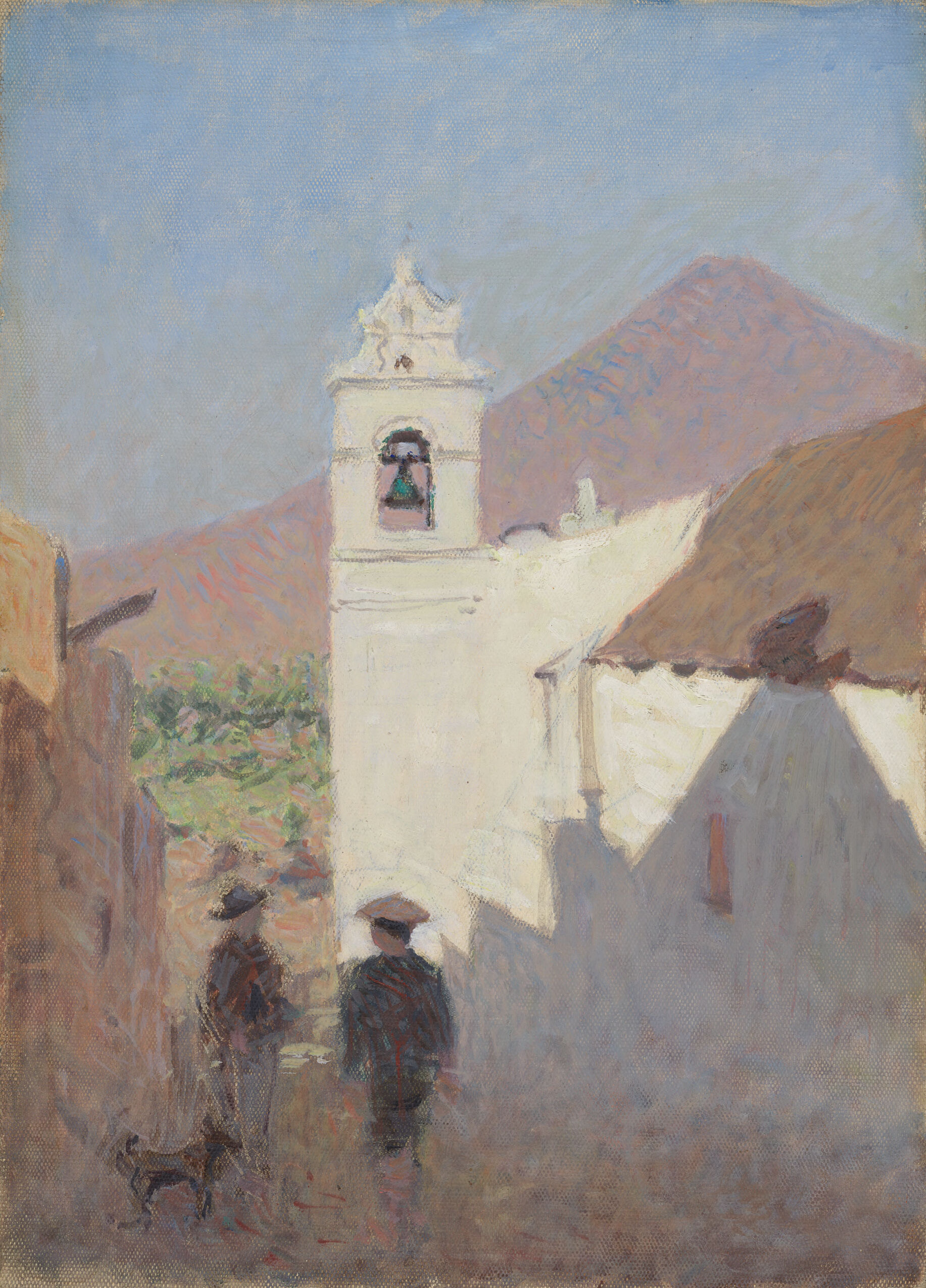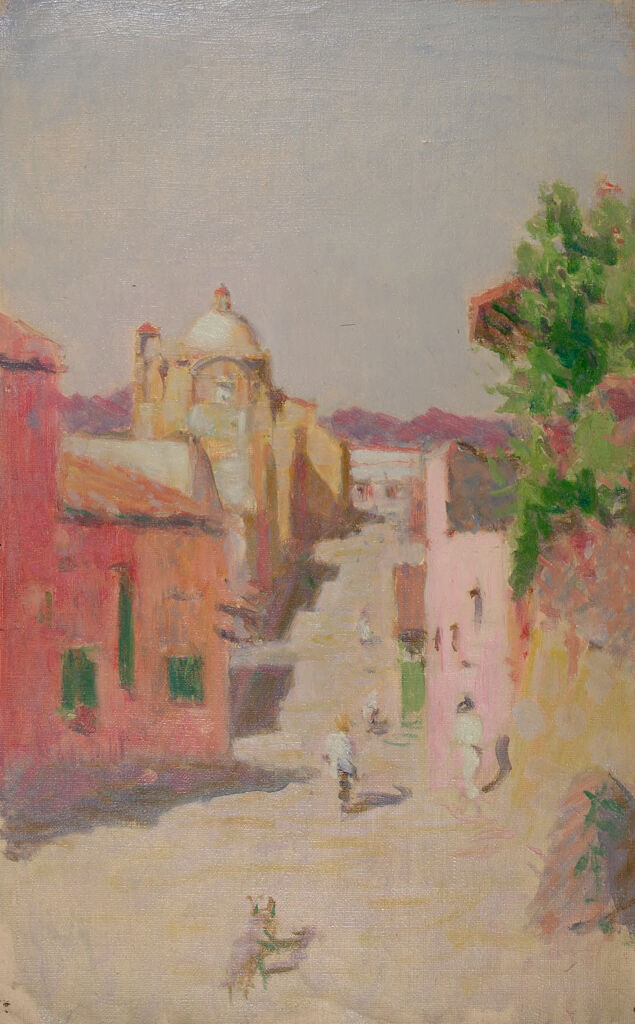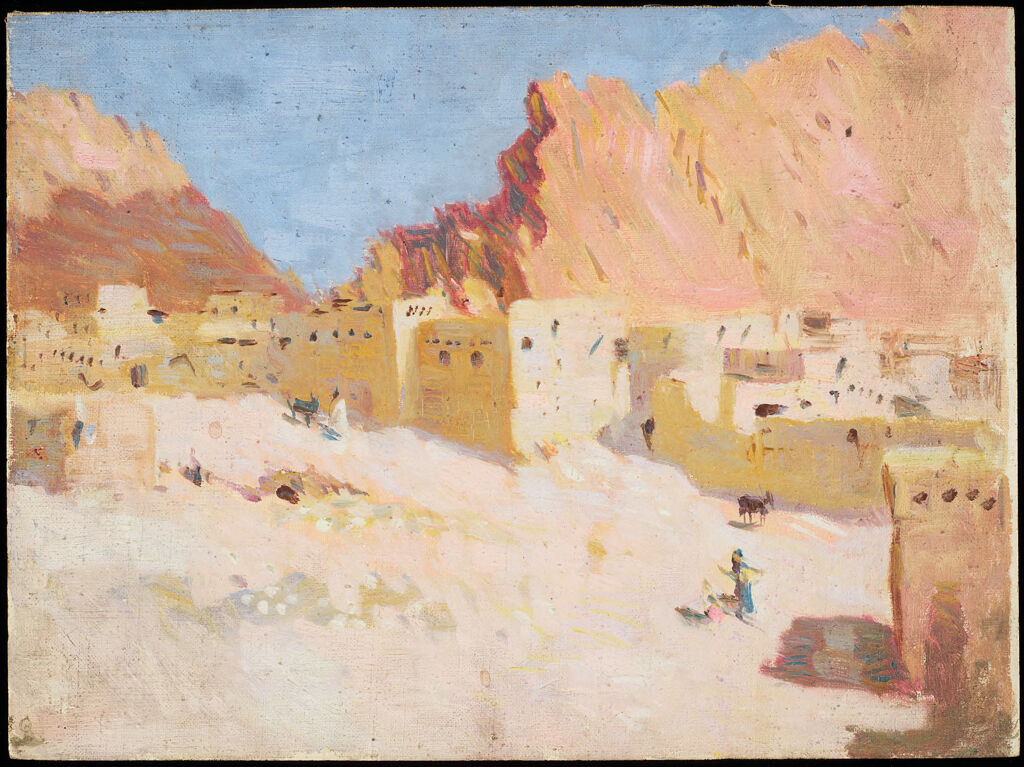
Could beauty survive in a century of chaos? In *Tunis Street Scene*, Denman Waldo Ross captures the delicate balance between faith and uncertainty, inviting us to ponder this profound question. Look closely at the vibrant colors that breathe life into the bustling street; the warm yellows and deep blues effortlessly draw your gaze toward the lively marketplace. Notice how the sunlight filters through the leafy canopies, creating a dance of light and shadow that enhances the intimacy of the scene. The figures, rendered in a combination of fluid brushstrokes and intricate detail, exude a sense of movement and purpose, reflecting a community bound together in the pursuit of daily life. Within this vivid tableau, there lies a juxtaposition of stillness in the faces of the vendors amidst the flurry of activity, suggesting an underlying resilience and faith in continuity. The artist's choice to depict both the vibrancy of commerce and the serene moments of personal connection reveals an emotional tension between chaos and harmony. Each figure is a testament to the everyday struggles and joys that exist, echoing the universal quest for beauty even in turbulent times. In 1901, when this work was created, Ross was immersed in the vibrant cultural exchanges of his time, influenced by European art movements yet firmly rooted in American impressionism. Living in a society marked by rapid change, Ross sought to capture the essence of human experience through the lens of this North African locale, highlighting the connections that bridge diverse cultures in an increasingly chaotic world.