Twee toiletkoffers — History & Analysis
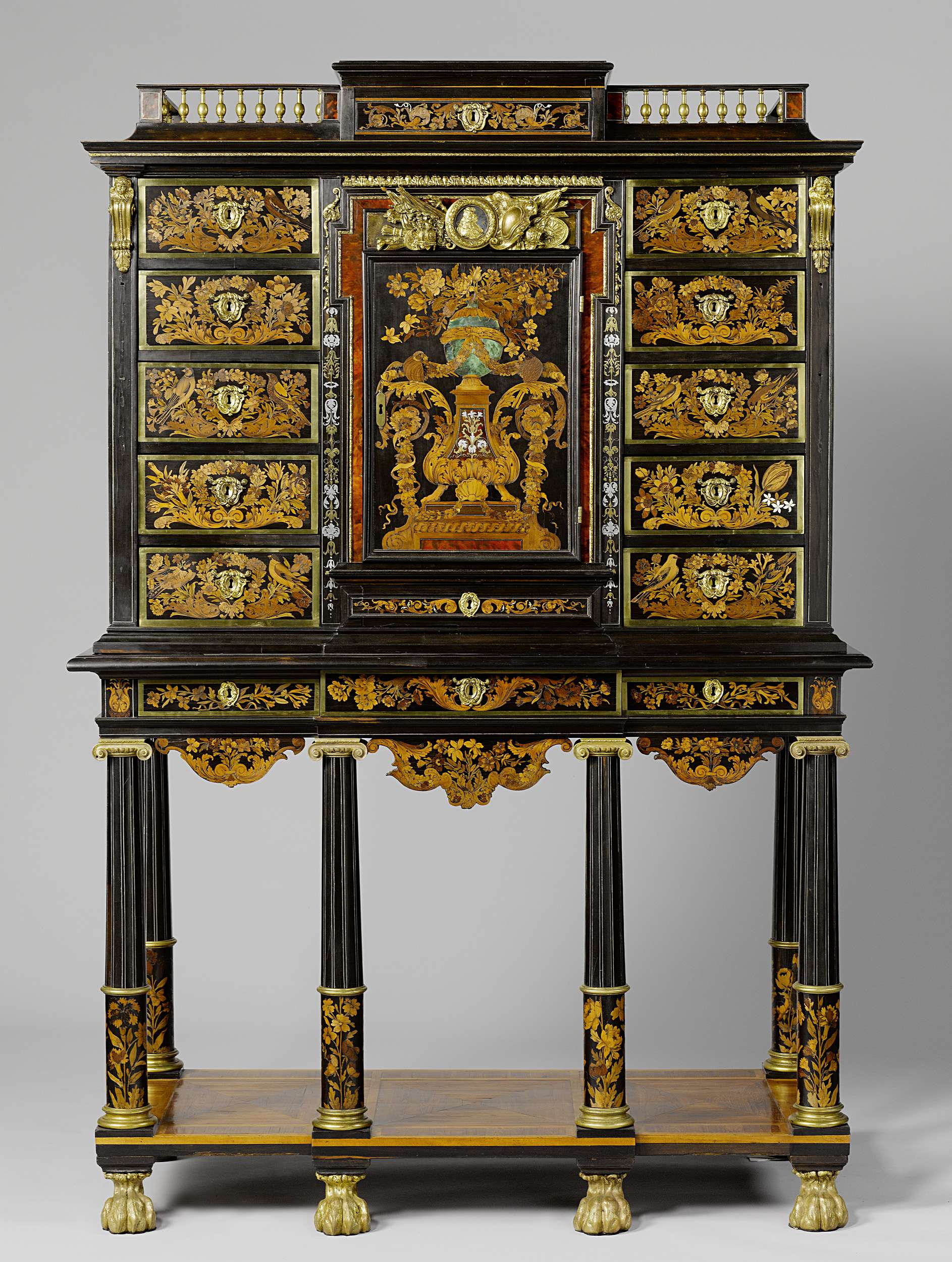
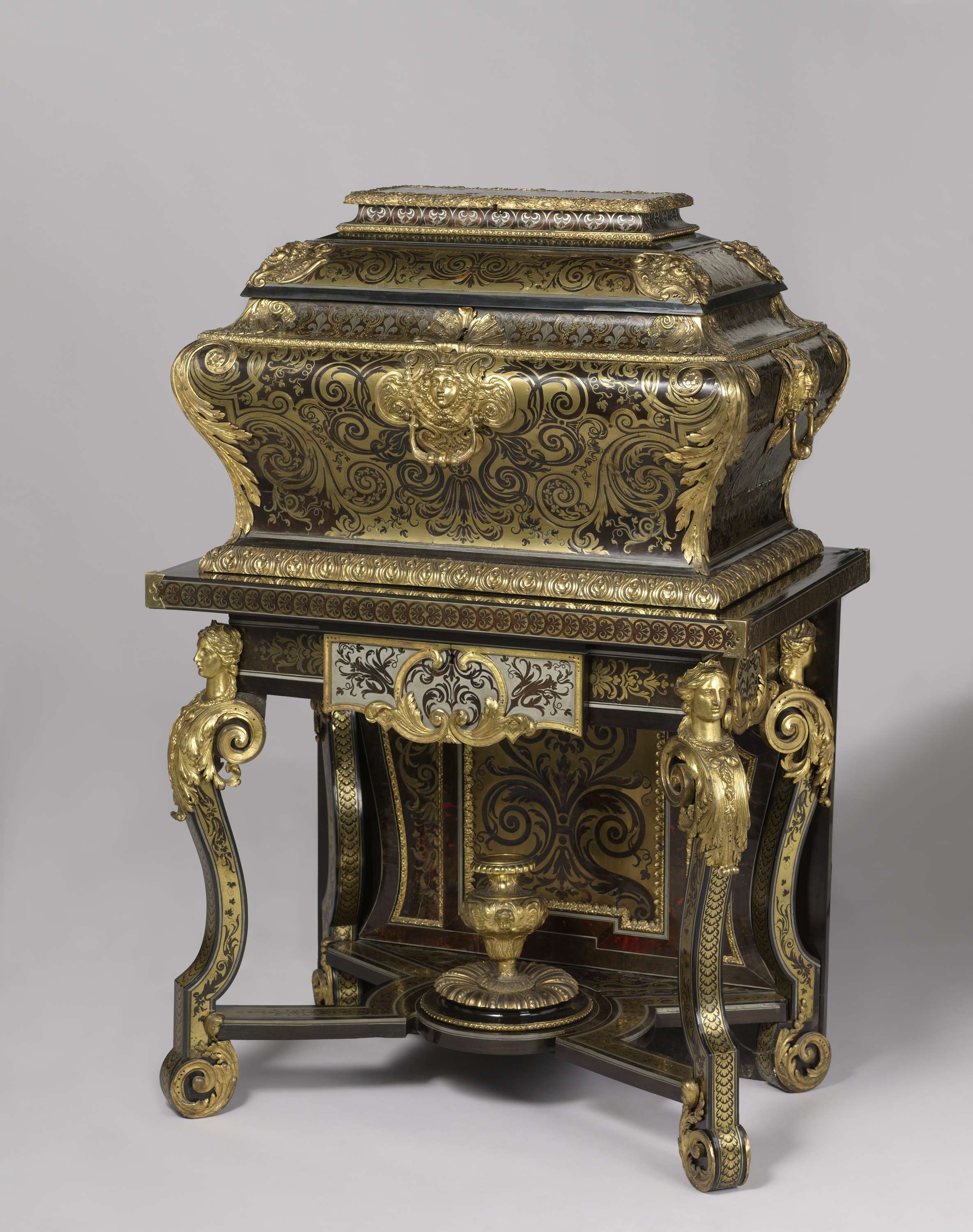
“The canvas doesn’t lie — it simply waits.” Within its stillness lies a profound emptiness, a space where the absence of action invites contemplation on the nature of beauty and utility. Look to the center of the composition, where two intricately designed toiletkoffers rest, their surfaces adorned with exquisite marquetry and rich colors. The meticulous details of the woodwork draw the eye, showcasing Boulle's masterful technique. Notice how the warm light illuminates the polished surfaces, creating a contrast between light and shadow that enhances the elegance of these objects.
The symmetry in the arrangement speaks to the harmony of their forms, while their stillness evokes a sense of tranquility. Yet, beneath the surface lies an emotional tension—the juxtaposition of elegance and emptiness. The toiletkoffers, designed for the display of beauty, serve as a reminder of the transient nature of adornment. Each container is a vessel for potential, holding within it the promise of personal care while simultaneously hinting at the isolation that comes with such opulence.
The vibrant wood and meticulous craftsmanship contrast starkly with the stillness that surrounds them, prompting reflections on what lies beneath the facade of luxury. Created between 1685 and 1690, this piece reflects André-Charles Boulle's status as a leading cabinetmaker in France during the reign of Louis XIV. As the court embraced the Baroque style, he became synonymous with the fusion of artistry and craftsmanship. This artwork stands as a testament to the artistry of the time, capturing the nuances of both material culture and the complexities of identity within the world of high society.