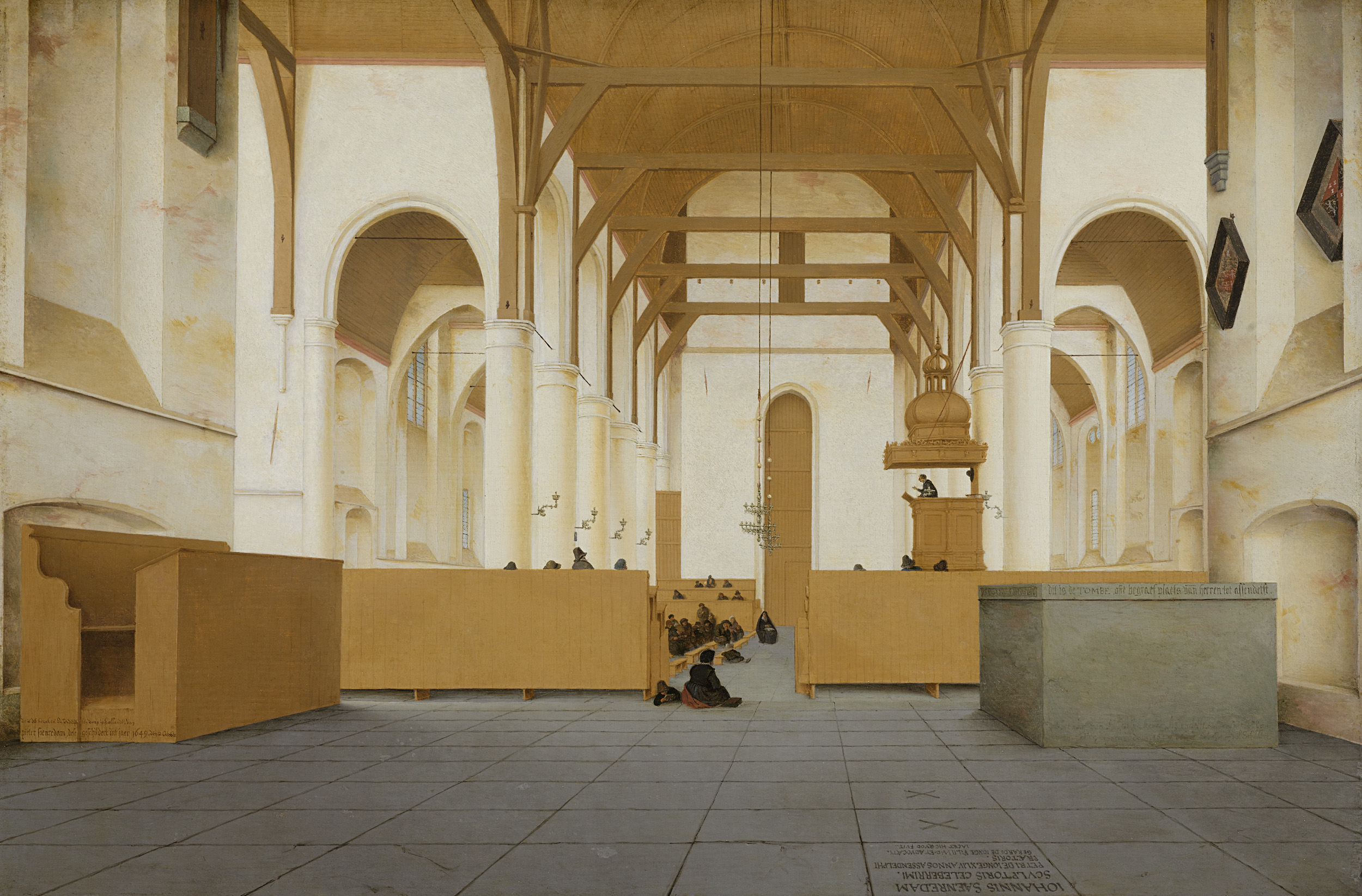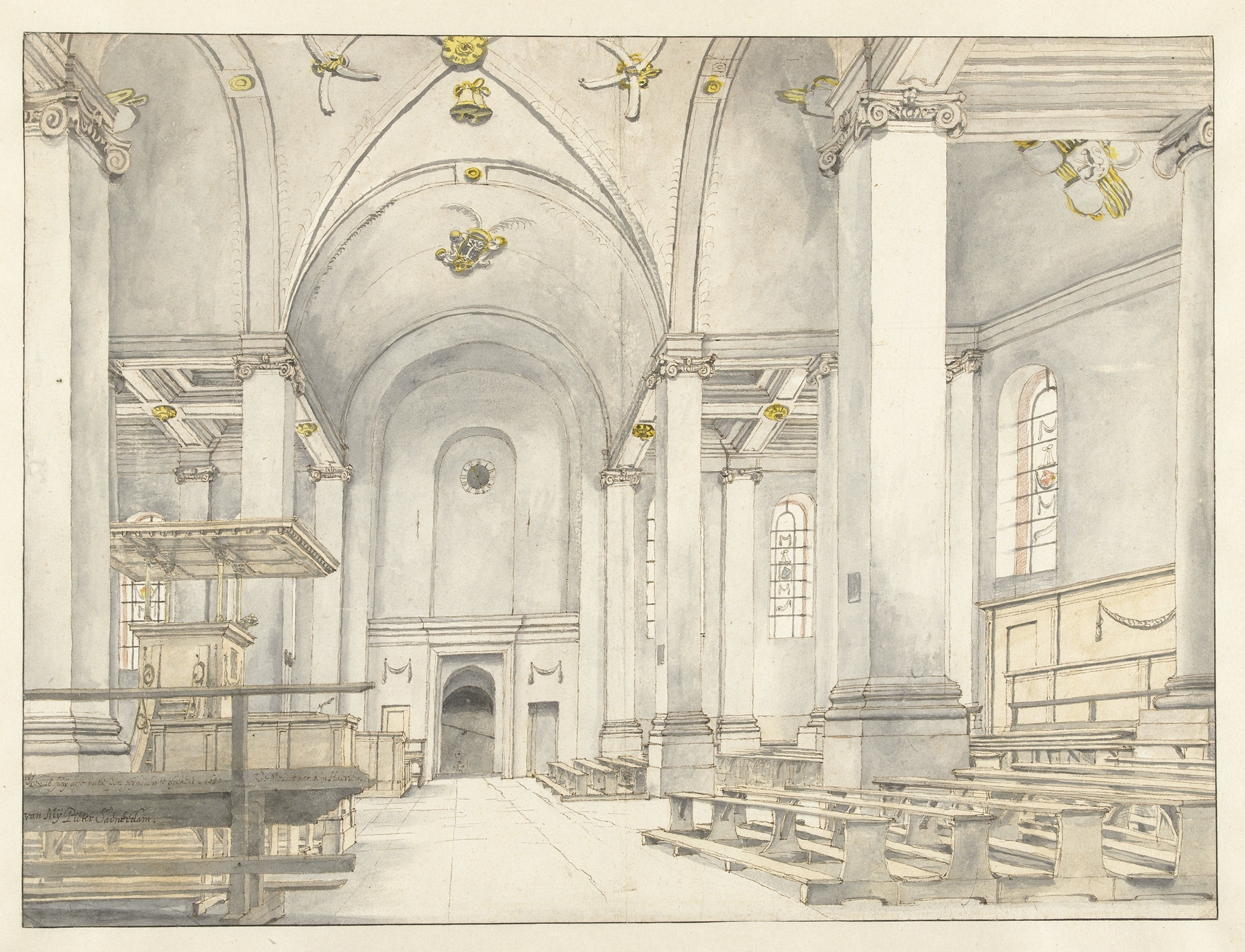
View of the Nave of the Nieuwe Kerk, Haarlem, Looking West — History & Analysis
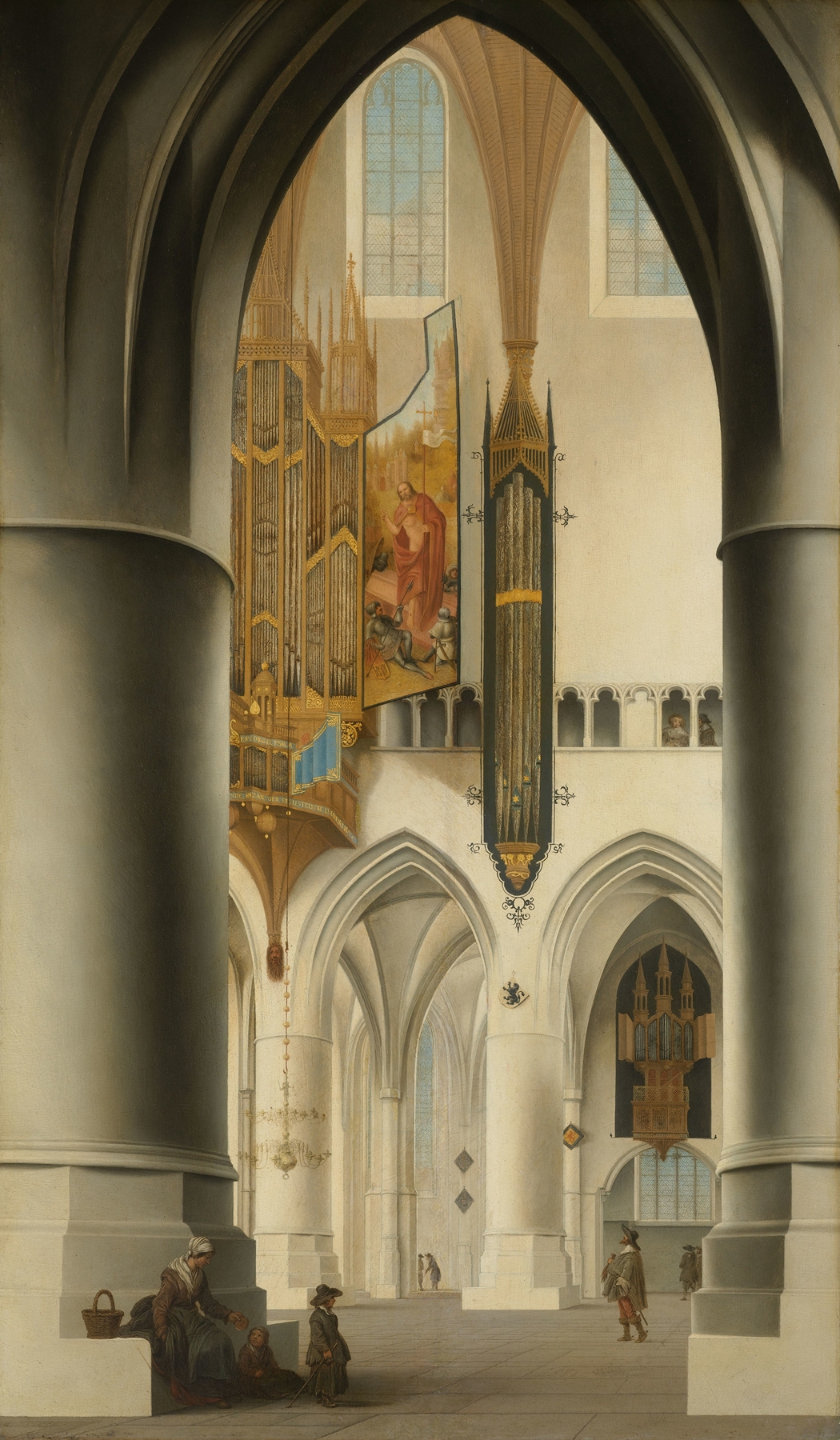
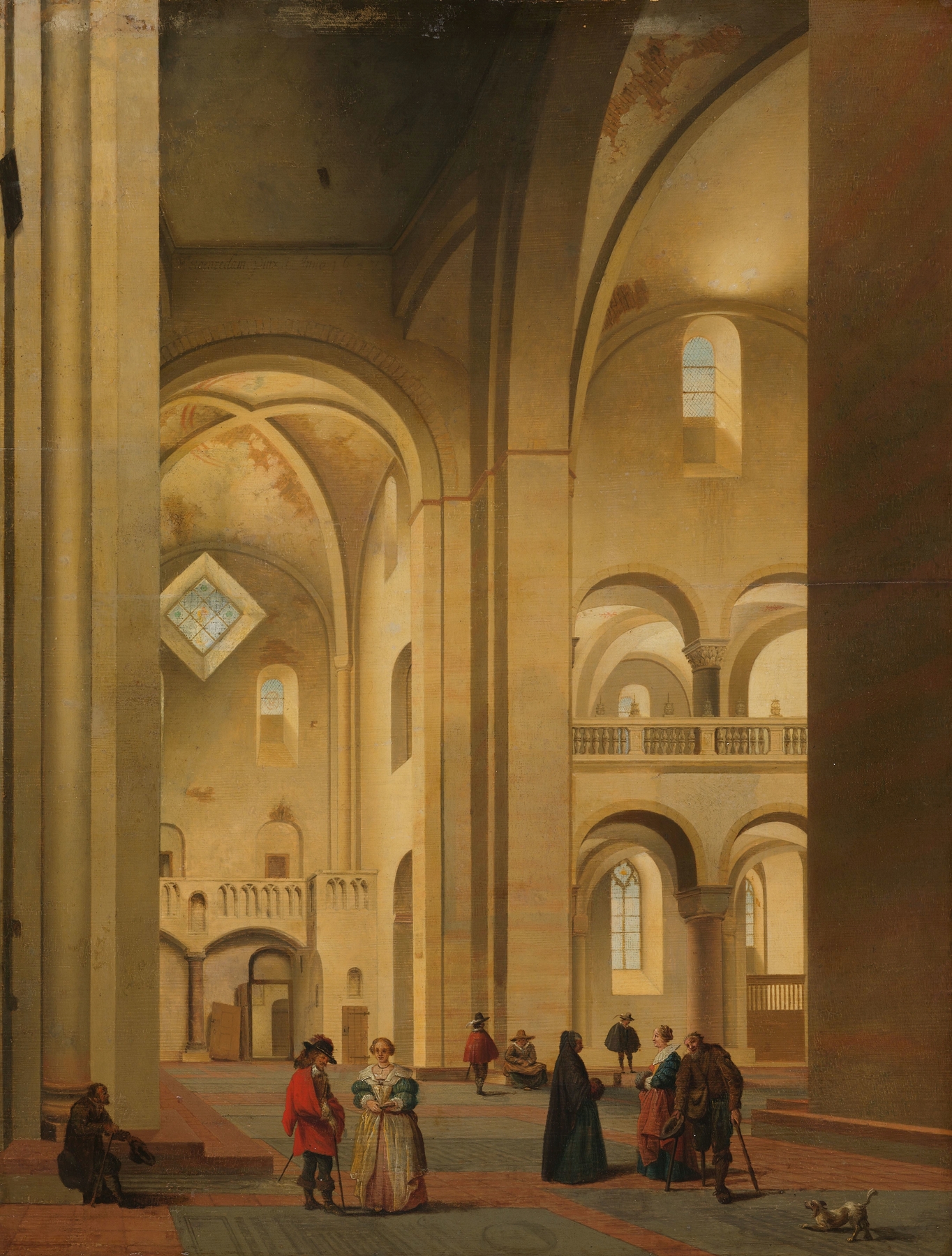
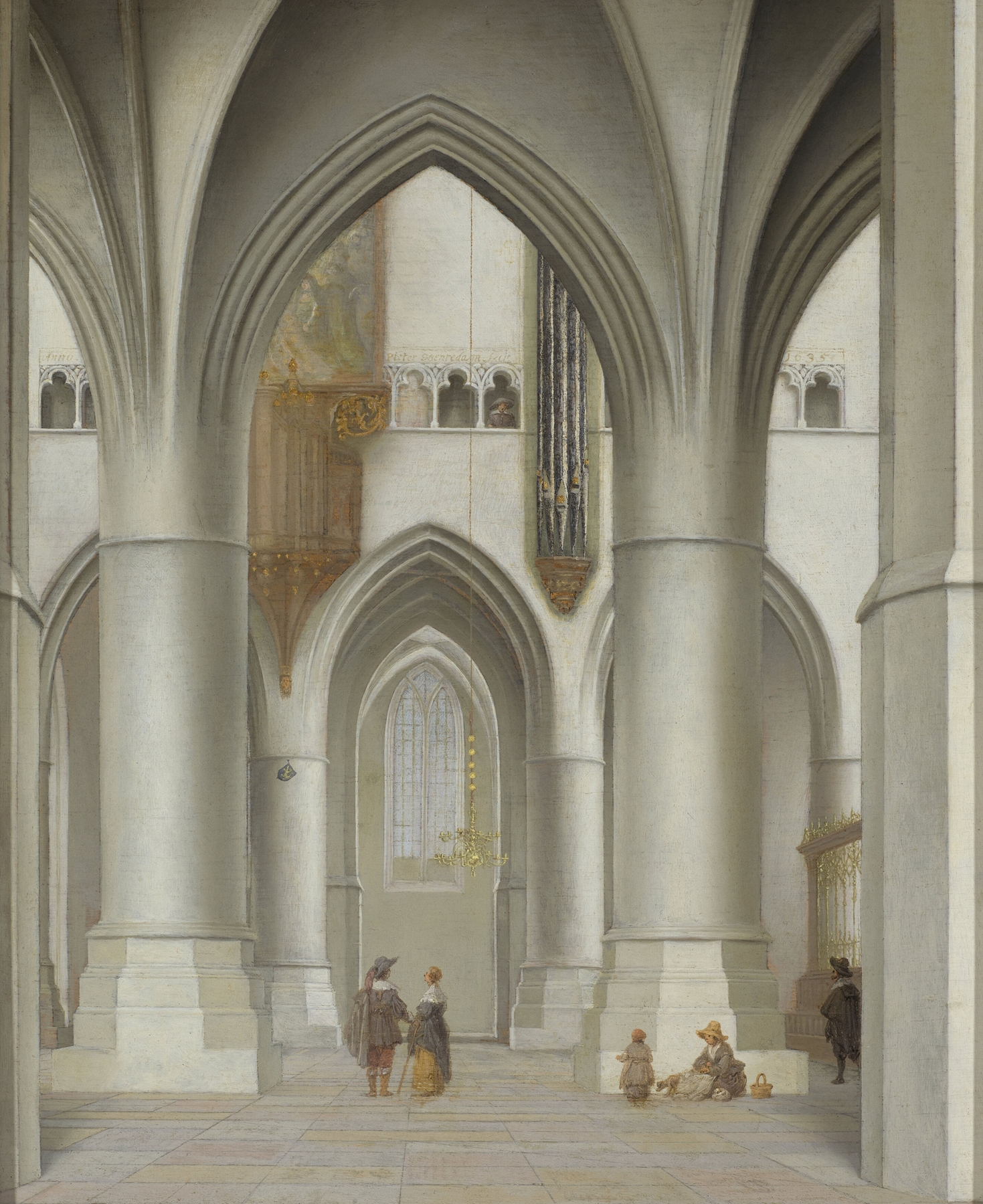
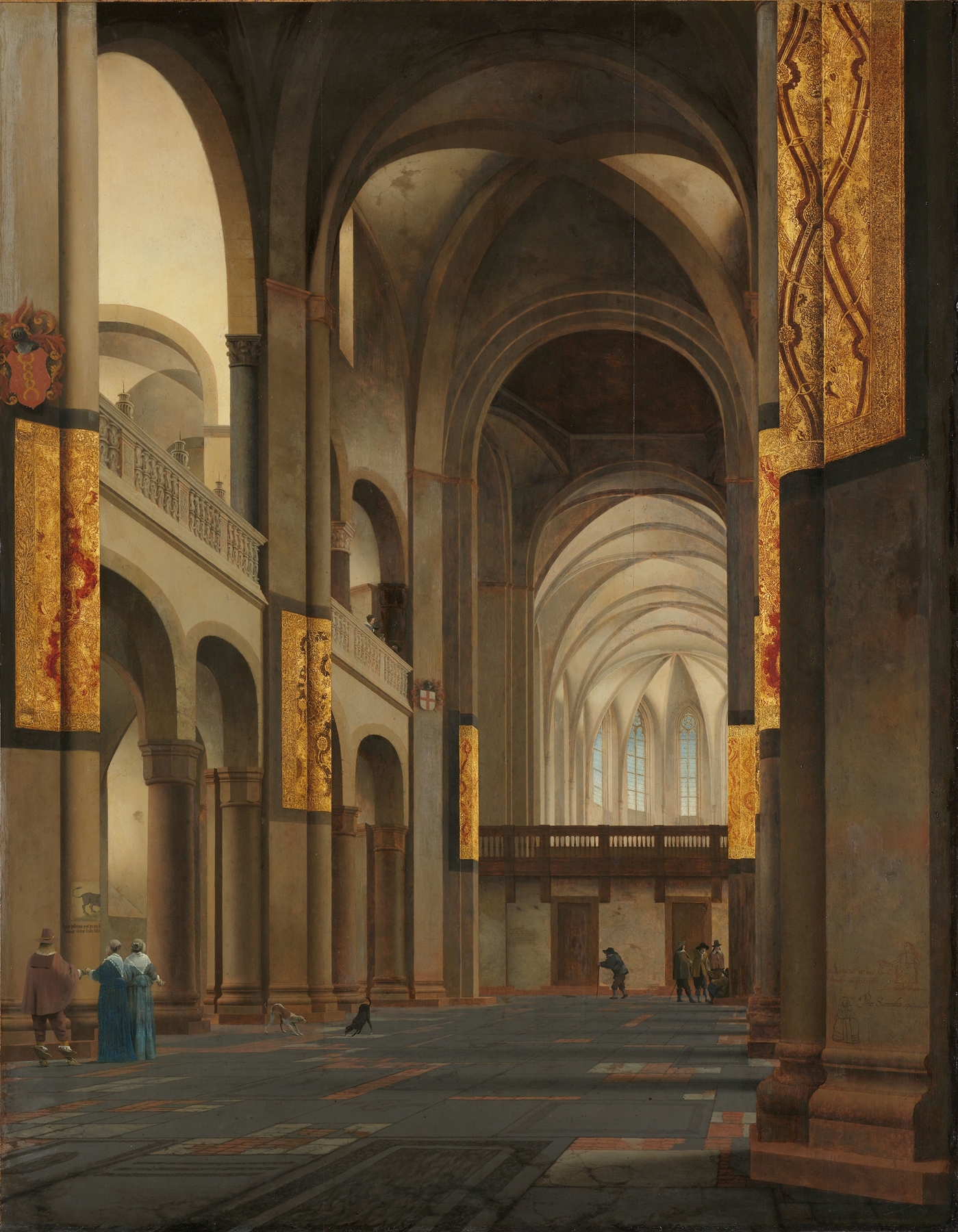
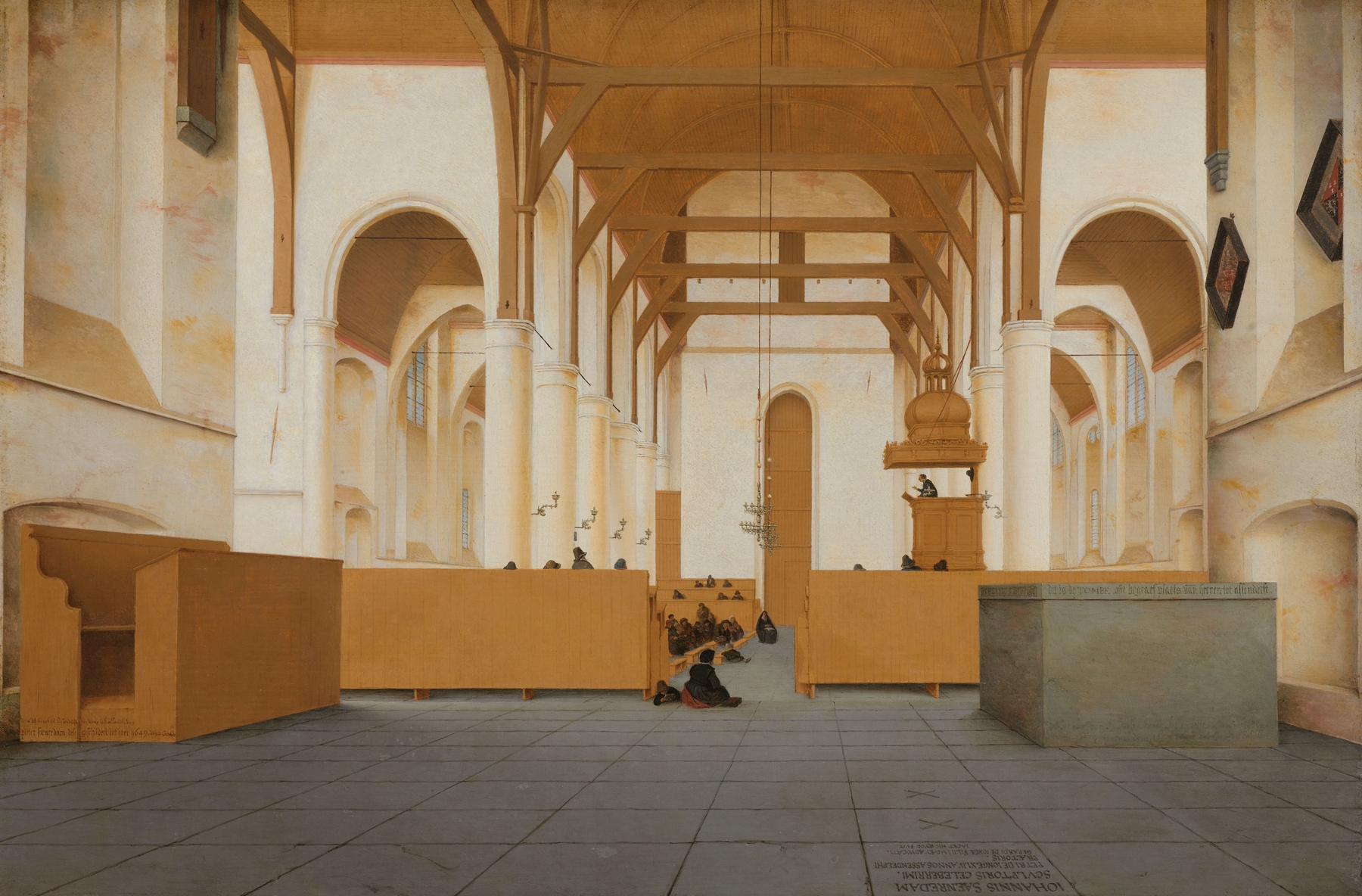
“Under the brush, chaos becomes grace.” In the hands of a master, color transforms the ordinary into the extraordinary, whispering tales of beauty within structure. Focus on the soft blues and earthy browns that envelop the nave, drawing your eye up along the soaring architecture. Notice how the light filters through the stained glass, casting vibrant hues across the polished stone floor, illuminating the intricate details of the pillars. Each element is meticulously rendered, inviting you to explore the harmonious interplay between light and shadow, form and space.
Saenredam’s precision reveals a deeper reverence for both the sacred and the mundane. The stark lines of the nave contrast with the gentle curves of the arches, symbolizing the tension between the earthly and the divine. The stillness of the empty church speaks volumes, evoking a sense of solitude that invites reflection on faith and community. In every brushstroke, an essence of tranquility permeates the atmosphere, hinting at the sacred moments that take place within these walls.
Created in 1650, this work emerged as Saenredam was establishing himself in Haarlem, a hub for Dutch painting. During this period, the art world was shifting, emphasizing realism and intricate detail. The artist’s focus on architecture was part of a broader trend among his contemporaries, who sought to capture the essence of their environment with unprecedented clarity and depth.