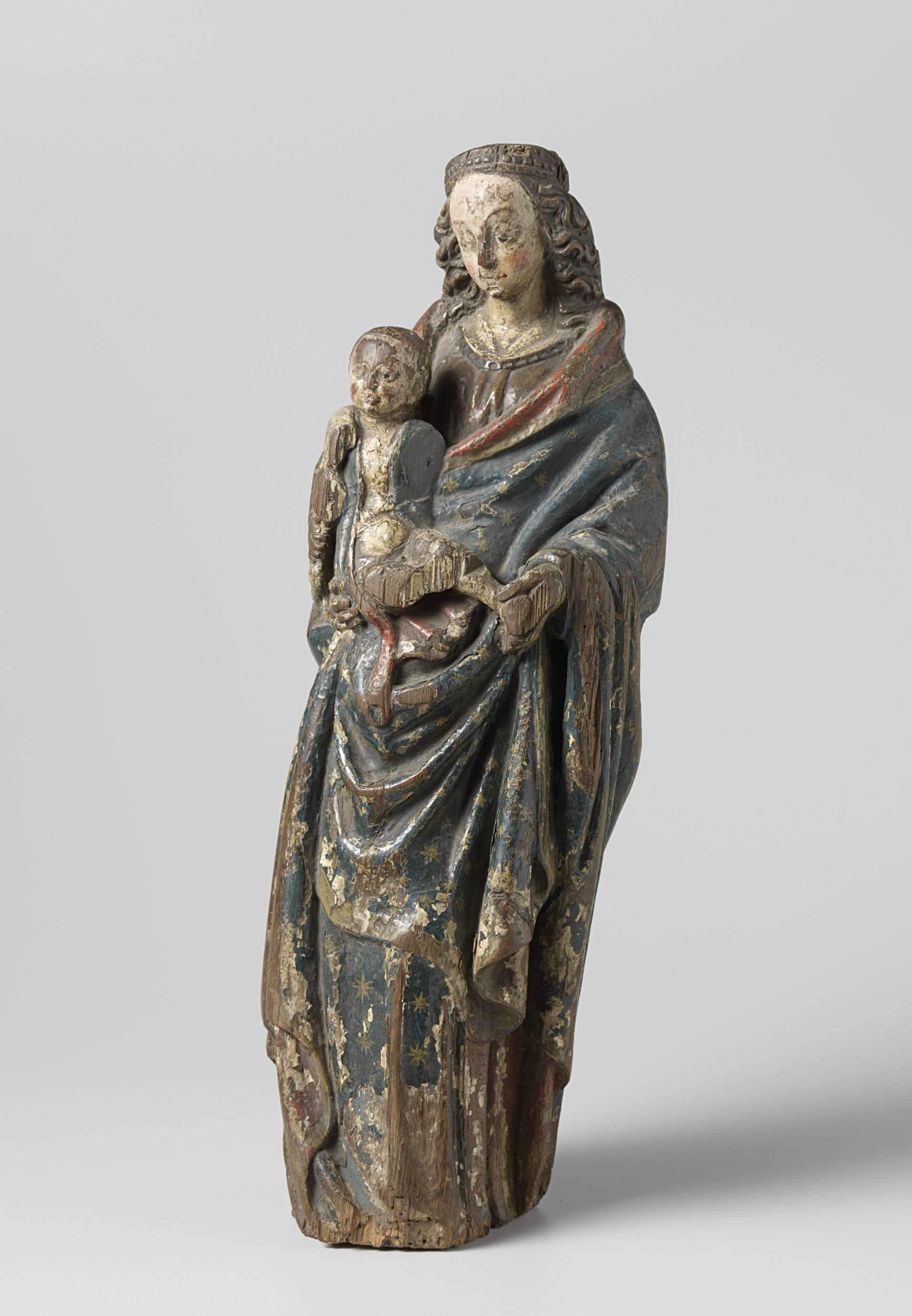
Could beauty survive in a century of chaos? As tumult and transformation swept across Europe in the early 16th century, a quiet resilience emerged in art, capturing the eternal dance between vulnerability and strength. Look to the center of the composition, where the Virgin holds the Christ Child, their figures serene yet charged with a palpable energy. Notice how the artist has carefully crafted their expressions, tender and protective as soft light envelops them, creating an ethereal glow. The rich drapery of the Virgin's garments flows elegantly, its deep hues contrasting with the pale innocence of the Child, drawing the eye inwards, inviting contemplation of their intimate bond. In this work, movement is a silent undercurrent. The Virgin's gaze, tender yet determined, reflects a sense of purpose amidst the surrounding turbulence of the time. The gentle curve of her arm cradling the Child conveys not only maternal affection but also a sense of safeguarding, as though she is a beacon of hope in an uncertain world. The delicate details in the fabric and the Child's tiny hand emphasize the fragility of beauty and love, suggesting that even in chaos, these elements endure and transcend. This artwork, created between 1500 and 1520 by an unknown artist, exists within a period marked by religious upheaval and artistic innovation. As the Renaissance blossomed, artists sought new ways of expression, pushing the boundaries of technique and subject matter. This piece reflects the values of its time, emphasizing human emotion and spirituality, serving as a testament to the resilience of artistry in the face of societal challenges.