Virgin and Child with Saints Sebastian, Francis, John the Baptist, Jerome, an unidentified female saint, Saint Anthony of Padua and two donors — History & Analysis
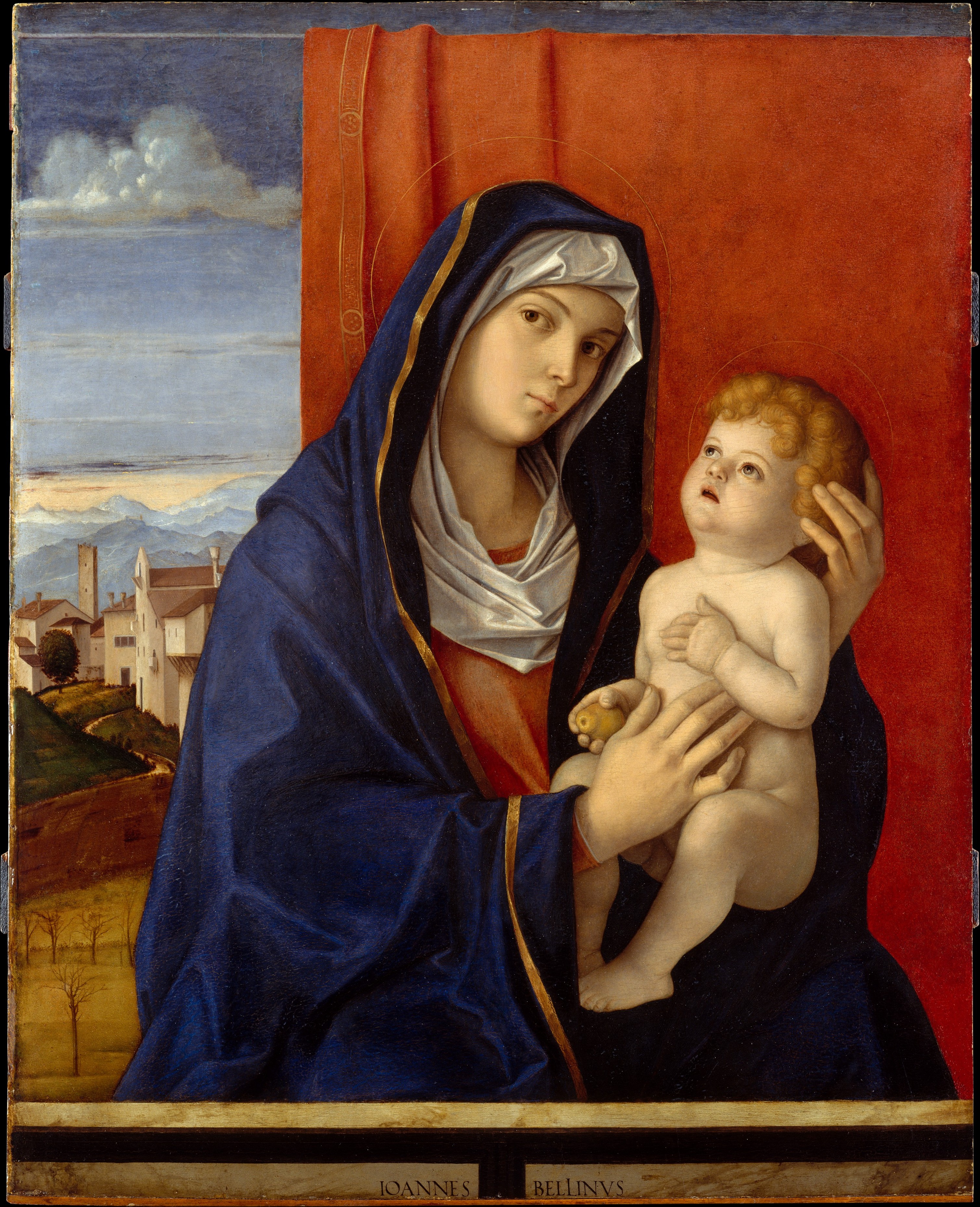
Is this a mirror — or a memory? In Virgin and Child with Saints, the boundary between the sacred and the temporal blurs, inviting the viewer to contemplate both faith and the inevitable decay of life itself. Focus on the serene expression of the Virgin, positioned centrally, her gentle gaze drawing you in. Notice how the light cascades softly across her robes, rich in deep blues and radiant whites, creating an ethereal quality.
Look to the left, where Saints Sebastian and Francis stand in contrast—their earthy tones and textured details speak of the corporeal world, grounding the divine scene. The careful placement of each figure in a harmonious composition highlights their connection, while the intricate background whispers of a world steeped in history and reverence. Delve deeper into the piece: the juxtaposition of the youthful Christ and the aged saints suggests not only the passage of time but the tension between innocence and wisdom. The two donors, framed at the base, serve as a reminder of mortality, their presence a testament to faith and the fleeting nature of human life.
The delicate decay of the background hints at the transience of earthly existence, a quiet acknowledgment that beauty, while divine, is often accompanied by the sorrow of loss. Giovanni Bellini painted this work around 1515 during a transformative period in Venice. The city was a hub of artistic innovation, and Bellini, revered for his mastery of color and light, was at the vanguard of this movement. By this time, he was transitioning from the influence of earlier styles to a more expressive and emotional approach, echoing the broader shifts in Renaissance art and thought.