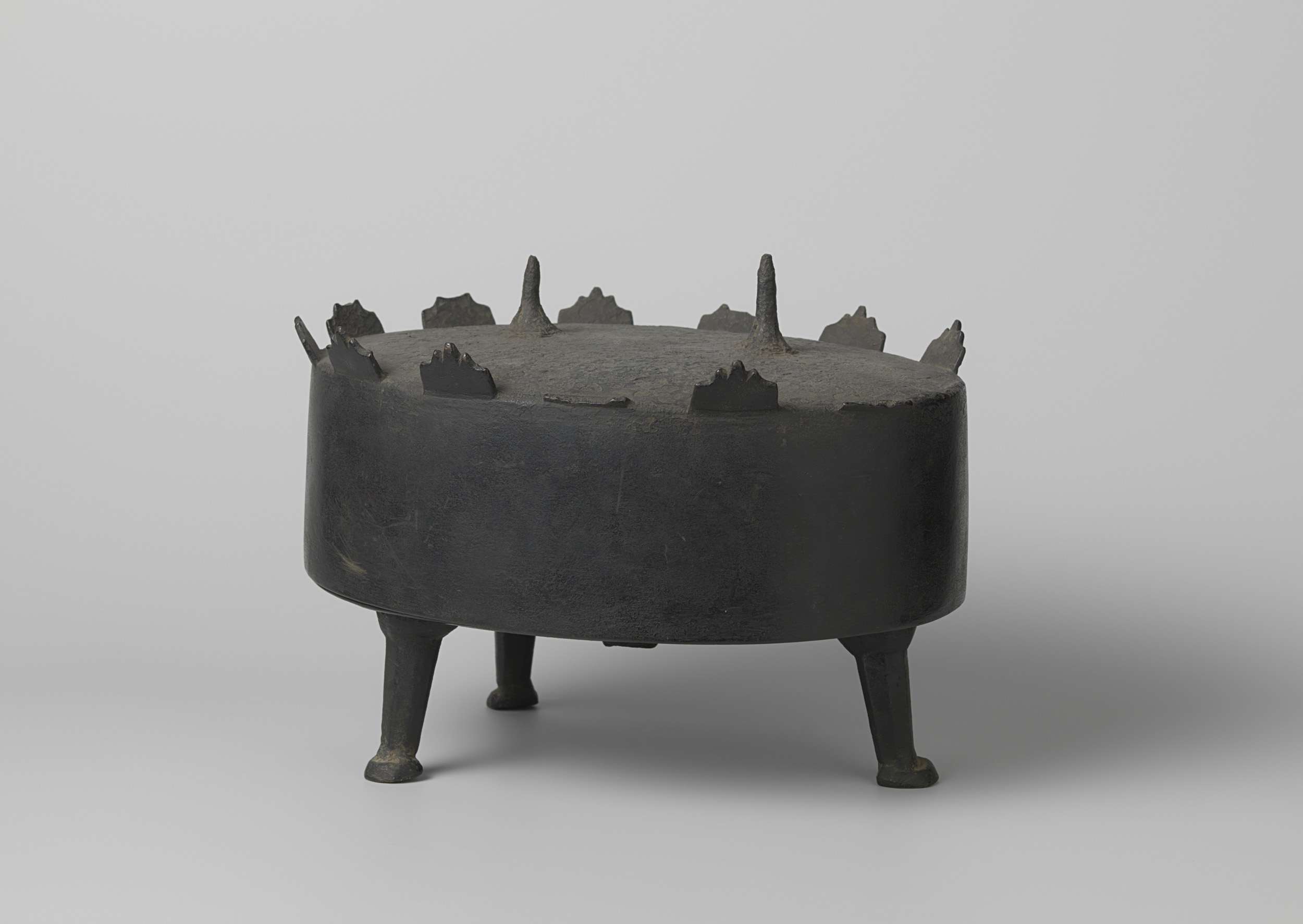
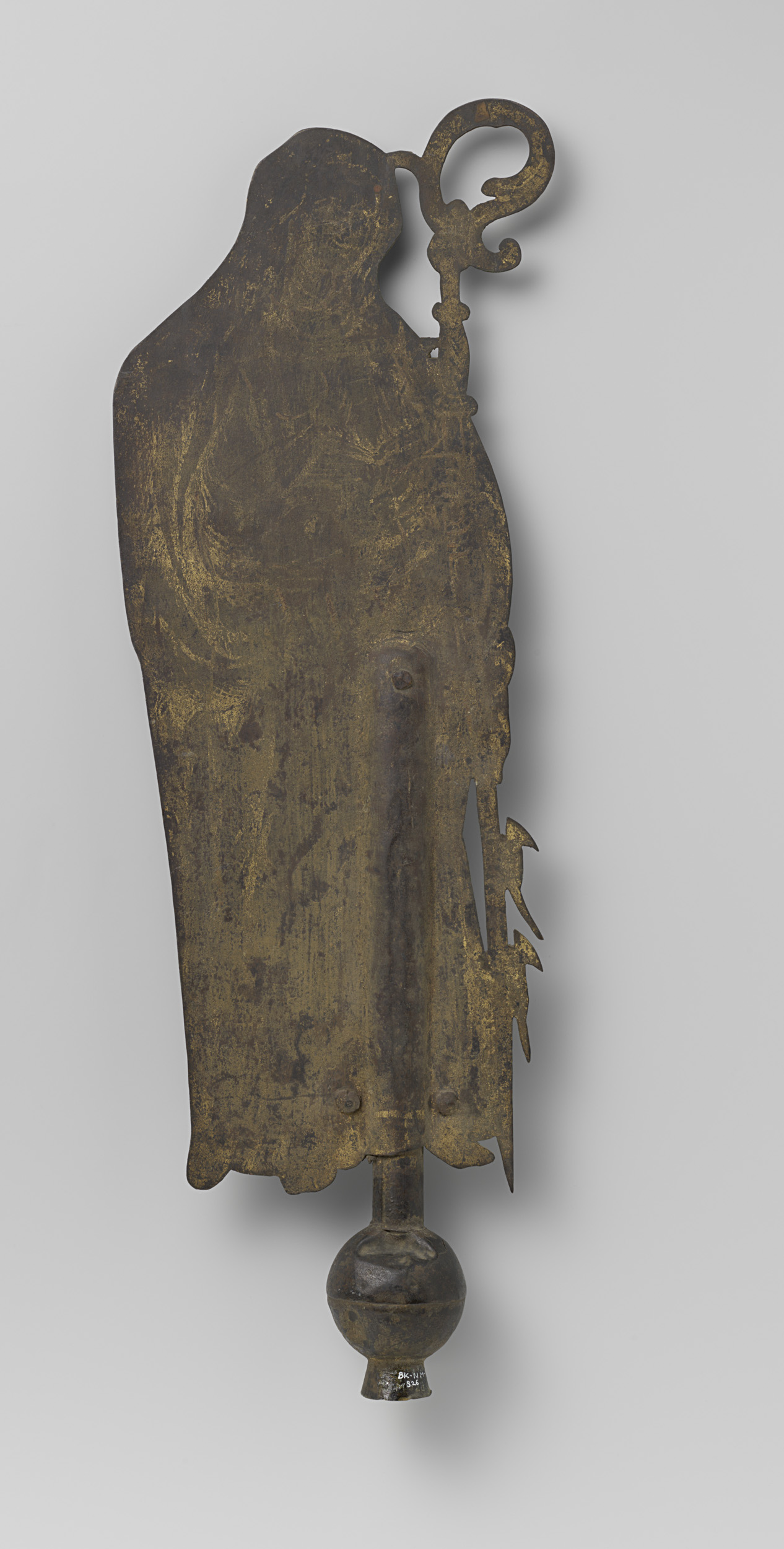
Windvaan van koper, met triton, afkomstig van de Hogewoerdspoort te Leiden — History & Analysis
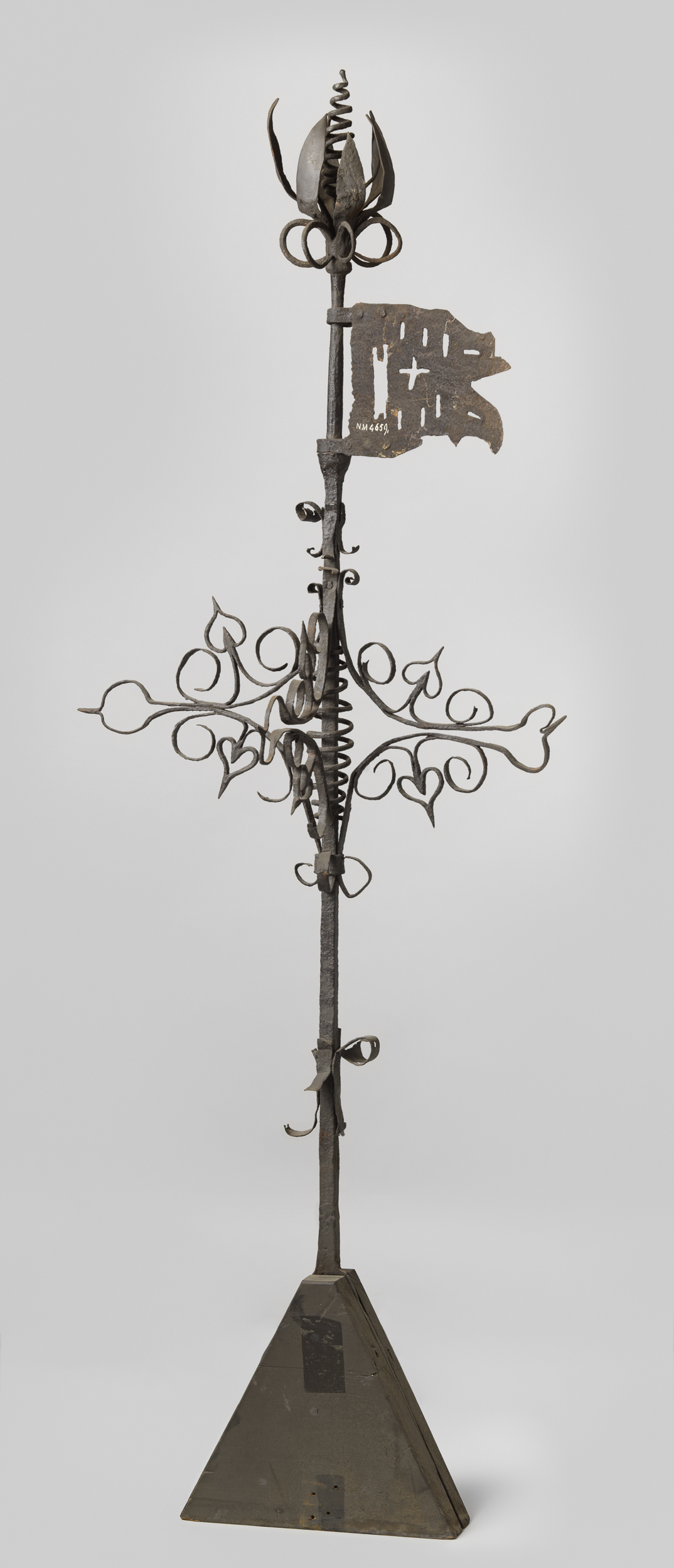
Is this a mirror — or a memory? The glint of metal beckons, inviting contemplation of its past, as the surface reflects not just light, but the echoes of the lives it has touched. Focus on the intricate details of the copper windvane, the way it gracefully twists and turns, catching the light with a warm, inviting glow. Look closely at the triton that crowns it, his form both powerful and ethereal, commanding attention while seeming simultaneously aloof.
Notice how the patina tells a story of time; the rich greens and browns speak of weathered years, imbuing the piece with a sense of history that transcends its physicality. Within this sculpture lies the tension between permanence and transience. The windvane symbolizes direction, suggesting a journey continually in motion, while the triton, a mythological figure, hints at the eternal.
Each element serves as a metaphor, the copper vessel awakening memories of the sea and the winds that guide mariners, evoking a calm yet restless energy. This work emerged in a period when anonymous artisans flourished in the Netherlands, crafting pieces deeply intertwined with local culture and maritime history. Created during a time when the Dutch were establishing trading routes and exploring new horizons, the windvane represents both a practical function and an artistic expression of identity, reflecting the era's merging of practicality and aesthetics.