Woman with a Basket of Beans in a Kitchen Garden — History & Analysis
Under the gentle glow of the afternoon sun, a woman pauses in a lush kitchen garden, her hands cradling a woven basket brimming with beans. The air is thick with the earthy scent of soil and leaves, while the rhythmic chirping of birds punctuates the stillness. She stands poised between the vibrancy of her harvest and the quiet domesticity of her surroundings, a moment caught between labor and leisure. Look to the left at the rich hues of the garden, where verdant leaves burst forth in a riot of greens, drawing your eye toward the radiant blossoms nestled among them. The light dances across her figure, illuminating the subtle textures of her dress, capturing the wear of her daily toil.
Notice how the basket, heavy with produce, accentuates her posture, embodying both pride and fatigue, a testament to her dedication. The composition is meticulously balanced, inviting the viewer into this serene yet vibrant sanctuary. Beneath the surface of this tranquil scene lies an obsession with domestic life and the nurturing of nature. The woman's concentrated gaze suggests a deeper connection to her work; she is not merely gathering food, but cultivating sustenance for her family. The contrasting elements of abundance and labor echo the delicate balance of life—how joy is often intertwined with hardship.
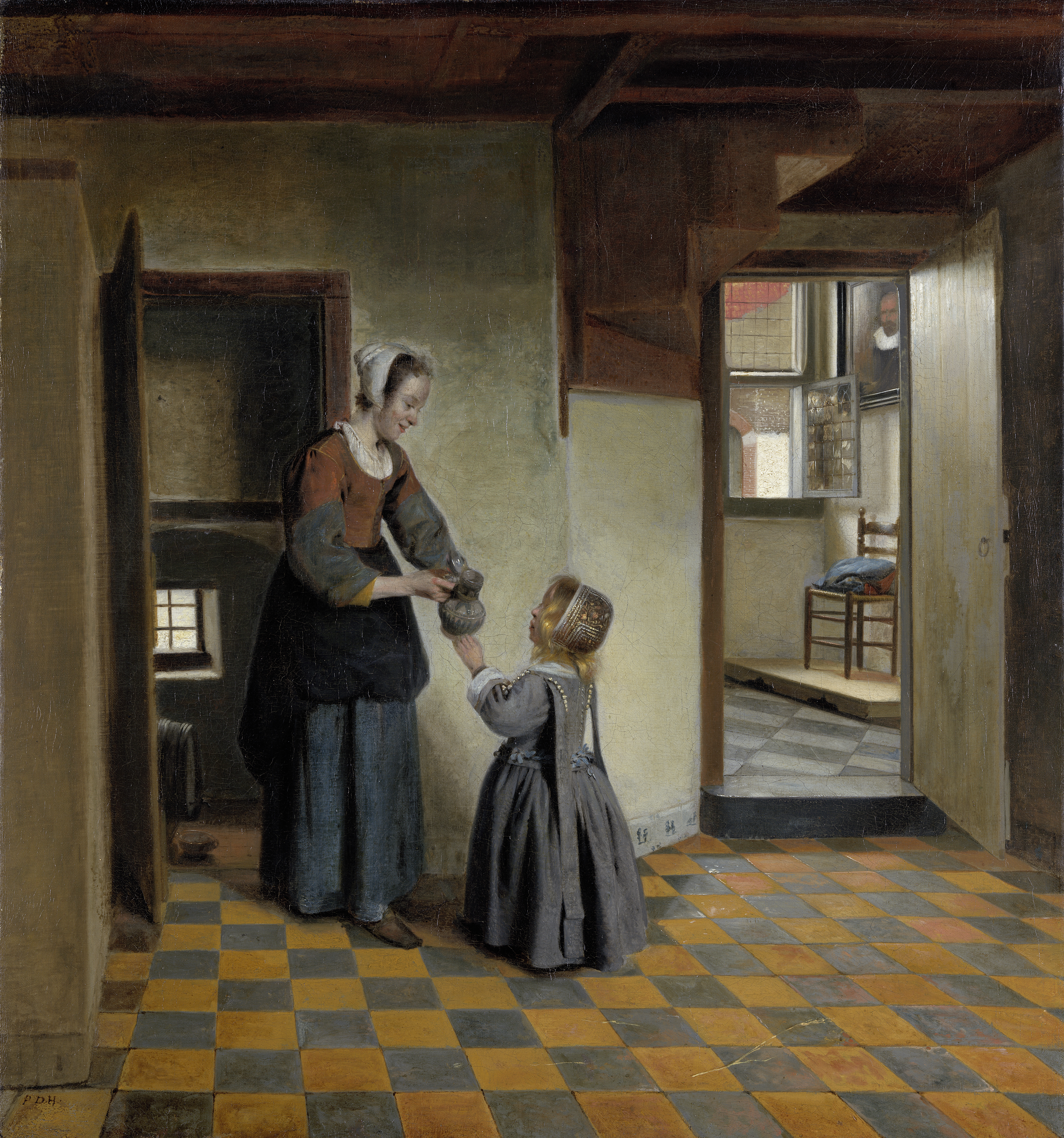
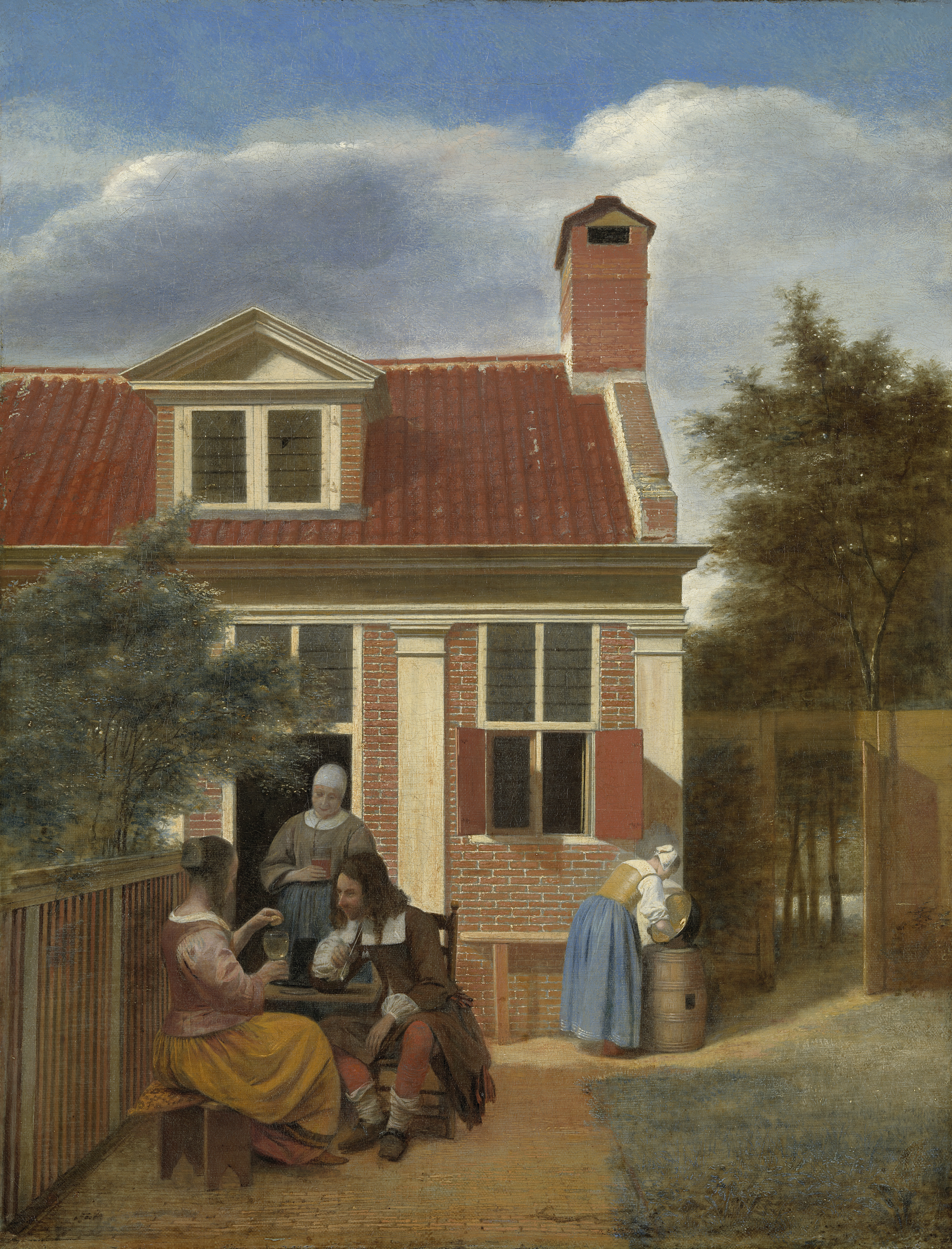
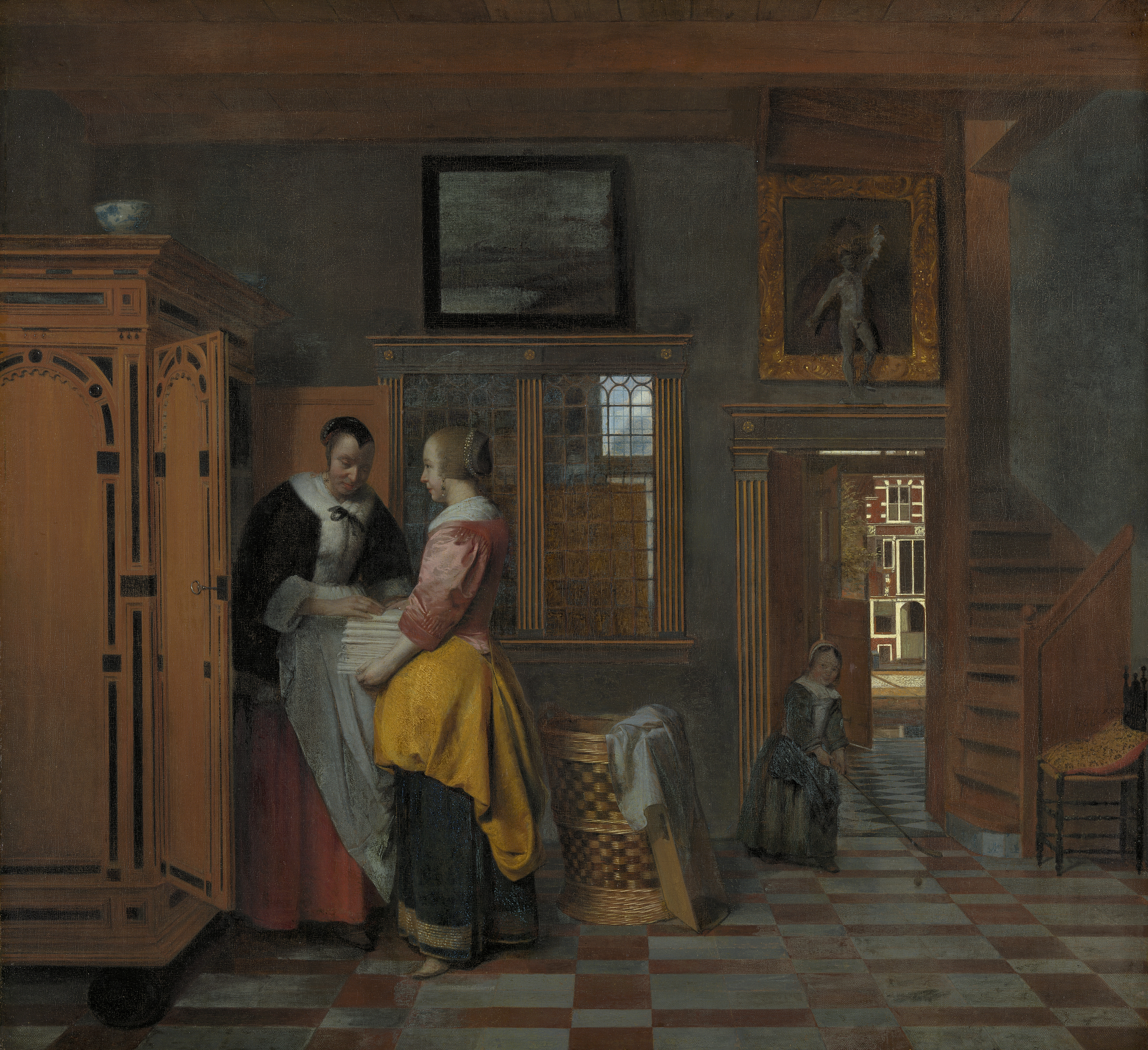
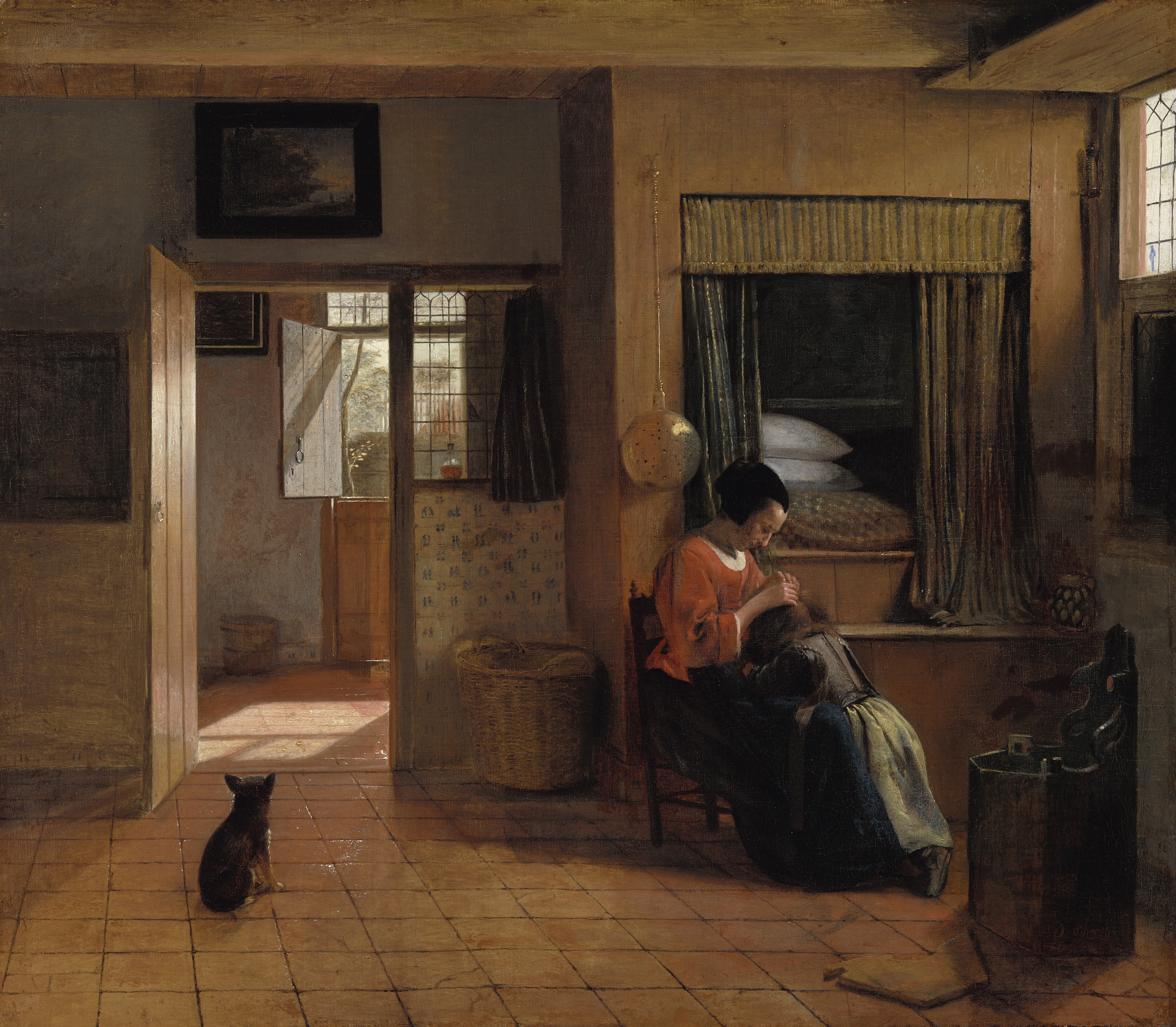
Each bean signifies her care, while the garden’s fertility symbolizes hope and continuity. In 1660, Pieter de Hooch created this work during a period marked by the flourishing of genre painting in the Dutch Golden Age. Living in Delft, he focused on domestic interiors and everyday life, finding beauty in the ordinary. De Hooch's exploration of light and space reflected not only his skill but also a society increasingly enamored with the home as a site of comfort and order amid the complexities of the world outside.