A Hunting Scene at the Edge of the Woods — História e Análise
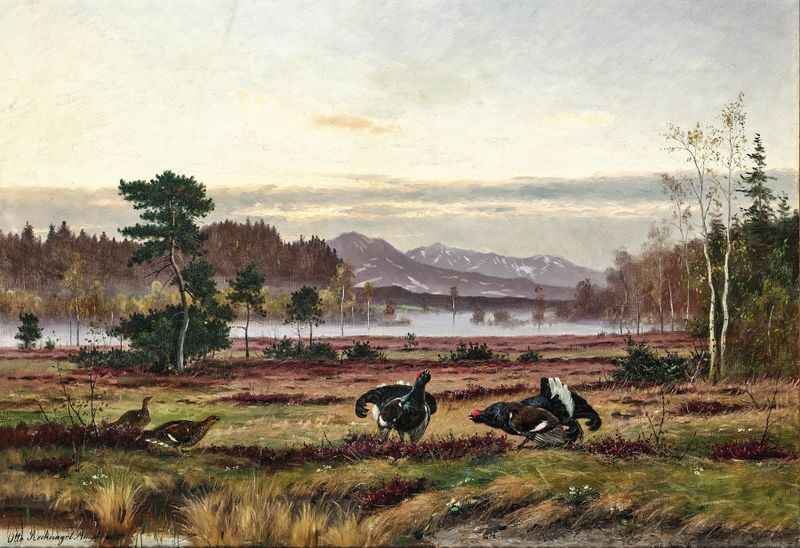
In the delicate balance of nature and man, the tension between predator and prey unfolds, inviting contemplation of our instincts and impulses. Look closely at the center, where figures clad in earthy tones are poised amidst a thicket of verdant greens. Notice the skilled brushwork that captures the foliage's dappled light, creating a shimmer that feels alive. The hunters, with focused expressions and sharply defined postures, contrast sharply with the gentler hues of the surrounding landscape, drawing the eye to their intent and creating a palpable sense of anticipation. Yet, there is more beneath the surface.
The serenity of the woodland is punctured by the sharp lines of the hunters’ rifles, hinting at an impending clash of life and death. The tranquil forest, alive with rustling leaves and distant calls, serves as a reminder of nature's inherent balance, while the hunters' determined gaze suggests a disruption to that very harmony. This interplay of tension reveals the duality of existence — the beauty in the pursuit and the somber reality of survival. In 1913, Otto Recknagel painted this work during a period when European art was shifting towards modernism, yet many artists still held a deep appreciation for traditional themes, such as nature and hunting.
Recknagel himself was influenced by his surroundings in Germany, where the natural world often served as a backdrop for human experience. This painting encapsulates the struggle for balance between civilization and the wild, a theme resonating with the societal changes occurring at the time.