A landscape — História e Análise
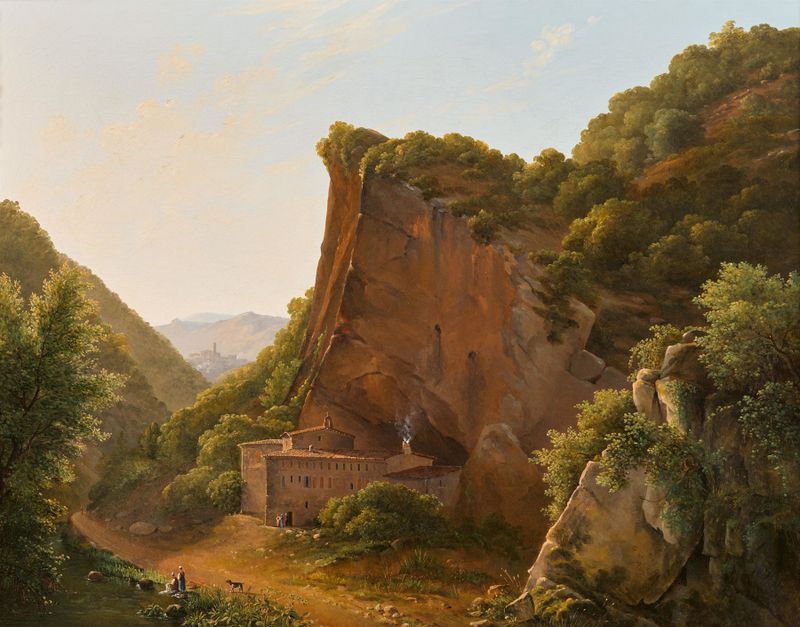
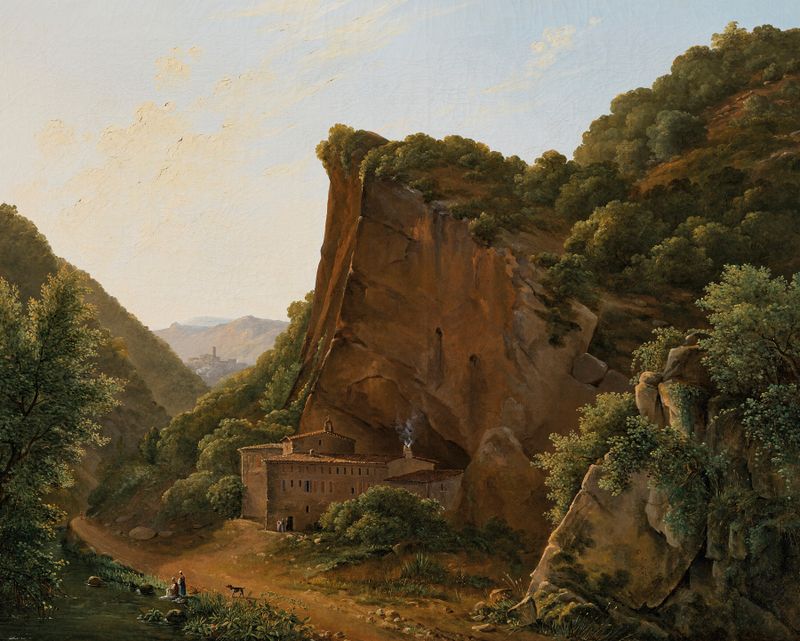
Could a single brushstroke hold eternity? In the delicate interplay of color and light, we find not just a landscape, but a fresh beginning—an invitation to witness nature’s cyclical essence. Look to the horizon at the gentle gradient where warm ochres meet cool blues, guiding your gaze across the canvas. Notice how the verdant greens of the foreground breathe life into the scene, each stroke carefully layered to create depth and texture. The brushwork is both spontaneous and deliberate, embodying the artist’s quest for harmony with nature.
Light cascades down, illuminating patches of the landscape and evoking a feeling of serene stillness punctuated by the promise of renewal. Within this tranquil vista lies an intricate dance of contrasts. The sun-dappled areas represent hope and vigor, while the shadowy recesses suggest the weight of forgotten histories. It's as though the painting captures the duality of existence—life intertwined with decay, forever hinting at the potential for rebirth.
Subtle details, like the flight of a solitary bird or the rustle of leaves, evoke a sense of continuity, resonating with the cycles of life itself. In 1834, Polydore de Bec was navigating the early stages of his career amid the Romantic movement’s fervor for nature’s beauty. Living in France during a time of political upheaval and artistic exploration, he sought to capture not only the aesthetic qualities of the landscape but also the emotional undercurrents that bind humanity to the earth. This period marked a pivotal moment for artists who yearned to express deeper connections, and through this work, de Bec found his voice in the sublime.