Mediterrane Landschaft mit Schlucht — História e Análise
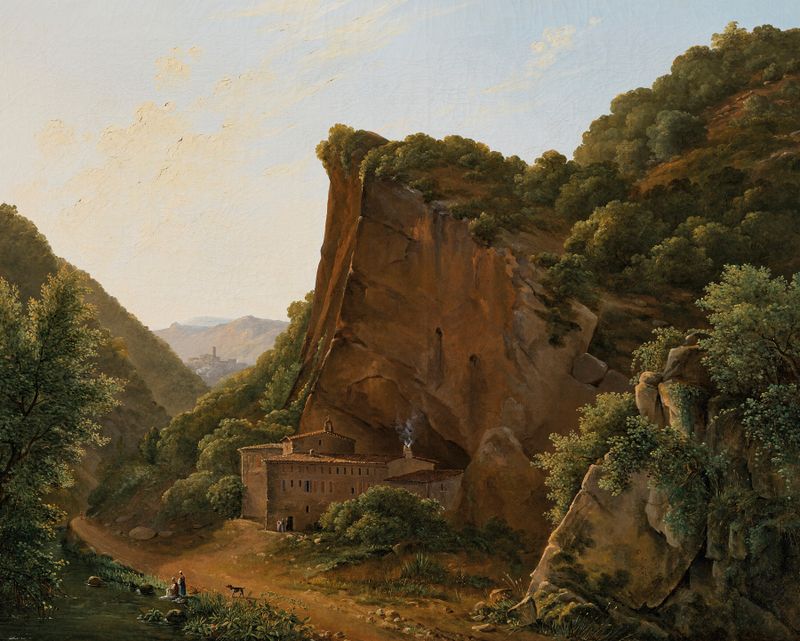
In Mediterrane Landschaft mit Schlucht, the void of the landscape invites contemplation, suggesting that beauty often arises from the vast spaces of uncertainty. Focus first on the dramatic interplay of light and shadow that carves the rocky gorge at the center of the canvas. Notice how the warm ochres and deep greens harmonize to create an illusion of depth, drawing you into the scene. The delicate brushwork showcases textures, from the rugged cliffs to the soft foliage, inviting you to linger on the edges of the chasm.
The vibrant sky above, painted with soft blues and hints of golden light, serves as a counterpoint to the rugged terrain below, creating a sense of balance. As your gaze wanders, you may feel the tension between the solid rock formations and the ephemeral qualities of the sky. The void in the gorge mirrors the emotional spaces humans often navigate—filled with potential and uncertainty. This contrast evokes feelings of solitude and introspection, suggesting that within chaos lies a profound beauty waiting to be uncovered. Polydore de Bec painted this landscape in 1834, during a period marked by a growing interest in Romanticism and a renewed appreciation for nature's sublime power.
Living in France, he was influenced by the shifting European art scene that embraced emotion and individual experience. The painting reflects both his personal fascination with the Mediterranean landscape and the broader artistic movements of his time, seeking to capture the essence of the natural world in all its complexities.