Alt Luzern — História e Análise
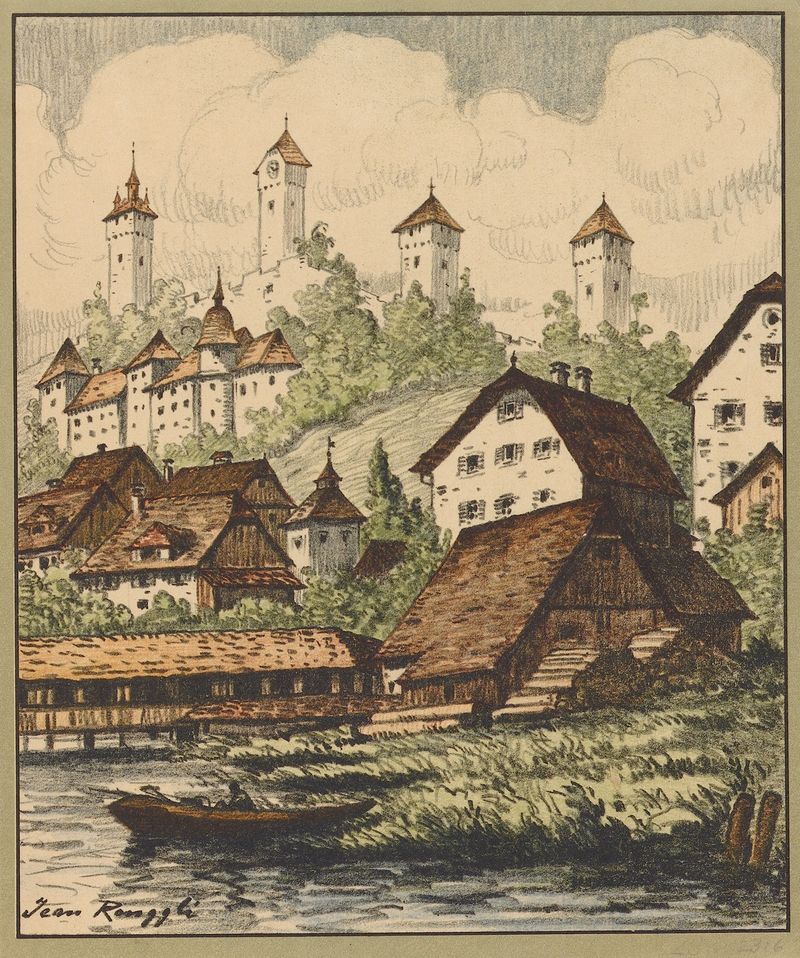
In the midst of swirling colors and frenzied lines, a sublime harmony emerges, suggesting both tumult and tranquility. Look to the center of the canvas, where bold, sweeping strokes intertwine, drawing the eye into an intricate dance of form and color. Shades of deep blues and fiery oranges collide, creating an energetic rhythm that seems to pulse with life. The chaotic brushwork is both expressive and deliberate, as if each mark was a heartbeat, capturing a fleeting moment in time. Beneath the surface lies a tapestry of emotions, where chaos is not merely an absence of order but a vital force.
Observe the contrast between the frenetic lines and the soft, luminous areas that emerge sporadically — these pockets of light symbolize hope and clarity amidst the storm. The interplay of darkness and brightness paints a narrative of struggle and resolution, inviting the viewer to contemplate the beauty hidden within chaos. In creating Alt Luzern, Renggli embraced the evolving art scene of the late 20th century, where abstraction and expressionism were at the forefront. At this time, he was exploring a personal journey through the complexities of urban life and nature in Switzerland, infusing his work with both introspection and a deep connection to his surroundings.
The painting reflects a moment in his artistic evolution, where he sought to articulate the vibrant yet chaotic essence of existence.