Aus Kloster Maulbronn — História e Análise
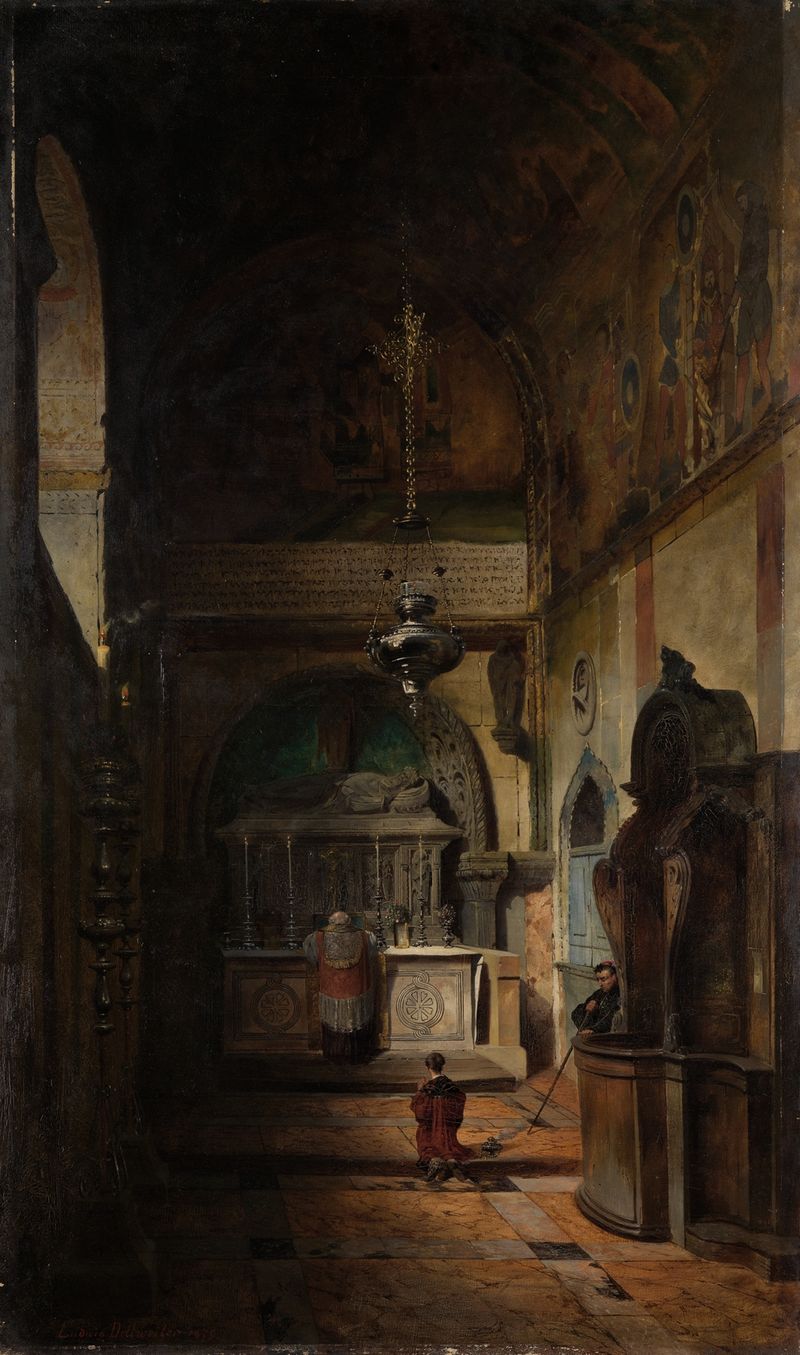
What if silence could speak through light? In Aus Kloster Maulbronn, the emptiness of the cloister resonates with an eloquence of its own, drawing viewers into a contemplative stillness. Look to the left, where the soft illumination spills through an arched window, casting gentle patterns on the stone floor. The light dances across the muted palette of greys and earthy tones, creating a serene atmosphere that invites introspection. Notice how the stark geometry of the cloister contrasts with the organic quality of the shadows, reinforcing a sense of solitude and peace within the monastery's walls. Delve deeper into the painting's subtleties, and you’ll uncover a poignant juxtaposition between light and shadow, representing the struggle between the spiritual and the material.
The empty benches hint at the absence of worshippers, emphasizing the isolation that can accompany devotion. Each untouched surface whispers stories of silence, a longing for connection, as if the very stones have absorbed the prayers once uttered within their embrace. In 1872, Ludwig Dittweiler found inspiration in the historic Maulbronn Monastery, a UNESCO World Heritage site in Germany. At this time, the artist was exploring themes of architecture and spirituality, situating himself in a period marked by a growing interest in realism and the natural world.
This painting reflects both his admiration for gothic architecture and his desire to capture the serene beauty of a world that often overlooked the quietude of sacred spaces.