
Bachlandschaft — História e Análise
When did color learn to lie? In Bachlandschaft, vibrant hues dance with dissonance, weaving a tapestry of nature that teeters on the brink of chaos, beckoning the viewer to question the very essence of reality. Look first to the sweeping brushstrokes that sweep across the canvas, where the greens of the forest clash boldly with the cerulean sky. The river meanders through the landscape, its surface reflecting the world above in a kaleidoscope of blues and greens, while hints of yellow and orange flicker at the edges like whispers of sunlight. Notice how the dense foliage on the left side draws the eye before leading it to the broader expanse of the river, creating a sense of movement that invites exploration and discovery. Deeper insights emerge from the juxtaposition of serenity and turmoil; the lush greenery suggests life and renewal, while the turbulent brushwork hints at an underlying chaos, portraying nature not as a tranquil scene but as a vibrant ecosystem alive with unrestrained energy.
This contrast speaks to the transformative power of landscape, where beauty and disorder coexist, and the river serves as a metaphor for the passage of time—ever flowing, yet eternally changing. In 1884, Theodor Von Hörmann painted this work during a period of artistic experimentation in Europe, as artists sought to break free from traditional constraints. Living in Austria, he was influenced by the Romantic movement, embracing nature's emotional depth. This piece reflects not only his personal journey but also a broader shift in art, where the exploration of color and form began to challenge viewers’ perceptions of the natural world.
Mais obras de Theodor Von Hörmann
Ver tudo →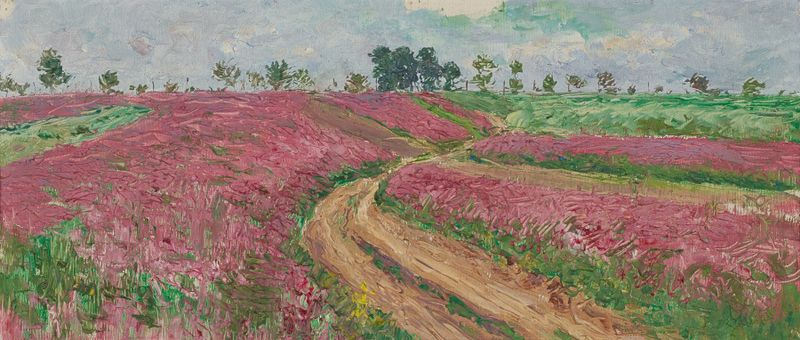
Esparsettenfeld Bei Znaim Ii
Theodor Von Hörmann

Blick Auf Paris
Theodor Von Hörmann

A Watering Place in Kis Bagh
Theodor Von Hörmann

Auf Der Ligethi Puszta
Theodor Von Hörmann
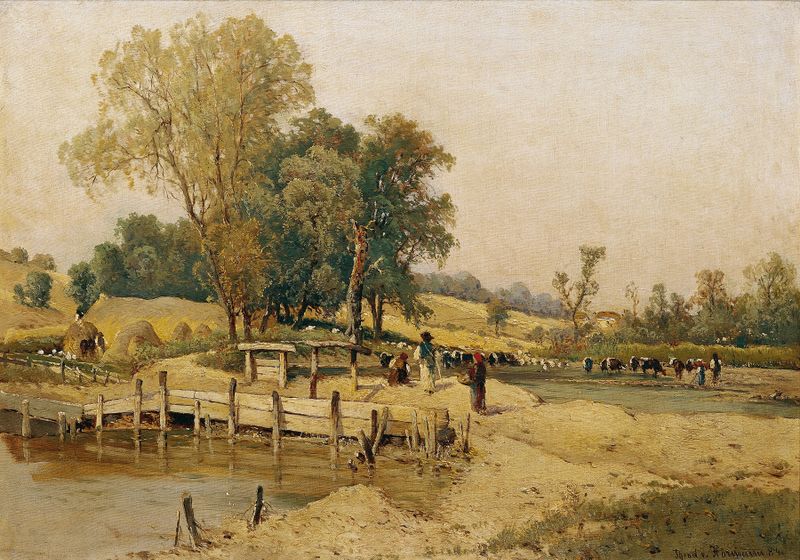
Ungarische Landschaft Mit Viehtränke
Theodor Von Hörmann
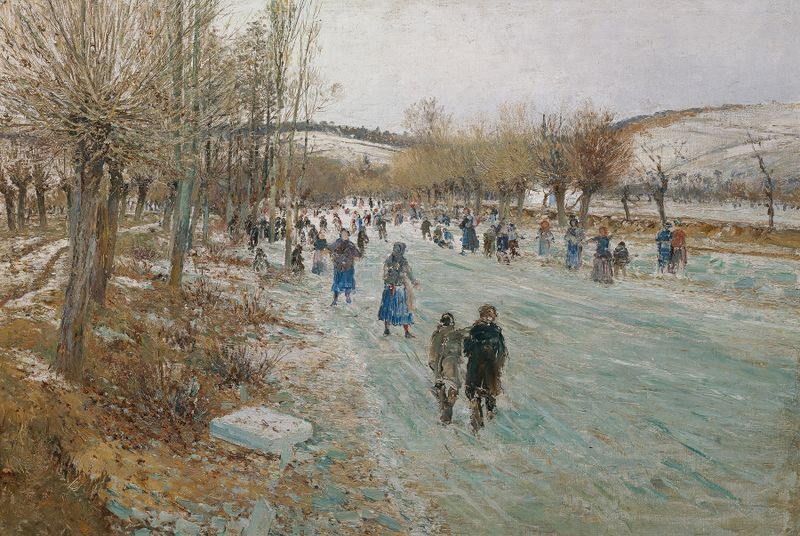
Eisläufer Auf Der Thaya Bei Lundenburg
Theodor Von Hörmann
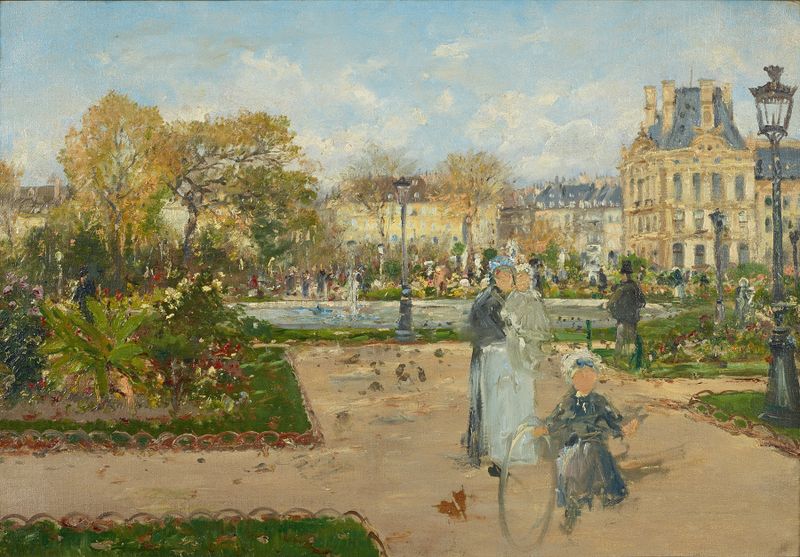
In Den Tuilerien
Theodor Von Hörmann

A Winter Day, Scene near St. Pölten
Theodor Von Hörmann

Znaim Im Schnee Ii
Theodor Von Hörmann
Dorfmotiv von Albeins bei Brixen, Tirol
Theodor Von Hörmann





