Bäume vor dem Haus — História e Análise
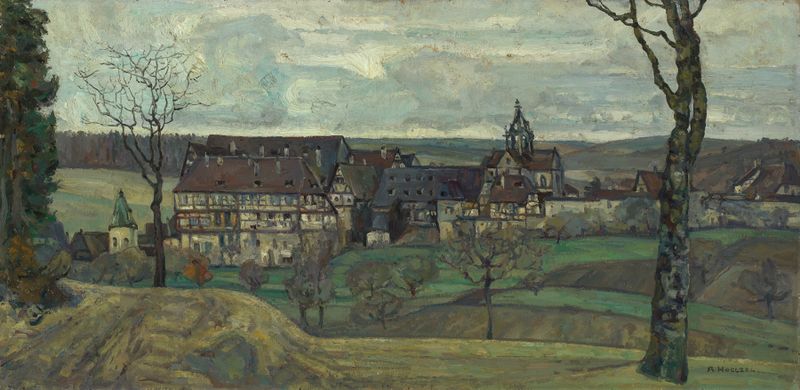
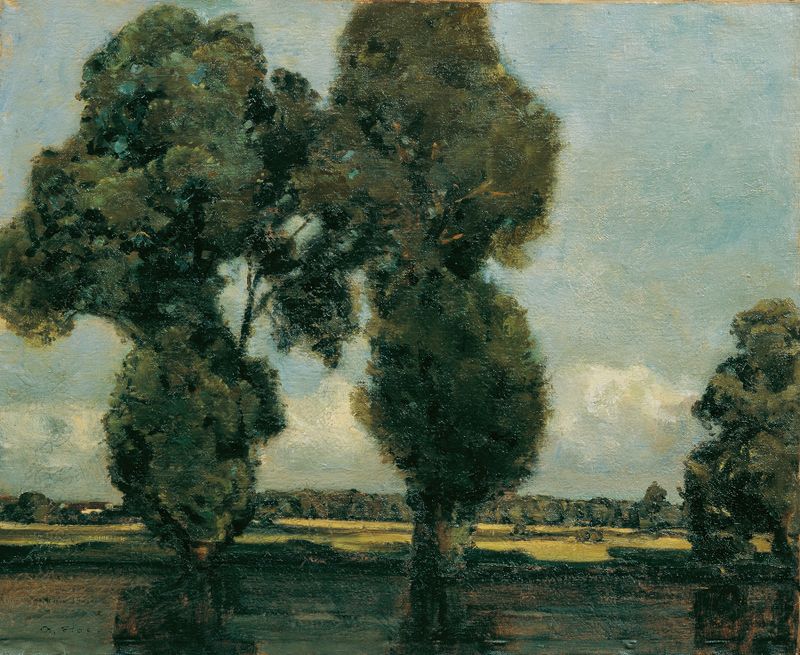
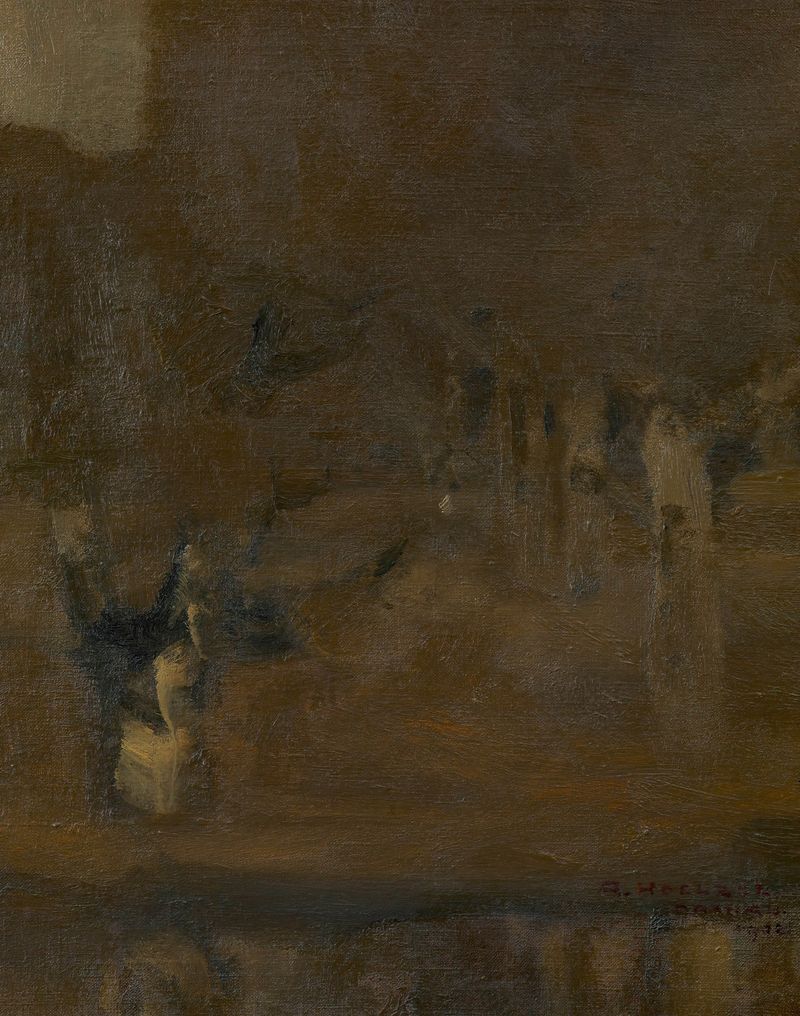
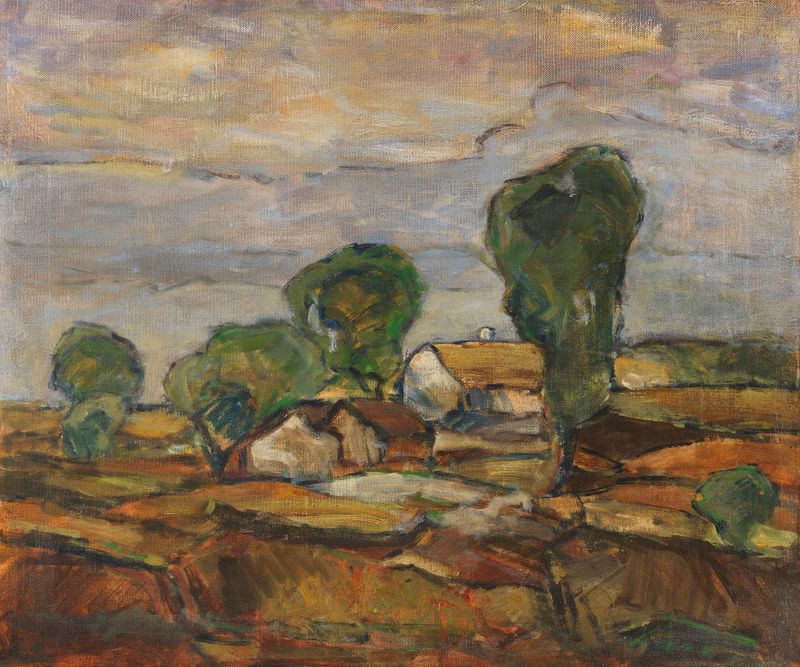
What if silence could speak through light? In Bäume vor dem Haus, the soft whispers of twilight envelop the landscape, revealing a world where tranquility and awe coexist. Look to the left at the towering trees, their branches stretching skyward, almost as if seeking to touch the heavens. The painter employs a delicate blend of greens and browns, creating a serene palette that invites contemplation. Notice how the light filters through the leaves, casting dappled shadows on the ground, a gentle reminder of nature's dynamic interplay.
Each stroke seems deliberate, combining both realism and abstraction to evoke a sense of wonder about the scene's quiet beauty. In this artwork, contrasting elements emerge. The sturdy trees, symbols of stability, stand steadfast against the ephemeral light of dusk—a metaphor for life's fleeting moments. The house, modest and unassuming in its presence, embodies human resilience amid nature's grandeur.
This juxtaposition invites viewers to reflect on their own place within the vastness of existence, where stillness can inspire awe and introspection. Adolf Hölzel painted Bäume vor dem Haus in 1904 during a period of personal and artistic growth. Living in Germany, he was deeply influenced by the burgeoning Expressionist movement, yet he favored a more subdued, contemplative approach. This work reflects his evolving style as he sought to capture the essence of nature and emotion through color and form, marking a significant chapter in his artistic journey.