
Duomo, Cremona — História e Análise
Who listens when art speaks of silence? In Duomo, Cremona, the delicate interplay between light and shadow invites a moment of reflection, urging us to pause and absorb the weight of stillness. Look to the center, where the grand facade of the cathedral rises majestically, its intricate details almost whispering to the viewer. Notice how the sun bathes the stone in warm hues of gold and amber, creating a harmony that contrasts with the cool shadows lurking in the crevices. The careful brushstrokes capture not just the architecture but the very essence of serenity, drawing your gaze upward, as if urging you to explore what lies beyond. In this composition, the balance between light and shadow evokes a duality—the tranquility of the scene clashing with the bustling world outside its frame.
The cathedral stands as a silent sentinel, embodying both faith and solitude, while the surrounding landscape hints at life, suggesting the ebb and flow of time. These elements converge to encapsulate a moment of peace, a rare pause in the chaos of existence. Julian Clarence Levi created Duomo, Cremona in 1904 during a period of artistic experimentation and societal change. Living in America but deeply influenced by European art, he sought to capture the architectural beauty of Italy with a fresh perspective.
At this time, the art world was transitioning towards modernism, yet Levi remained anchored in the traditional, marrying the old with the new in his serene depictions.
Mais obras de Julian Clarence Levi
Ver tudo →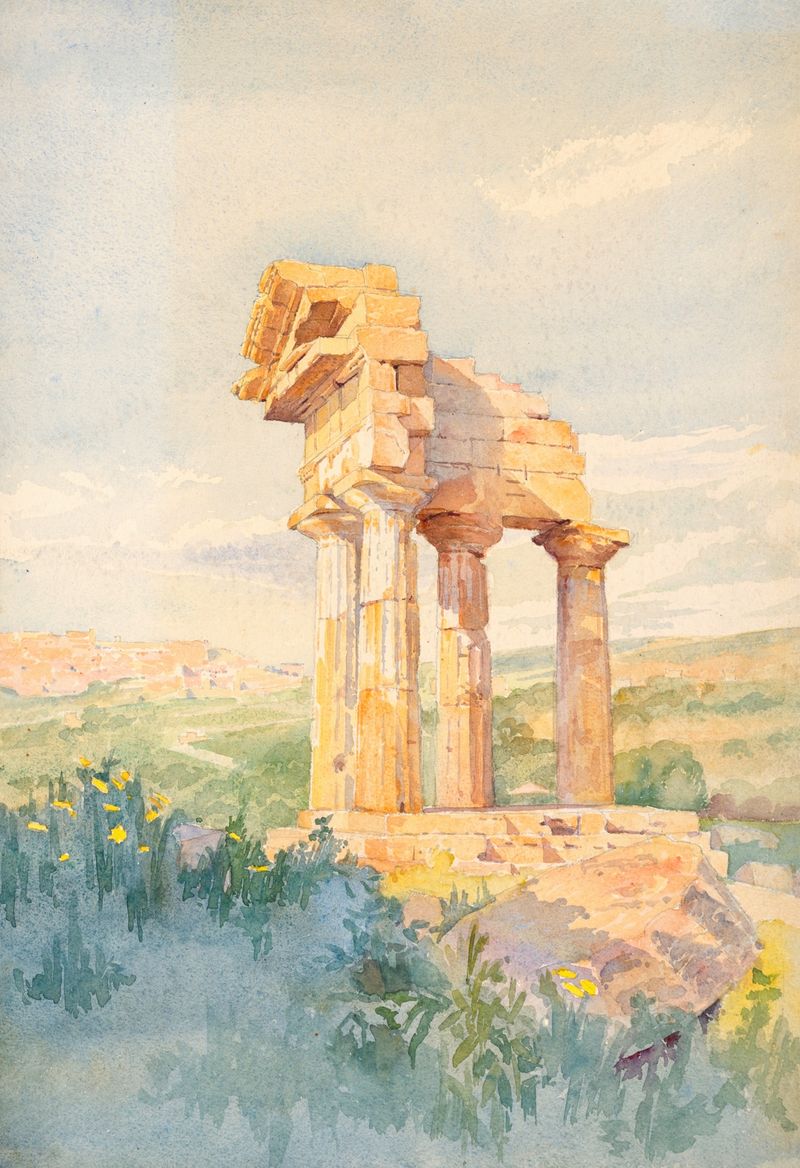
Mais arte de Arquitetura
Ver tudo →
The statue of Liberty
Frédéric Auguste Bartholdi

View of Houses in Delft, Known as ‘The Little Street’
Johannes Vermeer

View of Houses in Delft, Known as ‘The Little Street’
Johannes Vermeer

The Cathedral in Rouen. The portal, Grey Weather
Claude Monet

The yellow house
Vincent van Gogh

The Church in Auvers-sur-Oise, View from the Chevet
Vincent van Gogh