
Temple of Castor and Pollux, Sicily — História e Análise
In its stillness, it holds the promise of an awakening to the beauty of history and the whispers of the past. Look to the towering columns at the center of the composition, their weathered grandeur reaching towards the sky like ancient sentinels. Notice how the soft, golden light spills over them, illuminating the intricate details of their fluted surfaces. The artist’s careful brushwork conveys a sense of reverence, inviting you to explore the interplay of shadow and illumination that breathes life into stone.
Start at the base of the structure, where earthy tones ground the scene, and allow your gaze to rise, tracing the delicate contrast between the vibrancy of nature and the stoic presence of the columns against the serene blue of the sky. Within this tranquil landscape lies a profound dialogue between time and memory. The ruins evoke a sense of nostalgia, hinting at the civilizations that once thrived here, while the surrounding greenery suggests the resilience of nature reclaiming its space. The juxtaposition of manmade and natural elements speaks to the fleeting nature of existence, a reminder that even monumental achievements are destined to fade.
This tension fosters a contemplative atmosphere as you absorb both the beauty of the scene and the weight of history it embodies. In 1903, the artist found himself in a moment of transition, influenced by the burgeoning movements of Impressionism and Post-Impressionism. Working in Sicily, he captured the enduring allure of classical architecture amid a world eager for modern expression. During this time, Levi grappled with the evolution of his own artistic identity, seeking to reconcile the robust history of his subjects with a contemporary vision that would resonate with viewers across time.
Mais obras de Julian Clarence Levi
Ver tudo →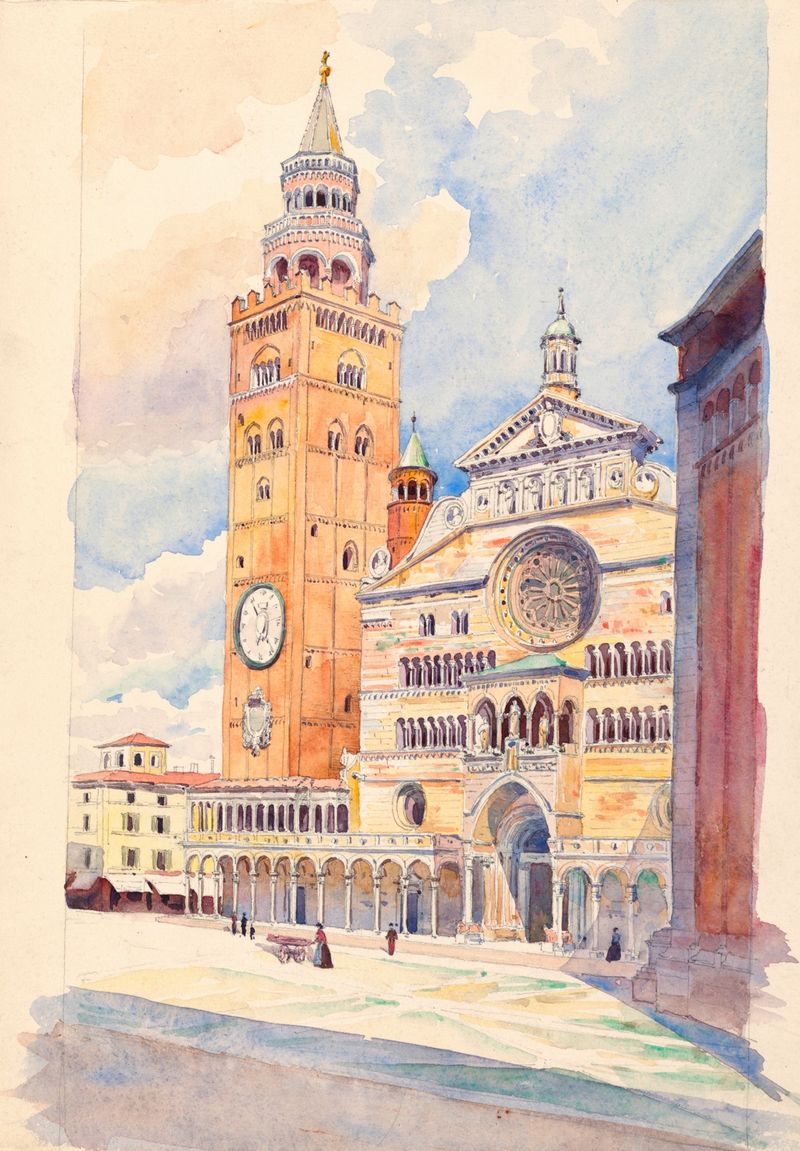
Mais arte de Arquitetura
Ver tudo →
The statue of Liberty
Frédéric Auguste Bartholdi

View of Houses in Delft, Known as ‘The Little Street’
Johannes Vermeer

View of Houses in Delft, Known as ‘The Little Street’
Johannes Vermeer

The Cathedral in Rouen. The portal, Grey Weather
Claude Monet

The yellow house
Vincent van Gogh

The Church in Auvers-sur-Oise, View from the Chevet
Vincent van Gogh