Ejsing Kirke — História e Análise
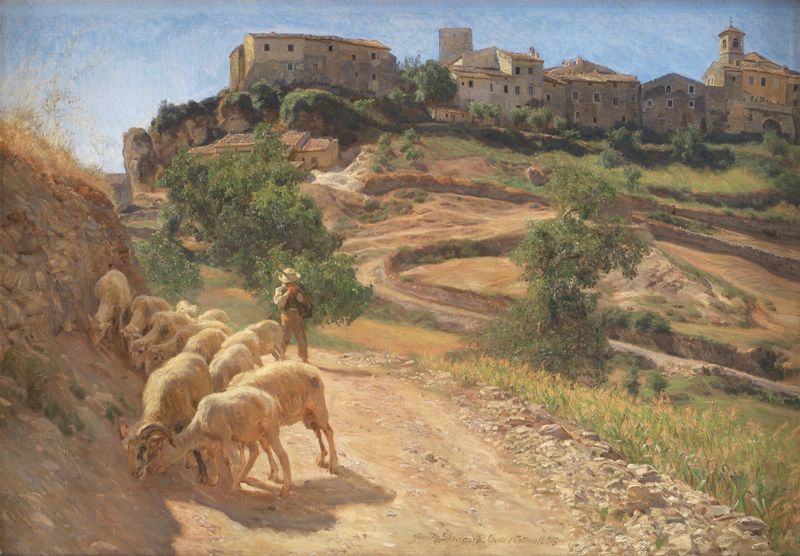
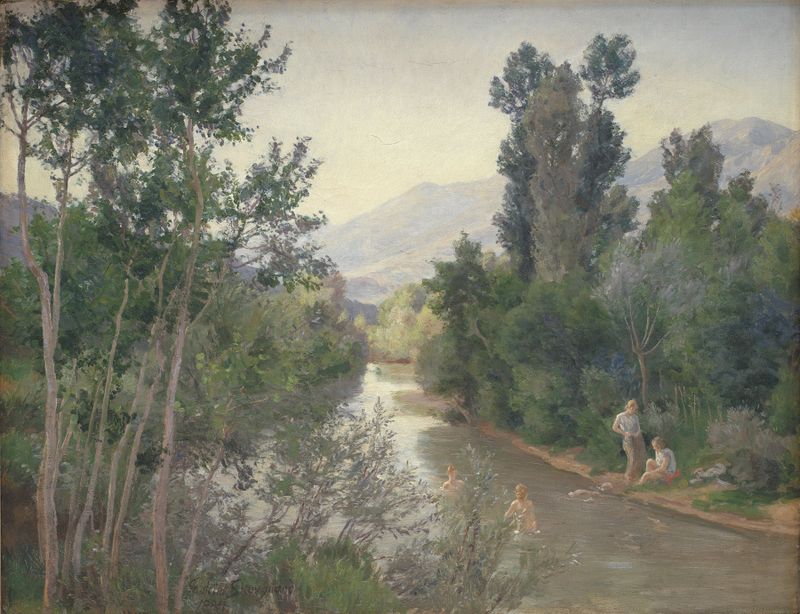
In the realm of art, beauty emerges not from perfection but from the harmonious interplay of color, light, and form. Focus on the vibrant hues that define the landscape, drawing you in with their intoxicating warmth. Notice how the gentle strokes capture the essence of the church, nestled among the verdant hills, evoking a serene yet dynamic atmosphere. The bright sky looms above, painted with wisps of clouds that contrast with the earthiness of the church’s facade, inviting contemplation and a sense of place. The juxtaposition of the natural elements and the manmade structure speaks to a deeper connection between humanity and the divine.
Each brushstroke carries a whisper of the artist's intent, suggesting the fleeting nature of tranquility amidst the chaos of the world. The soft light enveloping the scene not only highlights the church but also casts shadows that loom like memories, intertwining beauty with nostalgia. In 1900, Joakim Skovgaard painted this work during a time when Denmark was experiencing a cultural rebirth, influenced by the National Romantic movement. As a prominent figure in Danish art, Skovgaard was deeply invested in capturing the sacredness of nature and architecture, seeking to resonate with the spirituality of his homeland.
His surroundings reflected a society in transition, where the values of the past met the ambitions of a modern world, and his brush became a means to navigate that evolving landscape.