
Entrance to Mersey — História e Análise
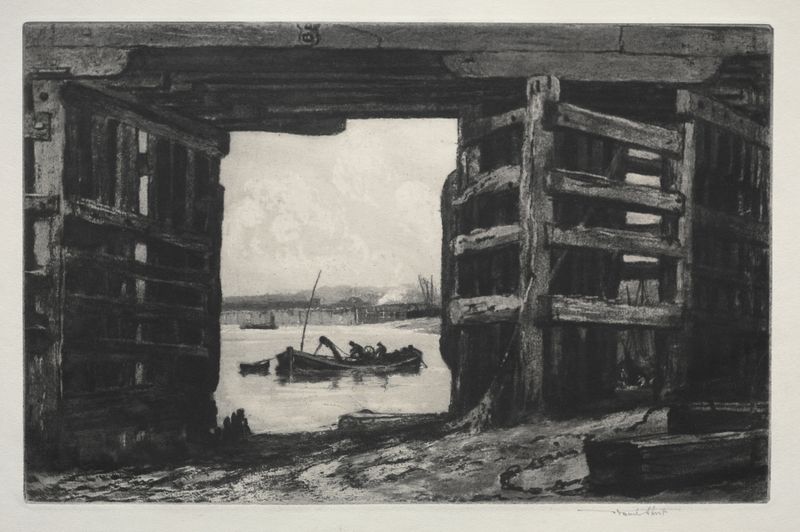
What if silence could speak through light? In Entrance to Mersey, the artist captures a moment that transcends sound, inviting viewers to explore the profound conversation between nature and maritime life. Look to the left at the gentle echoes of sunlight shimmering across the water’s surface, illuminating the rhythmic waves that lead into the harbor. Notice the delicate brushstrokes that define the clouds as they float lazily above, their soft contours contrasting with the solid, rugged cliffs in the foreground. This interplay between cool blue hues and warm golden tones evokes a sense of peace, drawing your eyes deeper into the scene. As you linger over the details, consider how the solitary lighthouse stands sentinel against the vastness of the sea, a symbol of guidance amidst uncertainty.
The shadows cast by the cliffs hint at hidden depths and uncharted waters, while the distant ships, mere silhouettes, speak to the human ambition that seeks connection beyond the horizon. This quiet tension between solitude and community resonates throughout the composition, painting a broader narrative of existence and aspiration. In 1890, Sir Frank Short was painting during a period marked by a turn towards impressionism in England, embracing both natural beauty and technological progress. Living in a time of personal exploration, he found inspiration in the landscapes of his youth along the Mersey River.
This piece reflects a moment of introspection and innovation, as Short sought to capture the transient beauty of life on the cusp of modernity.
Mais obras de Sir Frank Short
Ver tudo →
Morning Haze in Chichester Harbor
Sir Frank Short
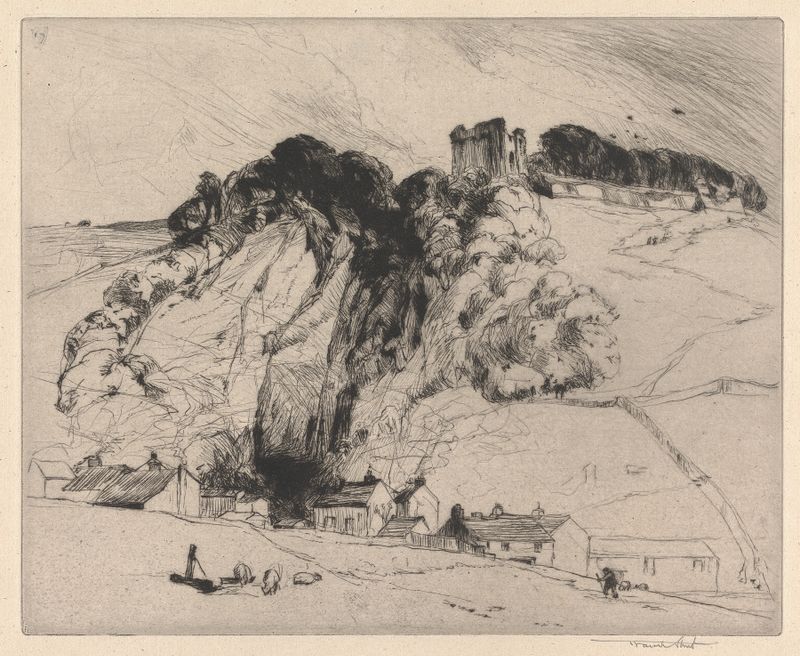
Peveril’s Castle, Derbyshire
Sir Frank Short
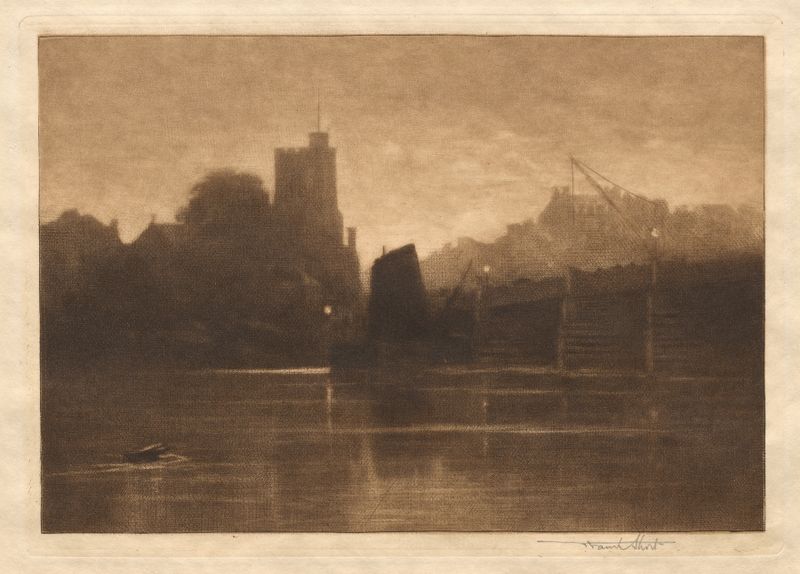
Ebb Tide, Putney Bridge
Sir Frank Short
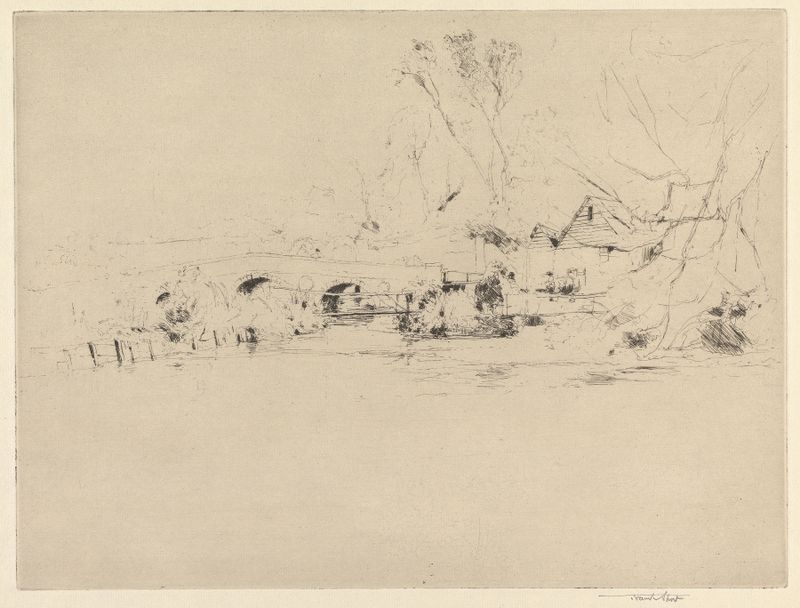
Old Mill on the Wandle, at Mitcham
Sir Frank Short

Moonlight on the Medway at Chatham
Sir Frank Short

Parkgate
Sir Frank Short
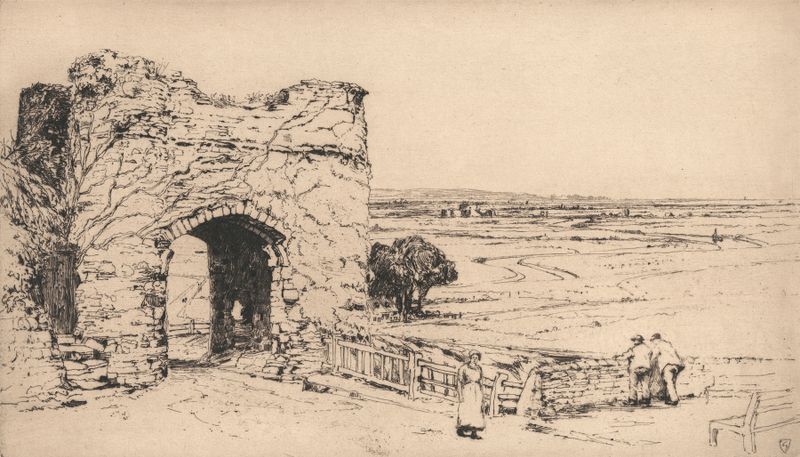
The Strand Gate, Winchelsea
Sir Frank Short

Bridgenorth
Sir Frank Short
A Span of Old Battersea Bridge
Sir Frank Short

The Rope Walk, Spittal Bridge Whitby
Sir Frank Short





