
Hunters Near Ruins — História e Análise
When did color learn to lie? In the intricate dance between light and shadow, Hunters Near Ruins beckons us to ponder the layers of reality and fiction concealed within its brushstrokes. Look to the left at the imposing, crumbling architecture, its weathered stones bathed in a warm, golden light. The juxtaposition of the hunters in the foreground, clad in rich, textured garments, draws the eye toward their poised stances, ready yet contemplative. Notice how the vibrant splashes of red and green in their attire contrast sharply with the muted earth tones of the ruins, creating a tension that speaks of both vitality and decay.
Weenix’s meticulous attention to detail breathes life into the scene, while the soft, dappled lighting enhances the ethereal quality of the moment. Behind this apparent serenity lies a deeper narrative. The hunters, symbols of humanity’s ambition and desire, stand against the backdrop of an ancient civilization’s decline, hinting at the inevitable passage of time and fate. The rich foliage enveloping the ruins suggests nature’s reclamation, an unspoken reminder that every victory is shadowed by loss.
By contrasting the vigorous figures with the remnants of a bygone era, Weenix invites us to reflect on the transient nature of life and glory. In 1648, Weenix created this work during a period marked by both personal success and the flourishing of Dutch Golden Age painting. Living in Amsterdam, he was influenced by the burgeoning interest in landscapes and still lifes, which began to dominate the art world. As he developed his distinctive style, the interplay of light and shadow within his compositions became a hallmark of his oeuvre, allowing him to explore themes of legacy and mortality.
Mais obras de Jan Baptist Weenix
Ver tudo →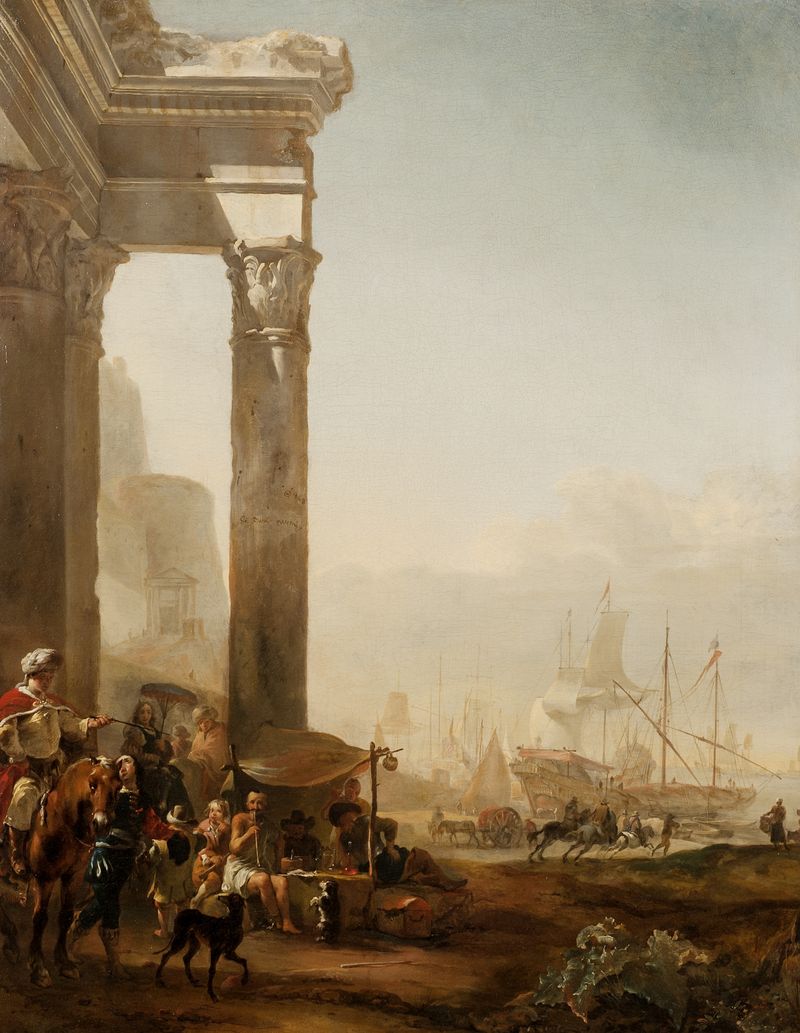
Harbour with Antique Ruins
Jan Baptist Weenix
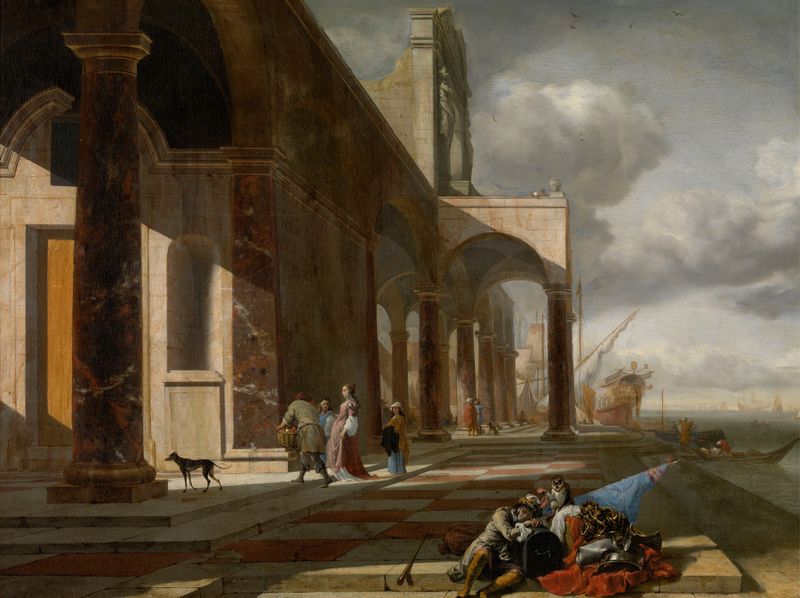
An Italian Seaport
Jan Baptist Weenix

Roman Landscape with Shepherds
Jan Baptist Weenix
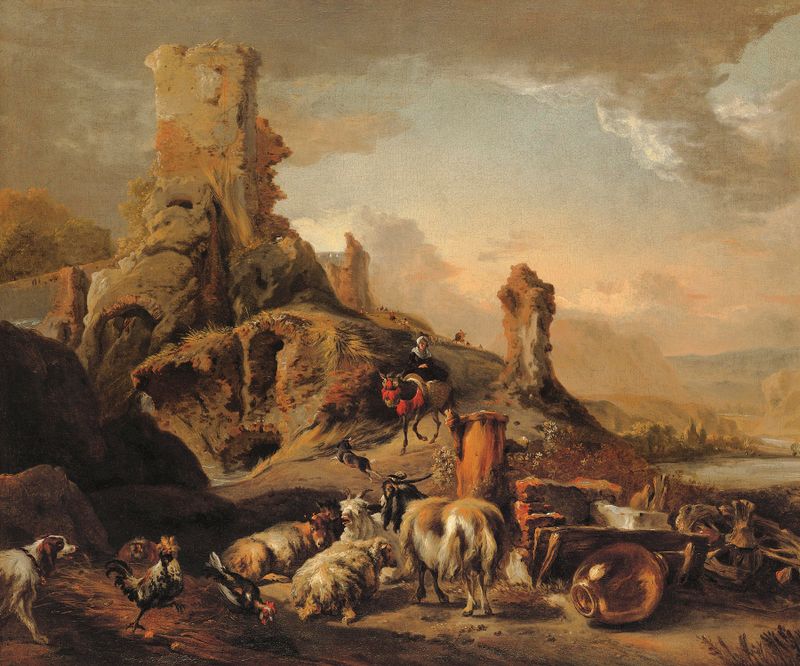
Shepherdess And Her Flock On A Path
Jan Baptist Weenix
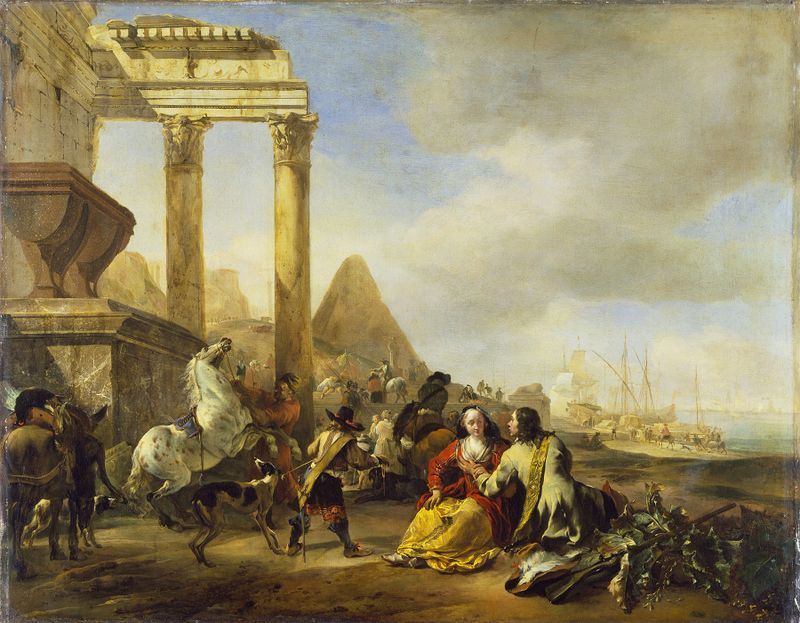
A Coast Scene with Classical Ruins
Jan Baptist Weenix

In den Ruinen römischer Architektur die drei Parzen, rechts ein Löwe aus Marmor
Jan Baptist Weenix

A Roman Temple With Cattle Herders
Jan Baptist Weenix

Architectural interior with foreign shippers, ruins and a shipyard beyond
Jan Baptist Weenix
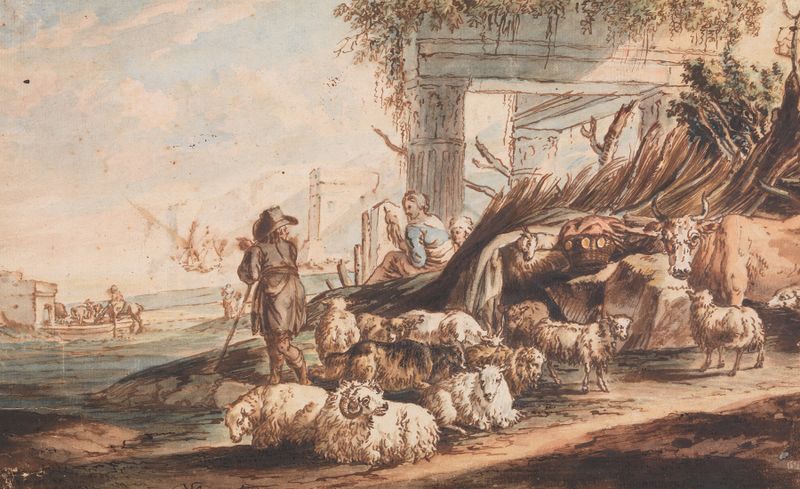
Shepherd with a flock of sheep and a cow among ruins
Jan Baptist Weenix

Portrait of a Man
Jan Baptist Weenix





