
Kreuzgang in San Pablo zu Barcelona — História e Análise
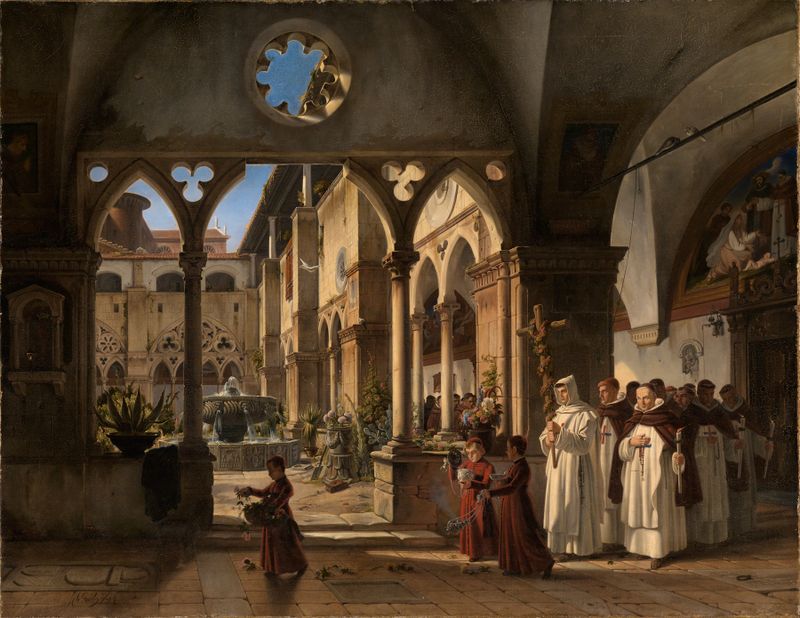
Did the painter know this moment would outlive them? In the quiet arches of Kreuzgang in San Pablo zu Barcelona, a sense of hope permeates the scene, whispering through the intricacies of the architectural beauty that surrounds it. Look to the right at the elegant stone columns, their delicate carvings inviting you into a world frozen in time. Notice how the light gently filters through the open archways, casting soft shadows that dance along the cool, aged stones. The color palette, muted yet warm, evokes a feeling of serenity, contrasting with the vivid life just outside the monastery’s embrace.
Each brushstroke conveys not just form but an ethereal atmosphere that beckons contemplation. Yet, within this calm, there lies a contrast: the stillness of the cloister juxtaposed with the vibrant history it has witnessed. The meticulous details of the stonework suggest the hands of countless artisans who poured their hopes into the creation of this sacred space. Shadows loom in the recesses, hinting at the sorrows and struggles that have unfolded beneath these arches over centuries, enriching the tapestry of human experience woven into every corner. In 1836, while immersed in the cultural currents of Romanticism, Wilhelm Gail painted this work amid a Europe stirred by revolutionary ideas and a resurgence of interest in medieval architecture.
He was captivated by the interplay of light and structure, reflecting a period where artists sought to bridge the past with emerging modernity. This piece, a masterful homage to a sacred space, stands as a testament not only to its time but also to the enduring human spirit.
Mais obras de Wilhelm Gail
Ver tudo →
Mais arte de Arquitetura
Ver tudo →
The statue of Liberty
Frédéric Auguste Bartholdi

View of Houses in Delft, Known as ‘The Little Street’
Johannes Vermeer

View of Houses in Delft, Known as ‘The Little Street’
Johannes Vermeer

The Cathedral in Rouen. The portal, Grey Weather
Claude Monet

The yellow house
Vincent van Gogh

The Church in Auvers-sur-Oise, View from the Chevet
Vincent van Gogh