
Klosterhof mit Prozession von Trinitariermönchen — História e Análise
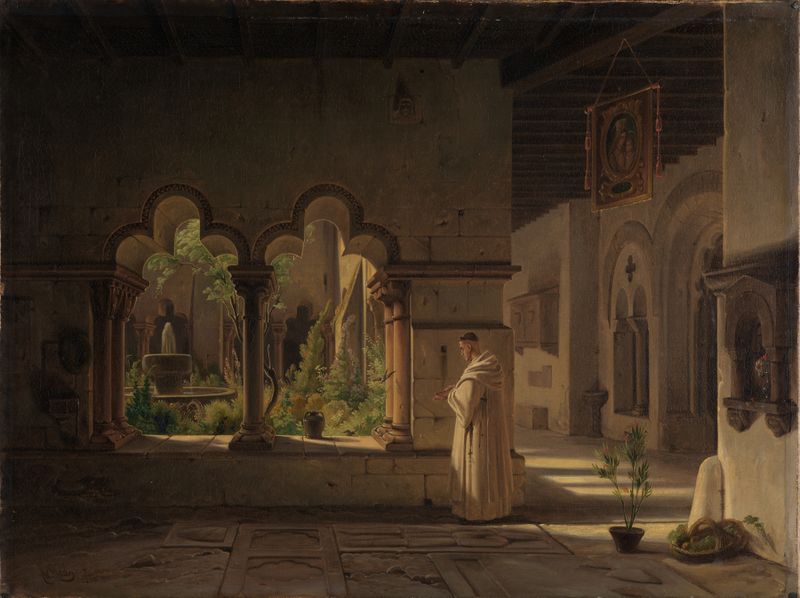
What if beauty was never meant to be finished? In Klosterhof mit Prozession von Trinitariermönchen, the viewer is drawn into a moment frozen in time, inviting contemplation far beyond its surface. Look to the center of the composition where a procession unfolds, cloaked in solemnity. The figures, draped in rich, flowing robes, glide toward the viewer, their movements both graceful and deliberate. Notice how the warm golden light spills across the courtyard, casting gentle shadows that elongate and sway.
The harmonious palette of earthy browns and soft greens grounds the scene, evoking a sense of tranquility that contrasts with the underlying urgency of their pilgrimage. Delve deeper into the contrast between the serene architecture and the vibrant energy of the monks. Each figure holds not just a role in the procession but carries an individual story, illuminated through subtle facial expressions and gestures. The interplay of light and shadow doesn't just define space; it suggests the passage of time and the transient nature of life itself.
This reflection on solitude amidst community invites viewers to ponder their place within the rituals that bind us. In 1831, Wilhelm Gail was immersed in the Romantic movement, seeking to capture the essence of spirituality and nature through his work. He painted this piece in Germany, a time marked by social change and a burgeoning interest in the inner emotional experience. Amidst the sweeping backgrounds of the era, his focus on a contemplative yet communal moment provides a window into a world where faith and daily life intertwine, leaving an indelible mark on the art of his time.
Mais obras de Wilhelm Gail
Ver tudo →
Mais arte de Arte Religiosa
Ver tudo →
The Return of the Prodigal Son
Rembrandt van Rijn

The Garden of Earthly Delights
El Bosco

Count Orgaz’ funeral
El Greco

The Hundred Guilder Print: the central piece with Christ preaching, the plate arched
Rembrandt van Rijn

The Descent from the Cross
Rogier van der Weyden

The return of the prodigal son
Rembrandt van Rijn