
La rue Mouffetard — História e Análise
In the vibrant streets of early 20th century Paris, the echoes of violence linger beneath the surface of daily life, shaping the stories of its inhabitants. Look to the left at the cluster of figures, their bodies caught in the rhythm of the bustling street. The scene is framed by the warm glow of lamplight, casting a golden hue over the cobblestones, while vibrant colors breathe life into the architecture that leans protectively around them. Notice how the artist's brushwork creates a sense of movement, capturing the hurried pace of pedestrians and the weight of their unspoken burdens. Yet, amidst this lively tableau, a tension brews; the juxtaposition of joy and struggle is palpable.
The woman in the foreground, her expression both engaged and wary, hints at the complexities of existence in a city rife with turmoil. The stark contrast between the vibrant palette and the subtle shadows evokes a duality: beauty intertwined with the hardships that residents strive to escape. Each face tells a story, embodying the silent witness of history etched into the fabric of the street. In 1905, while living in Paris, Fernand Maillaud found himself in a milieu of social change and artistic experimentation.
The city was a hotbed of innovation following the upheaval of the 19th century, with a burgeoning spirit of modernism that challenged traditional forms. As he painted La rue Mouffetard, the artist reflected not only the vibrant life around him but also the underlying tensions that marked a society on the cusp of transformation.
Mais obras de Fernand Maillaud
Ver tudo →
La rue de la Montagne-Sainte-Geneviève
Fernand Maillaud
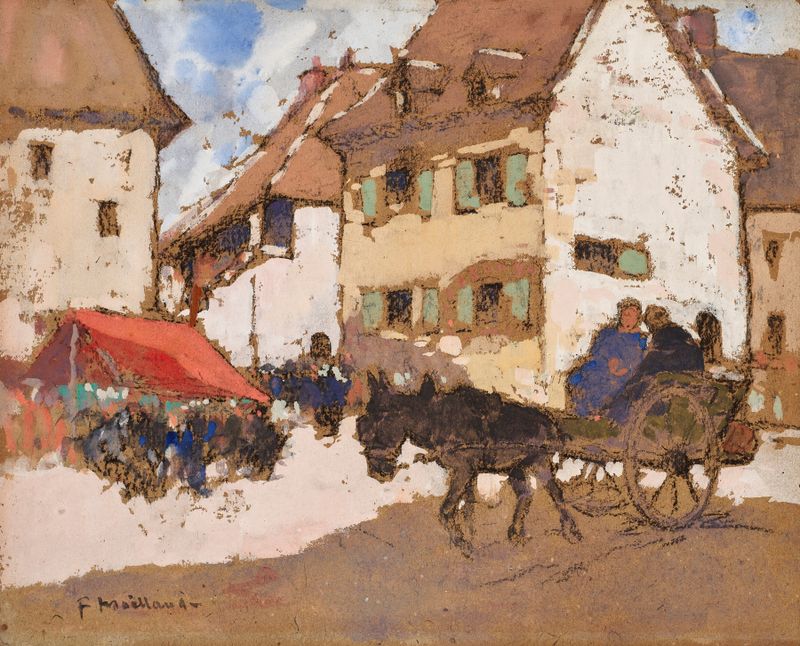
Coin de marché en Berry
Fernand Maillaud

La rue Saint-Julien-le-Pauvre
Fernand Maillaud

Porte rue Saint-Jacques
Fernand Maillaud
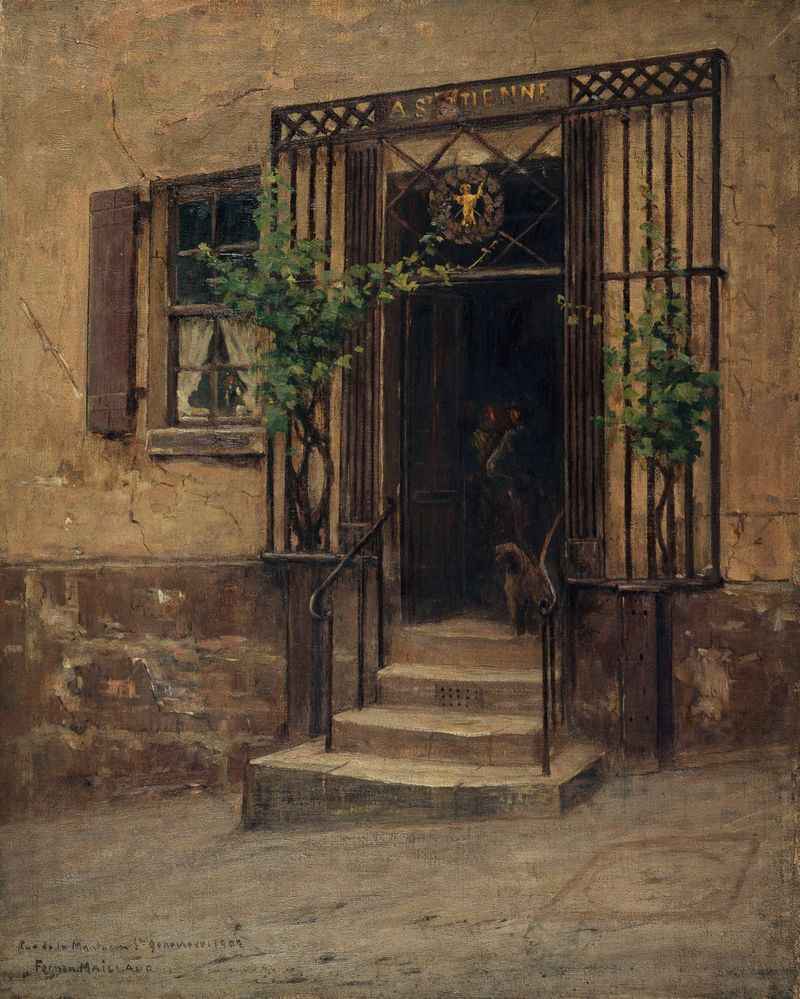
Auberge à l’enseigne de Saint-Étienne, rue de la Montagne-Sainte-Geneviève
Fernand Maillaud

La cour de l’hôtel Saint-Adrien, 264, rue Saint-Jacques
Fernand Maillaud
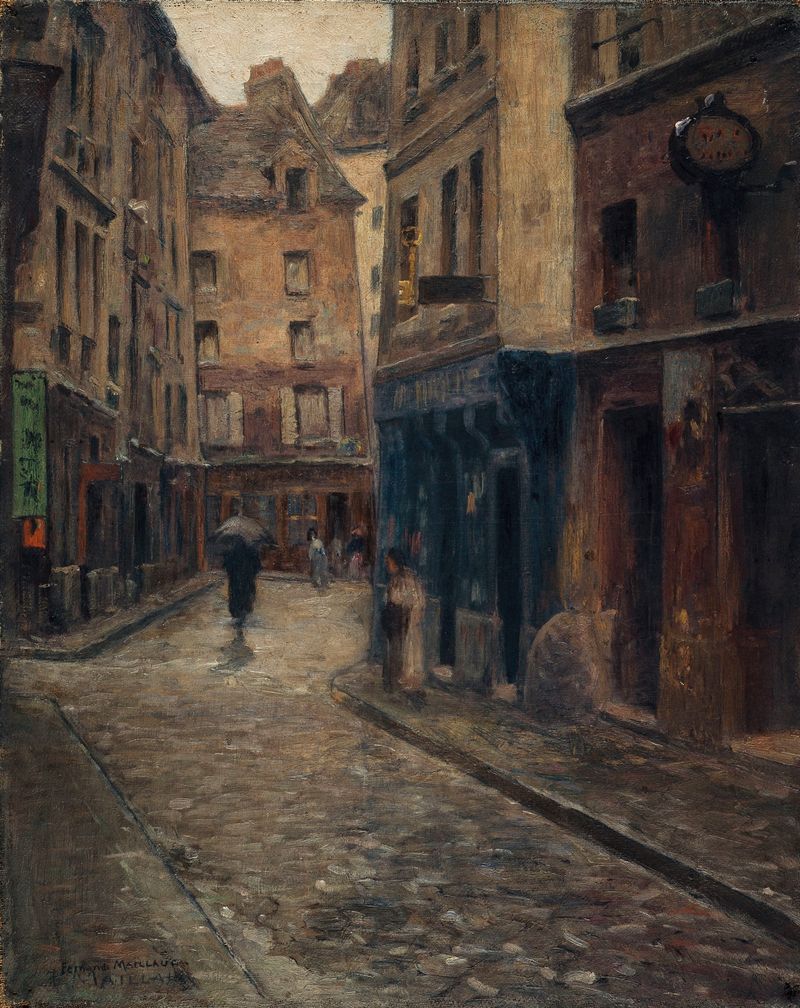
La rue de Lanneau. Effet de pluie
Fernand Maillaud





